
Activity-Aware Computing: Bridging the Gap Between Context and Intent in Healthcare
11799_Activity-Aware Computing for Healthcare.
This paper introduces "Activity-Aware Computing," a paradigm that utilizes a parallel layered Hidden Markov Model (HMM) and a wearable bracelet interface to monitor and support healthcare workers. By representing human actions as "e-activities," the system achieves 92% accuracy in activity recognition, enabling proactive patient care in dynamic hospital environments.
TL;DR
In the high-pressure environment of a hospital, "context" is more than just where you are—it is what you are trying to achieve. This paper proposes Activity-Aware Computing, moving beyond simple sensor-based triggers to a system that understands the flow of medical work. Using e-activities and a wearable bracelet, researchers achieved 92% recognition accuracy, helping nurses prioritize patients' critical needs in real-time.
Background: Why Context is Not Enough
Standard context-aware systems are often "dumb." They might see a doctor near a bed and pull up a patient record, but they don't know the doctor is actually searching for a drug interaction database. The essence of the problem is fragmentation: hospital staff switch tasks roughly every 90 seconds.
The authors argue that we need to move from "Interaction" to "Engagement." Instead of the user managing the technology, the environment should "awarely" support the human's goal.
Methodology: The Power of e-Activities
The core of this research is the e-activity, a computational representation of a human task. These units are:
- Reactive: They trigger specific system responses.
- Sequential: They form historical timelines.
- Mobile & Persistent: They follow the staff across the hospital and over long shifts.
To power this, the authors shadowed medical staff for 196 hours to build a dataset for a Parallel Layered Hidden Markov Model (HMM). This model doesn't just look at one sensor; it looks at the combination of people, artifacts (like catheters or medical charts), and location to decide what is happening.
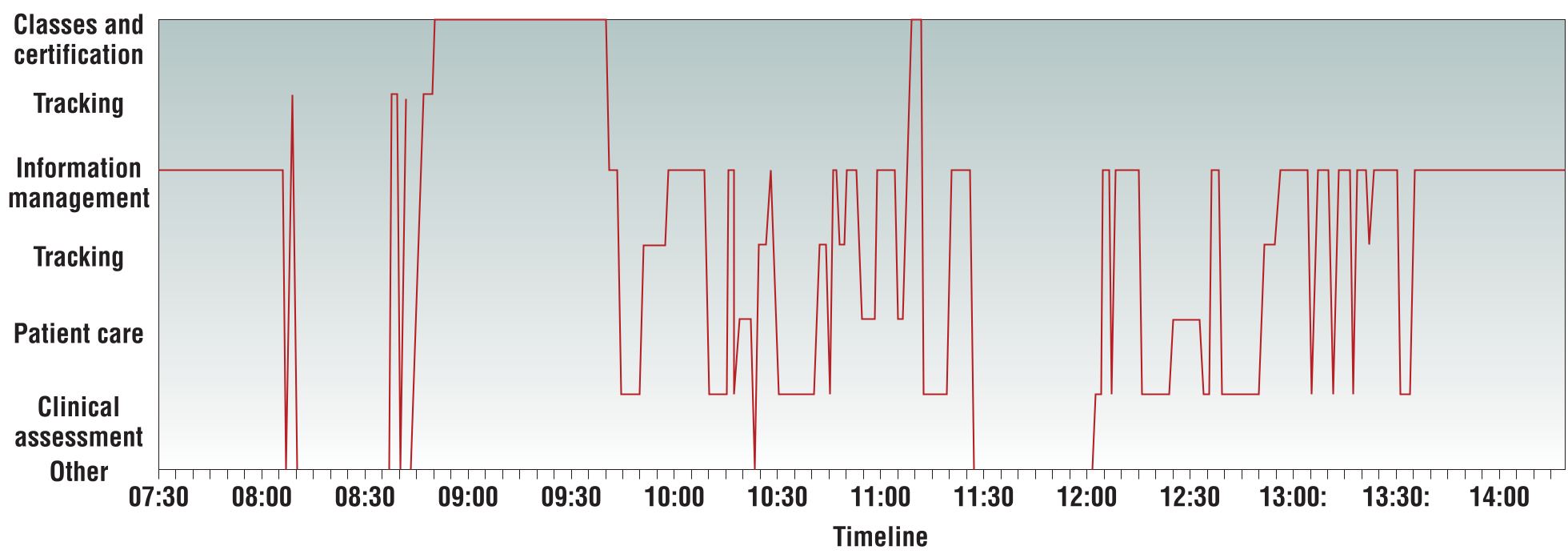 Figure 1: Visualizing the high level of task fragmentation during a physician's shift.
The Hardware: The Activity-Aware Bracelet
While the AI works in the background, the interface is a physical vinyl bracelet.
- Visual Cues: Each button represents a patient.
- Traffic Light System: Colors indicate priority (e.g., yellow for a routine ADL like urination; red for a potential risk like frequent evacuation).
- Seamless Integration: When a nurse presses a button, the detailed activity data surfaces on their smartphone.
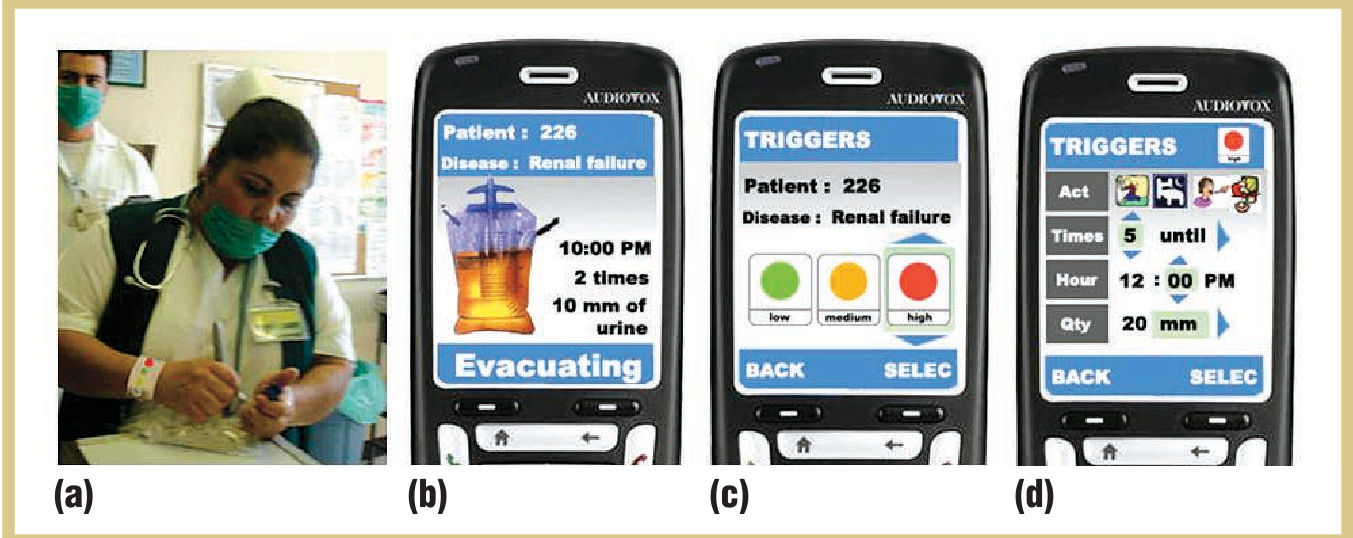 Figure 2: (a) The wearable bracelet; (b) Mobile assistant interface; (c-d) Settings and priority assignments.
Experimental Success and Human Concerns
The HMM model reached a 92% success rate in identifying activities. In qualitative interviews, nurses praised the system for its ability to help them prioritize (knowing which patient to visit first) and save time.
However, the study revealed a fascinating sociotechnical tension: some nurses feared that such high-tech monitoring might replace the "warmth and affection" of the patient-caregiver relationship with clinical "quality."
Critical Insight & Conclusion
This work stands out because it doesn't treat hospital work as a static list of tasks. It acknowledges that medical work is distributed, dynamic, and collaborative.
Key Takeaway: The success of future healthcare AI won't just depend on the accuracy of the algorithm, but on how "ambient" and "non-intrusive" the interface is. By turning "activity recognition" into "activity-aware engagement," we can allow medical professionals to focus on the patient while the system handles the information logistics.