
Activity Discovery and Recognition: The Power of a New Partnership
Activity Discovery and Activity Recognition: A New Partnership
This paper introduces a novel framework that couples unsupervised activity discovery (AD) with supervised online activity recognition (AR) to handle unscripted sensor data. By using the AD algorithm to identify behavioral patterns within undefined data, the authors significantly improve the classification accuracy of predefined Activities of Daily Living (ADLs) in smart home environments.
TL;DR
Recognizing human activities in a real home is messy because most of what we do doesn't fit neatly into a "predefined" label like 'Cooking' or 'Sleeping'. This paper proposes a dual-system approach: an unsupervised algorithm (AD) first "discovers" recurring behavioral patterns in the data, and then a supervised classifier (AR) uses these discoveries to filter out noise, significantly boosting the accuracy of monitoring elderly health.
Background: The "Other" Problem in Smart Homes
In controlled lab settings, activity recognition is easy because subjects perform scripted tasks. In the real world—specifically the CASAS smart home project—residents just live their lives.
The authors found that on average, only 42% of sensor events belonged to predefined Activity of Daily Living (ADL) classes. The remaining 58% were lumped into an "Other" category. This "Other" class is a toxic inhabitant for machine learning models: it is massive, lacks a coherent signature, and causes the model to misclassify real activities as mere background noise.
The Core Innovation: Activity Discovery (AD)
Instead of ignoring the "Other" data, the authors treat it as a gold mine of hidden patterns. They developed the AD (Activity Discovery) algorithm based on two key pillars:
- Minimum Description Length (MDL): The algorithm searches for sequences that, if replaced by a single label, would most "compress" the data. It's an information-theory approach to finding significance.
- Edit Distance Resilience: Human behavior is rarely robotic. AD uses the Damerau-Levenshtein distance to allow for small variations (insertions or deletions of sensor events) within a pattern.
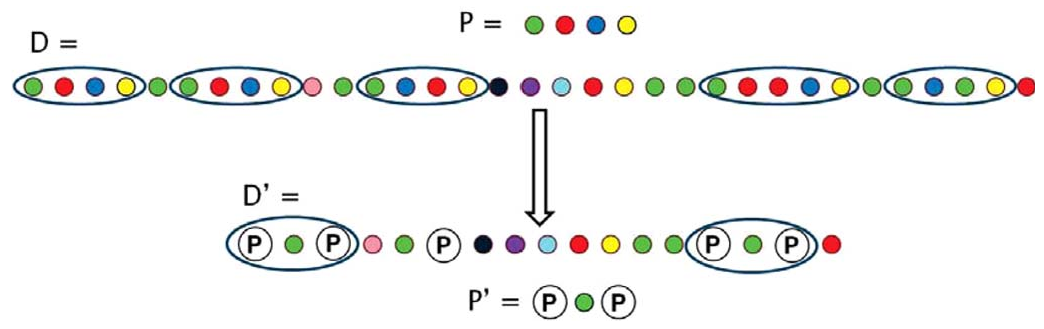 Figure 1: AD identifies patterns, compresses the data, and iterates to find increasingly abstract behaviors.
Methodology: The Partnership
The workflow follows a "Discovery-first, Recognize-later" logic:
- Phase 1: AD scans the raw, unlabelled stream and clusters frequent sequences into "Discovered Activities."
- Phase 2: These discovered patterns (e.g., "Walking from kitchen to bedroom") are added as new labels to the training set.
- Phase 3: An SVM (chosen for its consistency, see table below) is trained on both the original ADLs and these newly discovered classes.
| Model | B1 Accuracy | B2 Accuracy | B3 Accuracy | Average |
|---|---|---|---|---|
| SVM | 90.95% | 89.35% | 94.26% | 91.52% |
| HMM | 92.07% | 89.61% | 90.87% | 90.85% |
| Table 1: Comparing ML models for the recognition task. SVM provided the most robust performance. |
Experimental Results
The "Partnership" (AD + AR) was tested in three smart apartments (B1, B2, B3) over six months. The results were striking:
- Class Separation: The "Other" class was reduced from ~60% to under 10% in some cases, as the model learned to recognize "Transition" patterns (moving between rooms) as distinct classes.
- Accuracy Boost: By giving the model a way to categorize the "Other" data, the accuracy for the primary activities increased by over 10% on average.
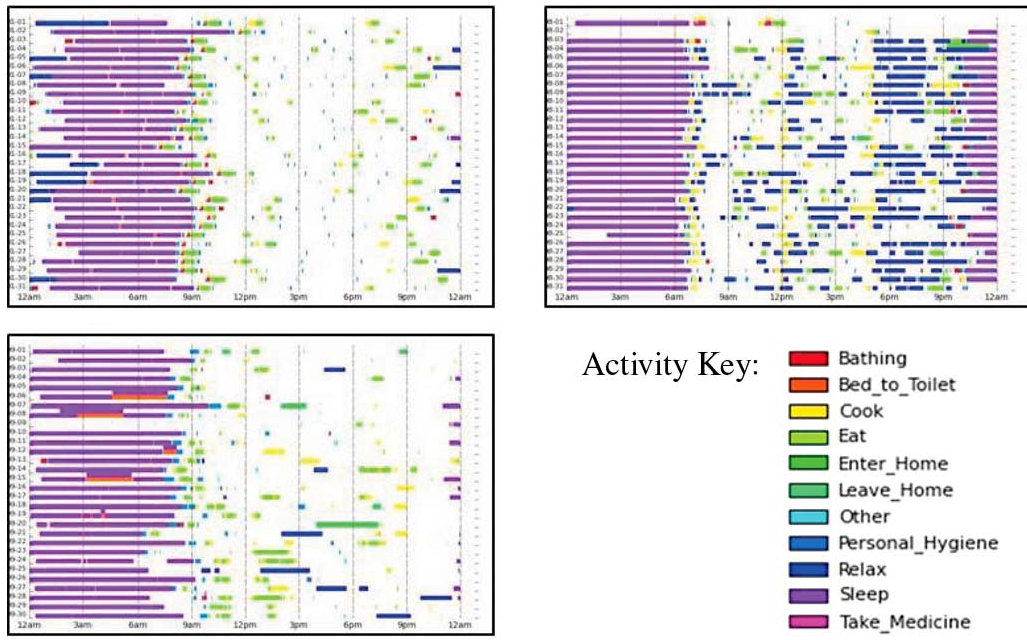 Figure 2: Plot of daily activity occurrences across different testbeds.
Critical Insight & Future Outlook
The brilliance of this work lies in recognizing that noise is often just an unlabeled signal. By using unsupervised discovery to "pre-segment" the messy reality of daily life, the supervised portion of the model is free to focus on the nuances of the target activities.
The authors suggest that future work could use these discovered patterns to auto-correct human annotation errors, which are a major bottleneck in AI research for health monitoring. As we move toward more pervasive computing, this partnership model provides a roadmap for building AI that can adapt to the unique "rhythms" of every individual's home.
Summary Table
 The significant jump in accuracy when patterns are included (With patterns vs. No patterns).