
Boosting Building Intelligence: Multi-Class Activity Recognition with Low-Resolution Sensors
Activity Recognition using Multi-Class Classification inside an Educational Building
This paper presents a multi-occupant activity recognition framework using a sensor fusion approach involving 30 Passive Infrared (PIR) sensors and 2 3D Stereo Vision Cameras within an educational building. The authors demonstrate that the Gradient Boosting Classifier achieves SOTA performance for this setup, reaching 97.59% accuracy in identifying five distinct activity classes.
TL;DR
This research tackles the challenge of monitoring human activity in educational buildings without compromising privacy. By fusing data from 30 inexpensive PIR sensors and 3D Stereo Vision Cameras, the authors developed a supervised learning framework that achieves a remarkable 97.59% accuracy using a Gradient Boosting Classifier. The system successfully distinguishes between moving, stagnant, and complex multi-occupant behaviors.
The "Blind" Navigation Problem in Smart Buildings
In the quest for energy-efficient "Smart Buildings," understanding what occupants are doing is as important as knowing if they are there. However, researchers face a persistent paradox:
- Intrusiveness: High-resolution cameras provide detail but violate Danish and international privacy regulations (GDPR).
- Low Resolution: Inexpensive sensors like Passive Infrared (PIR) are privacy-friendly but provide "blind" binary triggers that are difficult to map to specific activities or multiple people.
The authors identify Data Association—the ability to link a sensor trigger to a specific cause in a multi-occupant environment—as the primary hurdle for non-intrusive Activity Recognition (AR).
Methodology: Logic-Driven Labeling and Sensor Fusion
The core innovation lies in the methodology used to turn "noisy" time-series data into a structured supervised learning problem.
1. The Experimental Bed
The study was conducted in a study zone equipped with:
- 30 PIR Sensors: Capturing motion, humidity, and temperature.
- 2 3D Stereo Vision Cameras: Placed at entrances to act as "ground truth" counters via count lines.
2. The Labeling Algorithm
Because real-world data is often unlabeled, the authors designed a specific algorithm to categorize five states:
- Moving: General movement detected.
- Stagnant: Persistent triggers in a single zone (e.g., someone sitting).
- Both: Simultaneous movement and stagnant triggers, indicating multiple occupants.
- Outside: Camera trigger without internal PIR activity.
- No Activity: The baseline state.
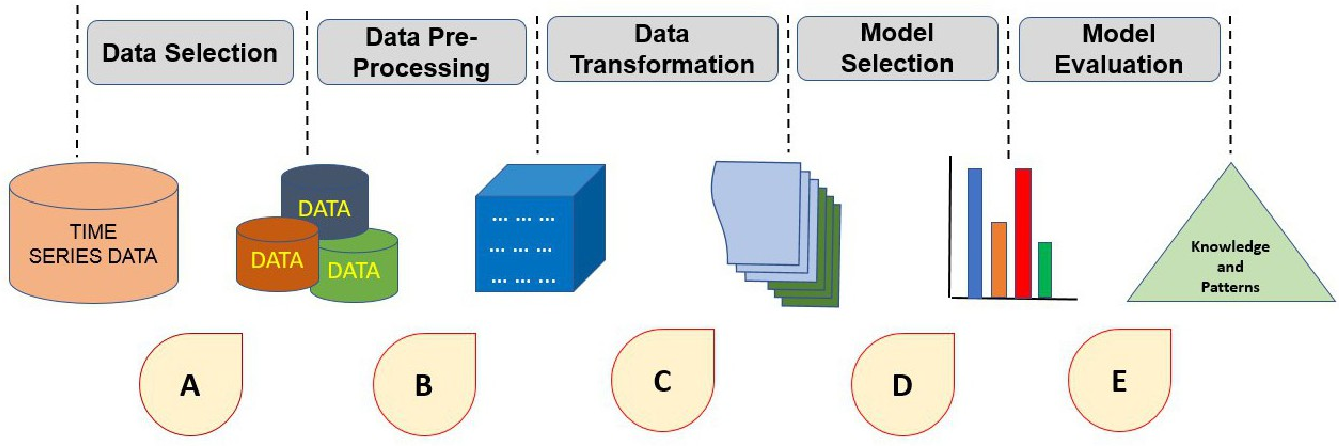 Figure 1: The proposed workflow from data acquisition to evaluation.
Battle of the Algorithms: Why Gradient Boosting Wins
The researchers benchmarked seven different Machine Learning Classification (MLC) algorithms. While Deep Learning is often the "go-to" in current literature, this study demonstrates that for tabular, feature-engineered sensor data, Ensemble Learning is king.
| Classifier | Accuracy | F1 Score |
|---|---|---|
| Gradient Boosting | 97.59 % | 97.40 % |
| XGBoost | 96.93 % | 96.63 % |
| KNN | 93.76 % | 93.21 % |
| SVM | 92.70 % | 91.53 % |
| Naive Bayes | 88.57 % | 88.07 % |
The Gradient Boosting Classifier significantly outperformed traditional models like Support Vector Machines (SVM) and Naive Bayes. The authors attribute this to the model's ability to handle the imbalances in the dataset—where "No Activity" instances far outnumber "Stagnant" instances.
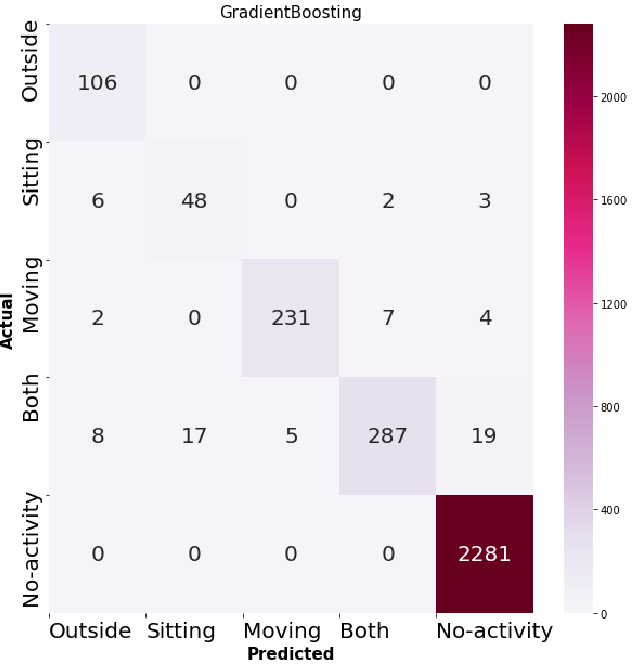 Figure 2: The Confusion Matrix showing high precision across most classes, despite imbalanced counts.
Critical Insight: Beyond Hand-Crafted Features
While the paper proves that traditional ML can achieve SOTA results on this specific dataset, the authors acknowledge a major limitation: Manual Feature Engineering.
The current model relies on "shallow features" designed by human experts. The discussion points toward Deep Learning (DL) for future work. Unlike ML, DL could potentially:
- Automatically extract Spatio-temporal features.
- Handle "Context-Aware" activities (e.g., distinguishing between "working on a laptop" vs. "reading a book").
- Scale better as the dataset grows beyond the 11-day test period.
Conclusion
This work provides a robust framework for researchers in building management. It proves that with the right fusion of low-cost PIR sensors and strategic entrance counting, we can achieve near-perfect activity recognition. This opens the door for HVAC systems that don't just react to motion, but adapt to the nature of the activity, leading to significant energy savings without sacrificing occupant privacy.
Key Takeaway: Gradient Boosting remains a formidable opponent to Deep Learning when dealing with structured, multi-modal sensor features in IoT environments.