
Internet of Underground Things: The Subsurface Frontier of Precision Agriculture
Ad Hoc Networks
This paper provides a comprehensive review of the "Internet of Underground Things" (IOUT), a paradigm for precision agriculture. It introduces a multi-layer architecture integrating buried sensors, machinery, and cloud analytics, while highlighting state-of-the-art wireless underground communication (WUC) mechanisms and their performance in soil-air interfaces.
TL;DR
To feed a global population projected to grow by 33% by 2050, agriculture must become smarter. The Internet of Underground Things (IOUT) provides the "eyes and ears" beneath the surface. This paper explores the architectural shift from manual soil sampling to a fully autonomous, buried sensor-to-cloud ecosystem, solving the physics-defying challenges of communicating through dirt, water, and roots.
The Subsurface Bottleneck: Why Standard IoT Fails
In precision agriculture, the most critical data—soil moisture, salinity, and nutrients—is hidden underground. Current "Over-the-Air" (OTA) solutions are vulnerable to farm machinery damage and provide only a snapshot of the field. However, moving sensors entirely underground introduces a massive physical hurdle: Soil is a hostile medium for radio waves.
Traditional wireless protocols assume a relatively static air medium. In contrast, soil moisture acts as a dynamic dielectric; as it rains, the "dielectric constant" changes, shifting the antenna's resonance frequency and causing signal absorption that is magnitudes higher than in air.
Architecture: Connecting the Buried to the Cloud
The authors propose a tiered architecture to bridge the gap between a buried sensor and a farmer’s smartphone:
- Underground Things (UTs): Rugged, waterproof nodes that sense and transmit from the root zone.
- Mobile Sinks/Base Stations: Tractors, Center Pivot irrigation systems, or UAVs (drones) that act as mobile gateways to collect data from buried nodes.
- Cloud Hub: A centralized processing unit that fuses in-situ soil data with satellite imagery and weather forecasts for real-time Variable Rate Irrigation (VRI).
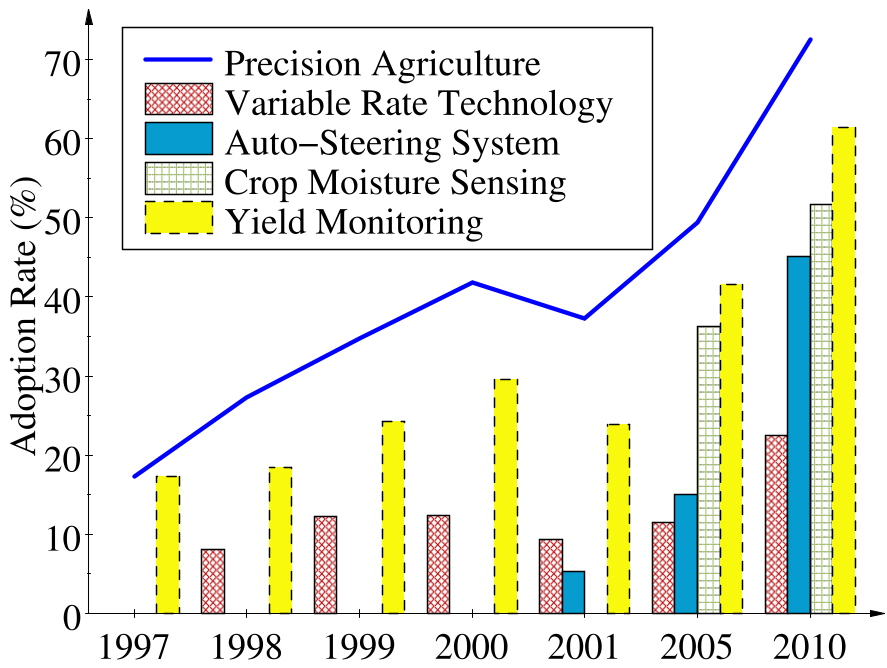 Figure 1: The proposed IOUT architecture integrating buried nodes with mobile gateways and cloud analytics.
Methodology: Master of the Soil Medium
The paper's technical core lies in Wireless Underground Communication (WUC). Unlike terrestrial links, underground signals travel via three distinct paths: the Direct wave, the Reflected wave, and the Lateral wave.
1. The Lateral Wave Advantage
The authors highlight that the lateral wave—which travels along the soil-air interface—is the primary driver for long-distance communication (up to 200m).
2. Adaptive Beamforming (SMABF)
Because soil conditions shift, the "angle of refraction" for waves exiting the soil also shifts. The paper discusses Smart Underground Antenna Arrays that use phase-shifters to steer the signal energy dynamically, maximizing the portion of the signal that escapes the soil into the air.
3. Diversity Reception
Soil limits coherence bandwidth to a few hundred KHz. To counter this, the authors suggest "Diversity Reception," where multiple antennas or frequency channels are used to ensure that if one signal path is blocked by a pocket of high moisture, another might get through.
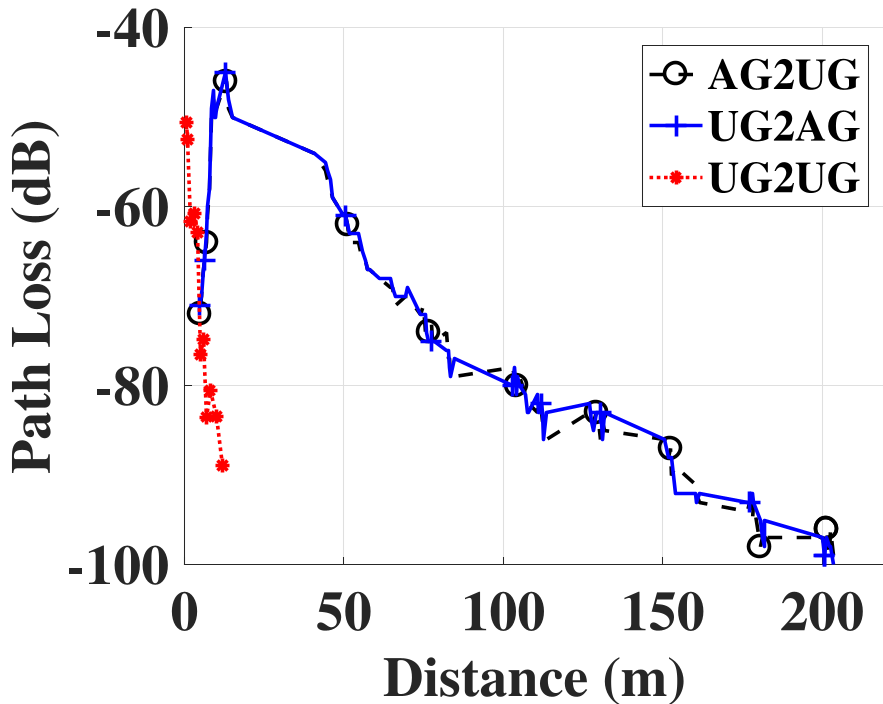 Figure 2: Experimental analysis of signal strength across different soil-air interface paths.
Experiments & Real-World Impact
The research evaluated several technologies, comparing academic prototypes like "Soil Scout" and "Thoreau" with commercial platforms like "John Deere Field Connect." Key findings include:
- Distance: UG-to-AG (Underground to Aboveground) links are viable up to 200m, whereas UG-to-UG links are severely limited to ~12m due to the lack of a low-loss air path.
- SNR Gains: Implementing specialized diversity combining (AC-LDR) achieved specialized signal gains 3x higher than single-antenna setups.
- Automation: Integration with Center Pivot irrigation systems allowed for fully autonomous watering schedules based on real-time moisture maps rather than fixed timers.
Critical Insight & Future Outlook
The IOUT is more than just "burying a sensor." It is a fundamental rethink of the Physical and Data Link layers. While the paper provides a robust blueprint, several challenges remain:
- Energy Scavenging: How do we power a device buried 1 meter deep for 10 years?
- Standardization: We need a "Soil-Protocol" that allows a sensor from Company A to talk to a tractor from Company B.
- Cross-Modal Sensing: Moving beyond moisture to real-time NPK (Nitrogen, Phosphorus, Potassium) sensing remains the "Holy Grail" of this field.
Conclusion: This work settles the theoretical foundation for the next generation of farming. By mastering the subterranean channel, IOUT turns the soil itself into an intelligent, connected component of the global food supply chain.