
Dynamic Interest-Based Ad-hoc Social Networks: Beyond Static Profiles
A mechanism for building Ad-hoc social network based on user's interest
This paper proposes a mechanism for building Ad-hoc Social Networks (ASN) by automatically inferring user interests from mobile web browsing history. It utilizes a Hierarchical Model for interest categorization and Vector Space Models with Cosine Similarity to establish virtual links between mobile devices without internet infrastructure.
TL;DR
In an era where social networks are largely centralized and static, this paper introduces a framework for Ad-hoc Social Networks (ASN). By analyzing URL patterns from mobile web browsers, the system builds a dynamic user profile and uses vector-based similarity to connect strangers with common interests directly via Bluetooth or WiFi—all without needing an internet backbone.
Background: The Shift to Decentralized Socializing
Current Social Network Services (SNS) like Facebook or X are "infrastructure-dependent." They require a central server to match users. However, the rise of smartphones equipped with multiple wireless interfaces (WiFi, Bluetooth) allows for Ad-hoc Networks—self-configuring, infrastructure-less networks. The authors posit that social networks should be just as dynamic as the users' physical movements and changing hobbies.
The Problem: The "Static Profile" Trap
Most social platforms require you to manually fill out a bio. These profiles are:
- Static: They don't update as your interests shift from "Basketball" to "Economics."
- Infrastructure-Heavy: You can't find people with similar interests in a crowded stadium or a conference hall if the cellular network is down.
Methodology: How to "Read" a User's Mind via URLs
The core innovation lies in the Hierarchical Model for Interest Inference. Instead of asking the user what they like, the system observes what they browse.
1. URL Analysis
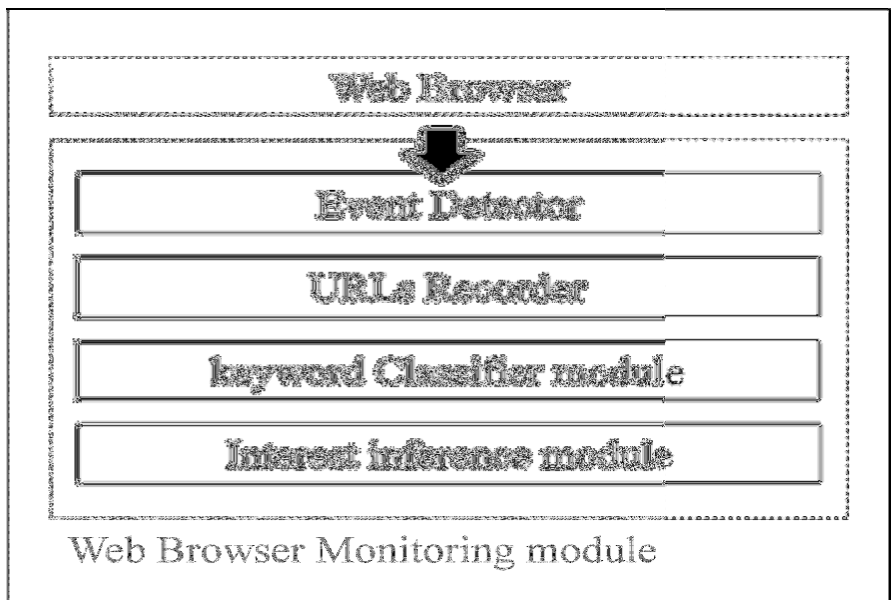
Since URLs are often human-readable (e.g., .../sports/basketball), the system monitors HTTP requests. It extracts keywords and maps them to a hierarchy. If you visit a sports page, the "Sports" parent node and "Basketball" child node both receive a boost in "Interest Level."
2. The Hierarchical Model
This tree structure allows for logical inference: if you like "Action Movies," the system can infer a broader interest in "Entertainment."
3. Mathematical Matching (Vector Space Model)
To determine if two users should connect, the system represents profiles as vectors (). It uses Cosine Similarity to calculate the angle between these vectors.
If the similarity score exceeds a certain threshold, a virtual link is created.
Experiments: Efficiency and Battery Life
Using the OMNeT++ simulator, the authors compared their approach against Epidemic Routing (a common baseline where data is flooded across the network).
Key Findings:
- Reduced Overhead: By only connecting with "similar" peers, the number of broadcast messages dropped significantly.
- Energy Conservation: Fewer messages mean the radio interface stays idle longer, directly translating to better battery life for mobile devices.
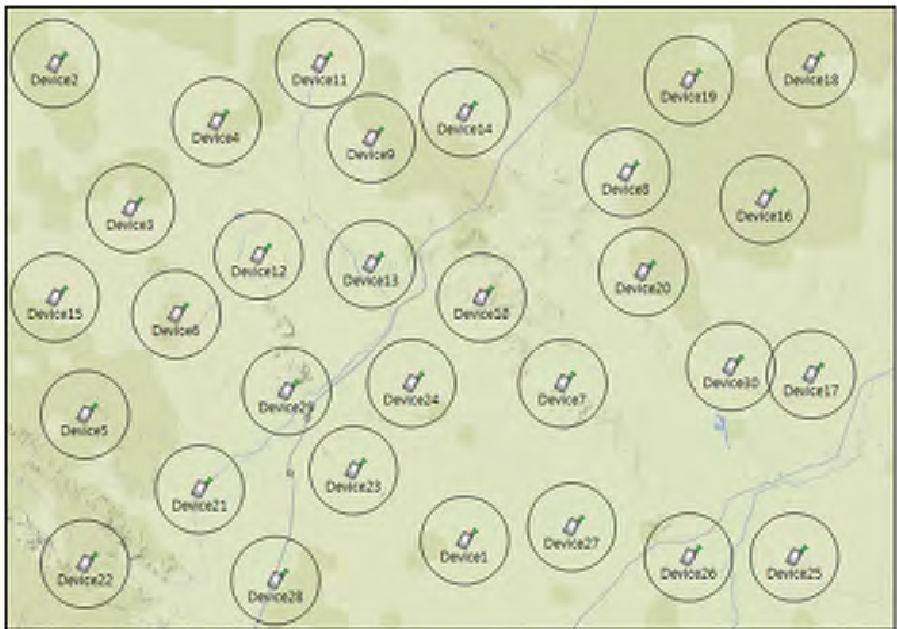 Figure: Comparison of energy consumption between the proposed system and Epidemic Routing.
Critical Insight & Conclusion
This paper successfully bridges the gap between Physical Proximity and Psychological Similarity. By automating the "discovery" phase of social interaction through transparent interest inference, it paves the way for smarter "Ad-hoc" communities.
Limitations: The reliance on URL patterns is a double-edged sword. With the modern shift toward HTTPS and encrypted SNI (Server Name Indication), extracting granular folder-level info from URLs at the network level has become much harder than it was when this research was conceived. Future iterations would likely need to look at on-device application-layer analysis or local LLM-based categorization to maintain this level of insight.
Takeaway: The future of social is not just global and permanent; it is local, ephemeral, and context-aware.