
GPAL: Redefining Video Streaming QoE through Geo-Predictive Crowdsourcing
Adaptation Logic for HTTP Dynamic Adaptive Streaming using Geo-Predictive Crowdsourcing
2016-02-05
Summary
Problem
Method
Results
Takeaways
Abstract
This paper introduces GPAL (Geo-Predictive Adaptation Logic), a novel DASH (Dynamic Adaptive Streaming over HTTP) algorithm that leverages geographical crowdsourced data to predict future network conditions. By utilizing a high-resolution (10m x 10m) database of real-world mobile throughput, it achieves superior Quality of Experience (QoE) compared to traditional reactive methods.
## TL;DR
Video streaming while traveling (DASH) often suffers from "rebuffering" because players only look at past speeds. This paper introduces **GPAL**, an adaptation logic that looks *ahead* at the road. By using a massive crowdsourced database of real-world network performance, GPAL predicts the bandwidth of the path you are about to drive through, achieving a SOTA eMOS score and virtually eliminating stalls.
## The Blindness of Reactive Adaptation
The current standard for video streaming, DASH, splits video into small chunks of varying quality. The "Adaptation Logic" (AL) is the brain that chooses which quality to download next. Traditionally, this brain is **reactive**: it looks at how fast the *last* chunk downloaded and makes a guess about the next one.
In a moving car or train, this is fundamentally flawed. You might have just finished a chunk in a high-coverage area, but you are heading straight into a "cellular dead zone." A reactive player will request a high-quality chunk right before entering the zone, leading to the dreaded loading spinner.
## The Method: GPAL and "Crowd Knowledge"
The authors argue that the best way to predict the future is to look at what thousands of other users experienced at your exact coordinates. They used a professional dataset from **WeFi**, containing over 300,000 samples with a resolution of 10x10 meters.
### 1. The Geo-Predictive Pipeline
The system doesn't just guess; it follows a rigorous logic:
* **Location & Speed Tracking**: The client monitors GPS and current velocity.
* **Batch Fetching**: Before the current segment ends, it queries a PostgreSQL geo-predictive server for the average throughput in the upcoming 250-meter radius.
* **Buffer-Weighted Decision**: GPAL uses a "Playout Buffer Fullness Ratio" to scale the crowd's predicted bandwidth. If the buffer is low, it selects a more conservative bitrate to prioritize speed over quality.
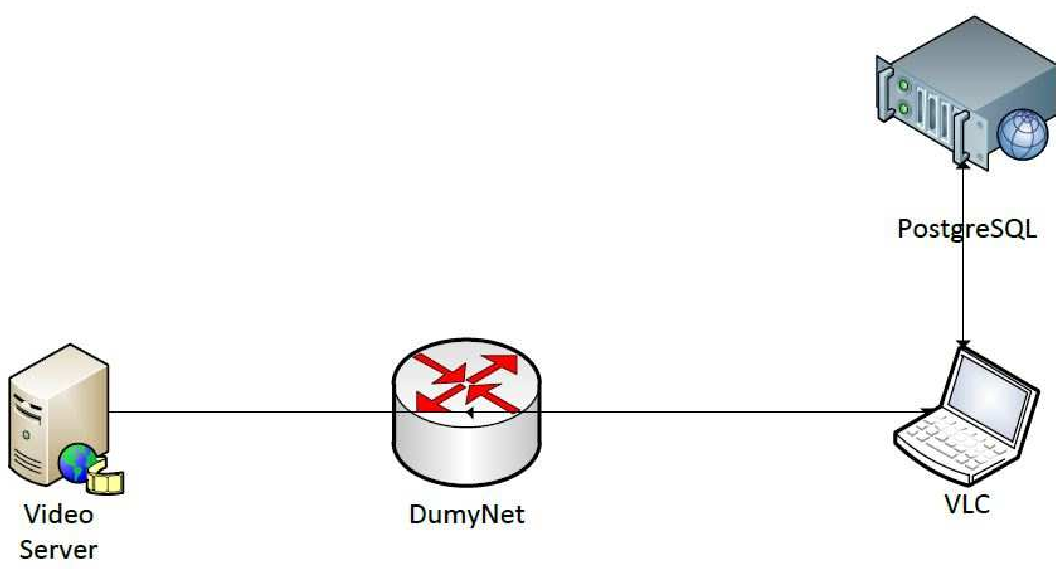
*Figure 1: The experimental setup showing the interaction between the VLC client and the Geo-Predictive Server.*
## Experiments: Real Roads, Real Data
Most papers use simulations; this study used data from the **I110** and **I405** interstates in Los Angeles. These roads represent a nightmare for streaming: high fluctuations, varying user densities, and rush-hour bottlenecks.
### Performance Comparison
The researchers compared GPAL against several State-of-the-Art (SOTA) algorithms, including **MAL**, **MaxBW**, and **MASERATI**.
| Algorithm | Average MOS (eMOS) |
| :--- | :--- |
| **GPAL (Proposed)** | **4.39** |
| MaxBW (Reactive) | 4.21 |
| Geo-MAL (Enhanced) | 3.74 |
| n-Predict | 2.15 |
The results were clear: **GPAL outperformed every other method.** Detailed analysis showed that while reactive algorithms like MaxBW suffered from excessive "quality switching" (187 switches in one run), GPAL maintained a much steadier, high-quality stream by anticipating drops in signal.
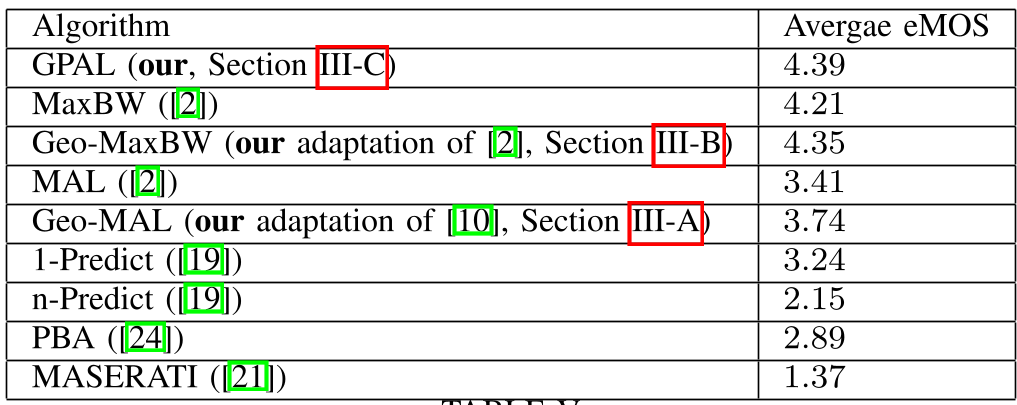
*Figure 2: Performance comparison showing GPAL leading in Mean Opinion Score (MOS).*
## Why It Works: The "How" and "Why"
The magic isn't just in having the data; it's in how GPAL handles it. By integrating the **Buffer fullness ratio ($B_p$)**, the algorithm avoids the trap of being *too* aggressive with crowd data. If the crowd says "5 Mbps" but your buffer is nearly empty, GPAL scales down the target to ensure the video doesn't stop.
Furthermore, the paper proves that **"Geo-Augmentation"** works for everyone. By simply feeding crowd data into older algorithms (creating "Geo-MAL" and "Geo-MaxBW"), they saw immediate performance boosts of up to 10%.
## Critical Analysis & Conclusion
**Summary**: GPAL is a major win for mobile QoE. It effectively solves the "dead zone" problem by treating network conditions as a geographical feature rather than a random temporal event.
**Limitations**: The system relies on a central geo-predictive server. In areas with no cellular data (zero coverage), the client might not even be able to query the crowd prediction for the *next* segment.
**Future Prospect**: The authors suggest moving toward **Machine Learning** models that combine crowd data with local device sensors (accelerometers, signal heatmaps) and exploring **HTTP/2 Server Push** to pre-emptively send chunks based on predicted movement.