
OpenScout: Reimagining OER Through the Lens of Social Networking
Adapting and Sharing Open Educational Resources: A Social Networking Approach
This paper introduces the OpenScout tool library, a niche social networking platform designed for the adaptation and sharing of Open Educational Resources (OER). Leveraging the Elgg framework, it enables a collaborative ecosystem where stakeholders like content developers and educators can exchange tools, stories, and learning materials through a widget-based interface.
TL;DR
Open Educational Resources (OER) are often treated as static files in a digital warehouse. This paper presents OpenScout, a social networking tool library that transforms OER into a living ecosystem. By connecting content developers, educators, and learners through a customizable, widget-based social platform, OpenScout moves beyond simple hosting to active, collaborative adaptation and sharing.
Background: The Gap Between Creation and Consumption
The Web 2.0 era promised openness, yet OER often suffers from a "silo" problem. A high-quality learning module created in one university might never reach its potential because other educators lack the tools or the social connection to adapt it to their specific needs. The core challenge is not just finding resources—it is re-authoring and contextualizing them.
The Problem: Why Static Repositories Fail
Prior OER initiatives focused heavily on the Resource but ignored the Social Context (the "story" of how the resource is used). Authors identify that without a dedicated infrastructure for collaborative authoring, the OER movement cannot reach its full potential. The difficulty lies in bridging the gap between professional content developers and social learners who need different interfaces and tools to interact with the same material.
Methodology: The "People-Stories-Resources" Ecosystem
To solve this, the authors propose a paradigm shift where resources are surrounded by social context.
1. Stakeholder Clustering
The methodology segments the user base into four distinct clusters to ensure the platform meets specific professional needs:
- Content Developers: Need re-authoring tools to aggregate media.
- Educators: Need recommendation mechanisms and rating systems to enrich courses.
- Collaborators: Organizations looking for international co-authoring opportunities.
- Social Learners: Individuals seeking personal networks and social metadata.
2. The Architectural Core
Built on the Elgg open-source framework, the platform uses a widget-based architecture. This allows for extreme personalization—a teacher can add a videoconferencing widget and a Google Gadget for collaborative document editing directly onto their dashboard.
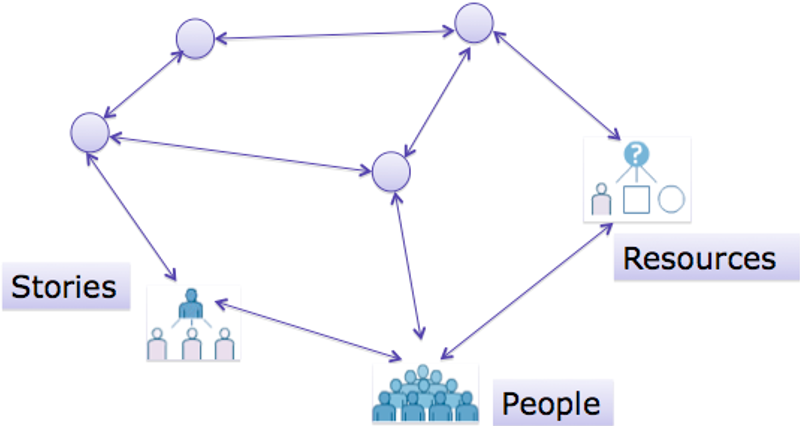 Figure 1: The OpenScout ecosystem mapping the interaction between people, their case studies (stories), and the OER (resources).
Implementation & Workflow
The platform allows for a seamless pedagogical workflow:
- Discovery: A teacher finds an OER via recommendations in their personal network.
- Personalization: The teacher uses a dedicated dashboard to adapt the content.
- Collaboration: A group is formed where students and teachers evaluate the material in real-time.
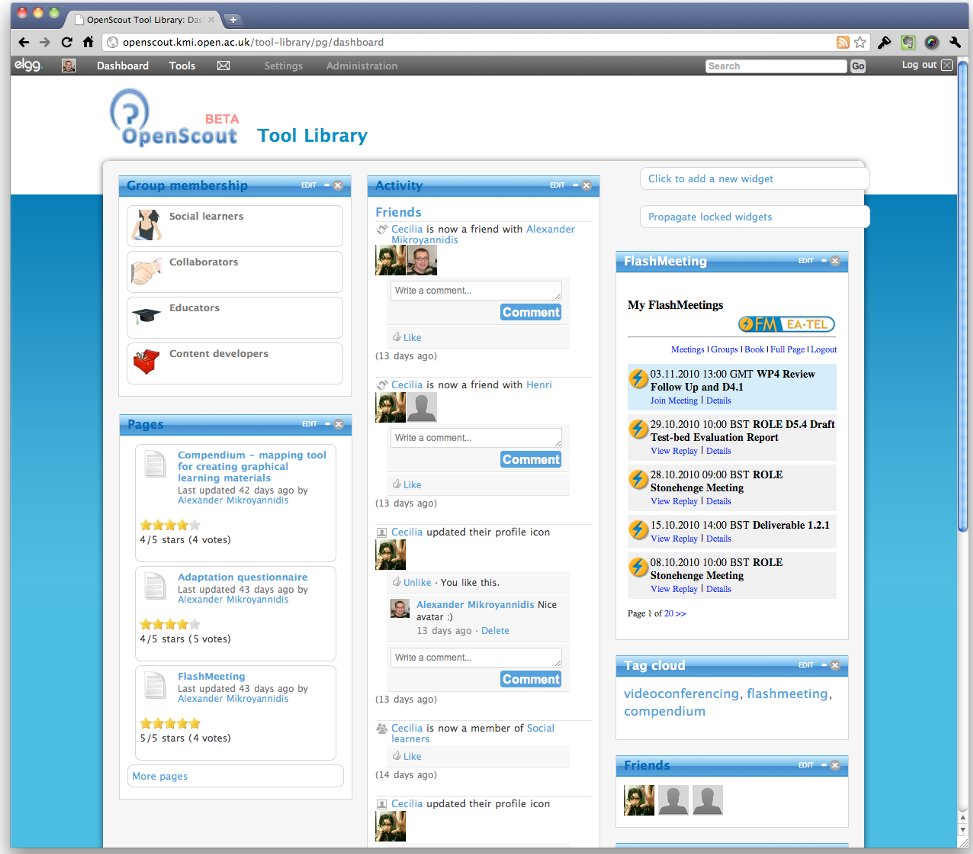 Figure 2: The widget-based dashboard showing how users can customize their OER workspace.
Experimental Insights
The implementation was trialed within the OpenScout consortium, involving Business Schools and SMEs. The results suggest that:
- Social Metadata is Key: User ratings and comments provide more value for resource selection than traditional keywords.
- Flexibility via Widgets: Importing external gadgets (like Google Gadgets) allows the platform to evolve without requiring a total overhaul of the core codebase.
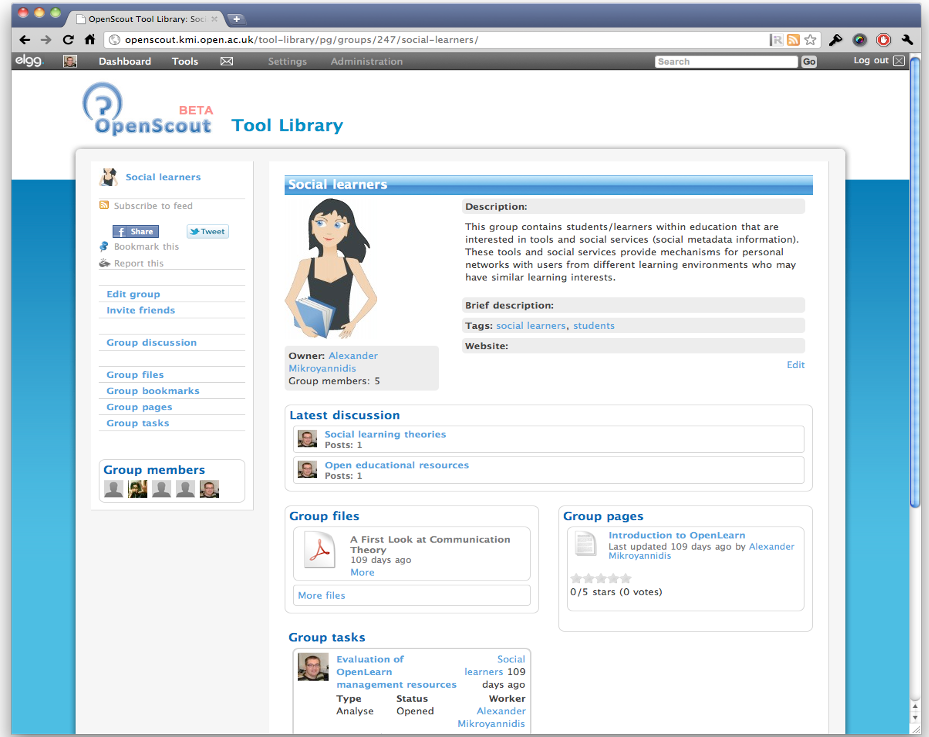 Figure 3: Representation of a group environment where social learners interact with adapted content.
Critical Analysis & Future Outlook
Summary: The paper successfully demonstrates that a social networking layer can significantly reduce the "friction" associated with OER adaptation. By treating adaptation as a social act rather than a technical one, OpenScout fosters a more dynamic learning environment.
Limitations: While the platform is technically sound, its success relies heavily on "network effects." Without a critical mass of active users from the worldwide OER community, the social metadata (ratings/stories) remains sparse.
Future Work: The authors plan to monitor user behavior to further refine the requirements for adaptation. We expect that future iterations may include more automated cross-repository scouting to bring even more diverse materials into this social ecosystem.