
SoCaM: Transforming Enterprise Social Networks into Productivity Engines
Adaptive Case Management in the Social Enterprise
The paper introduces SoCaM (Social Case Management), a framework that integrates Adaptive Case Management (ACM) with Enterprise Social Networks. It transforms cases, tasks, and artifacts into "first-class" social entities, allowing flexible, ad-hoc process enactment and collaborative feedback loops within an enterprise environment.
TL;DR
While Enterprise Social Networks (ESNs) like Yammer or Slack are ubiquitous, they often remain "chat boxes" disconnected from actual work. SoCaM (Social Case Management) bridges this gap by making business processes, tasks, and documents "active citizens" of the social network. By allowing these entities to be followed, updated, and adapted in real-time, SoCaM enables a flexible "planning-by-doing" approach to complex professional cases.
Context & Motivation: The "Disconnected Worker" Problem
In large enterprises, over 90% of activities—from legal cases to sales deals—are case-centric rather than linear. These require Adaptive Case Management (ACM). The status quo, however, is fragmented:
- Rigid BPM Tools: Force users into "straight-jacket" workflows that don't match reality.
- Information Silos: Critical decisions are buried in private email threads or IMs.
- Silent Social Networks: ESNs exist, but since they don't host "real work," active participation is abysmally low (often <5%).
The authors' insight is simple: If the work (tasks and artifacts) lives inside the social network, the social network becomes the workspace.
Methodology: The Architecture of Social Work
SoCaM introduces a Data Model where every business object is a node in a graph.
1. First-Class Social Entities
In SoCaM, a "Task" or a "Case" has a profile just like a person. You can "follow" a High-Value Sales Case to get updates in your activity feed.
- Task Template: Includes roles (Accountable, Responsible, Follower) and state transitions.
- Process Template: A dependency graph of tasks that acts as a "best practice" guide rather than a rigid script.
2. Extreme Flexibility
The core of ACM is the ability to change the plan as you go. SoCaM supports:
- Adaptive Tasks: A task might change its requirements based on the "size of the deal" or "geographical region."
- Partial Fulfillment: Recognizing that complex tasks often take multiple rounds of "draft-review-edit" before completion.
- Social Tasks: Crowdsourcing a task to the entire company (e.g., "Does anyone have experience with this specific client?").
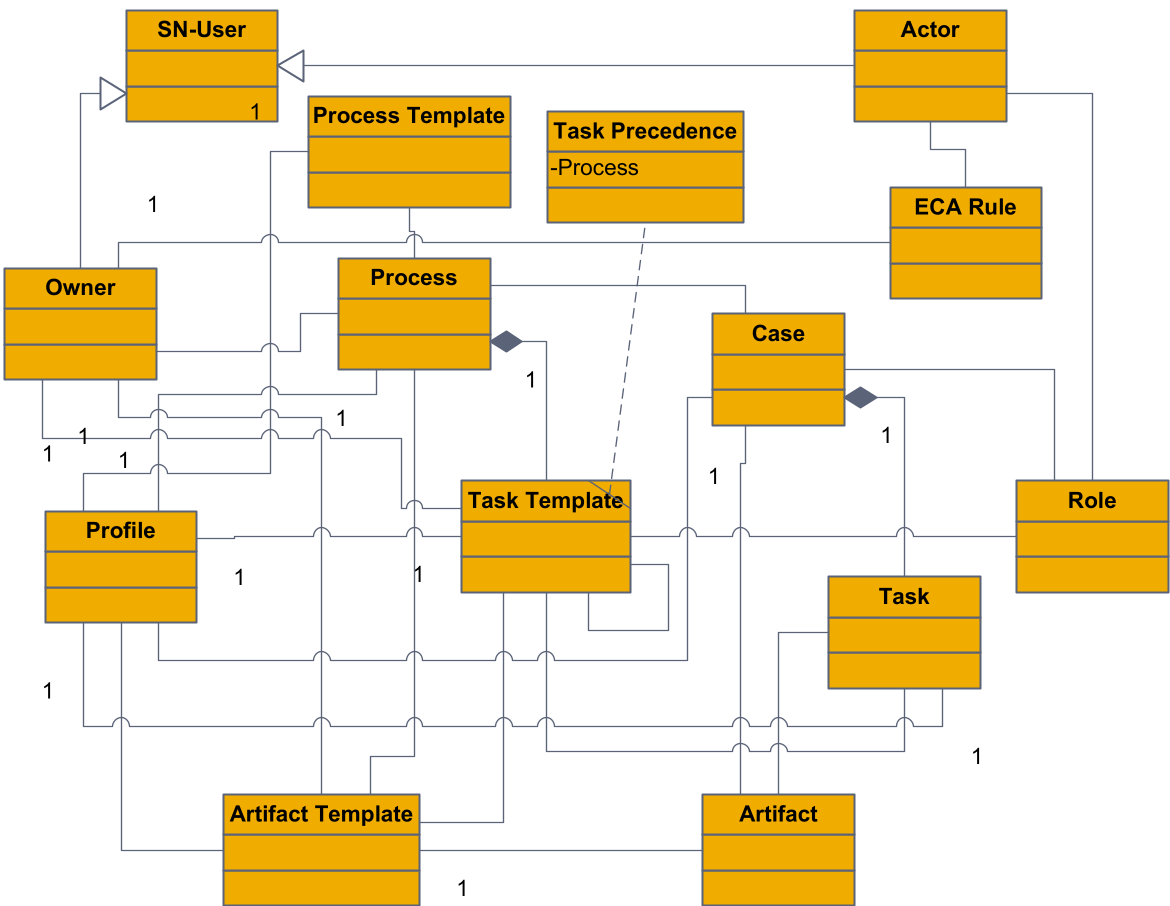 Figure 1: The SoCaM Data Model showing the inter-relationships between Cases, Processes, Tasks, and Social Actors.
Implementation & Real-World Use Case
The researchers built SoCaM on top of HP WaterCooler using the Neo4J graph database to handle the complex relationships between people and business entities.
They applied this to the HP Enterprise Services Sales Process. In this scenario:
- A Sales Manager creates a "New Deal Case."
- SoCaM recommends a "Pursuit Management" process template based on deal size.
- The team adapts the template, adding ad-hoc tasks as the client's needs evolve.
- All email exchanges are automatically captured into the case profile, preventing "information lock-in."
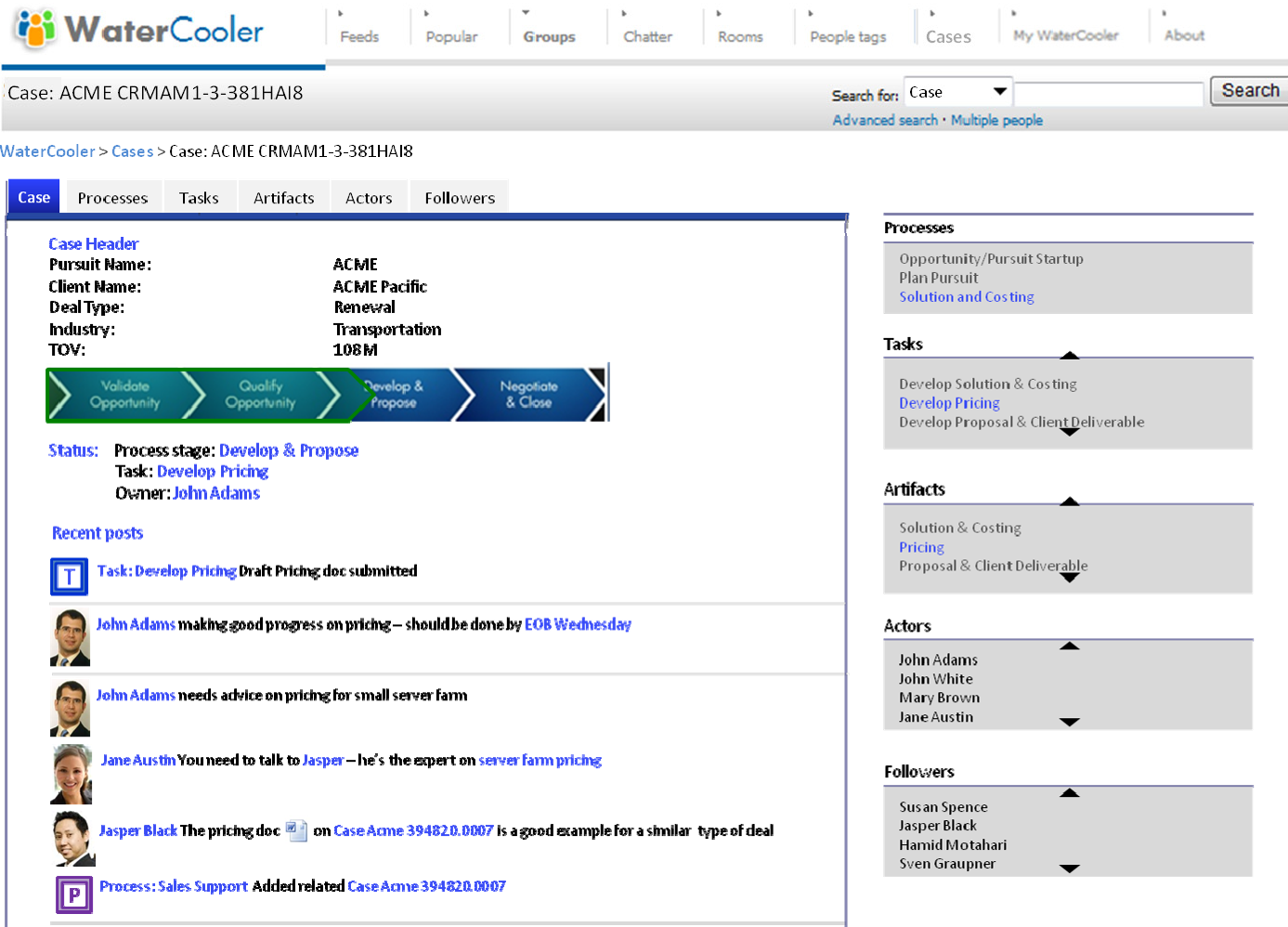 Figure 2: Implementation of Case Profiles within the HP WaterCooler environment.
Critical Insight: Why This Matters
The shift from Activity-Centric (do A then B) to Artifact-Centric (let's evolve this Document until it's done) is the "secret sauce" of modern knowledge work. SoCaM's brilliance lies in its use of a Publish/Subscribe model. When a process definition is updated by experts, everyone "following" that process is notified, allowing for an organic evolution of best practices across the entire organization.
Conclusion
SoCaM represents a pivotal move from "Social for the sake of Social" to "Social for the sake of Work." By embedding business logic into the social fabric of the enterprise, it solves the dual problems of low ESN engagement and rigid process management.
Future Outlook: As we move into the era of AI Agents, the "Social Entity" model proposed here provides a perfect interface for AI "coworkers" to follow tasks, consume events, and contribute to cases alongside humans.