
Adaptive Intelligence: Why Static Models Fail in Dynamic Stock Markets
The adaptive selection of ÿnancial and economic variables for use with artiÿcial neural networks
This paper proposes an adaptive neural network framework for predicting the direction of excess stock returns on the S&P 500. It utilizes an information gain-based data mining technique to dynamically select relevant financial and economic variables across different time periods, integrated with Feed-forward and Probabilistic Neural Networks (PNN) to capture market non-linearity.
TL;DR
Predicting stock returns is a "moving target" problem. This research demonstrates that the relationship between economic indicators (like interest rates and M1 money supply) and the S&P 500 isn't just non-linear—it's unstable over time. By using data mining to adaptively select variables for Neural Networks, the authors achieved predictive accuracies over 70%, significantly outperforming the standard Buy-and-Hold strategy and linear benchmarks.
Background: The Myth of Constant Relevance
Most quantitative models are "frozen" in time. They assume that if the Dividend Yield or the T-bill rate was a good predictor in 1980, it remains equally relevant in 2000. This paper challenges that assumption, arguing that the financial market's structural relationships are in constant flux. To survive, a model doesn't just need better math; it needs a mechanism to decide what to pay attention to right now.
Methodology: The Core Engine
The researchers developed a two-stage pipeline:
- Variable Relevance Analysis: Using an inductive learning decision tree algorithm (C4.5 logic), they calculated the Information Gain for 31 different financial and economic variables. They found that only a handful—like certain Treasury spreads and Certificate of Deposit (CD) rates—were consistently relevant, while others entered and exited the "predictive circle" depending on the decade.
- Neural Network Modeling: They compared two architectures:
- Feed-forward NNs: Optimized using a "Portfolio" approach (ensemble of models from 5-fold cross-validation).
- Probabilistic NNs (PNN): Based on Parzen windows for instantaneous non-parametric learning.
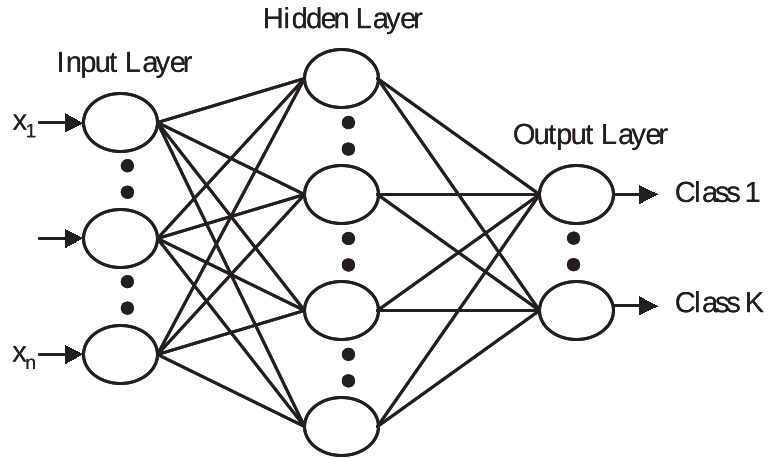 Figure 1: The Feed-forward architecture used for directional classification.
Why "Adaptive" Beats "Constant"
The most striking insight is the Adaptive Modeling (AM) vs. Constant Modeling (CM) comparison.
- The Experiment: "Constant" models were trained once and tested over long periods. "Adaptive" models were retrained periodically with newly selected features.
- The Result: For every neural architecture, the Adaptive version outperformed its Constant counterpart in both predictive accuracy (SIGN) and profitability.
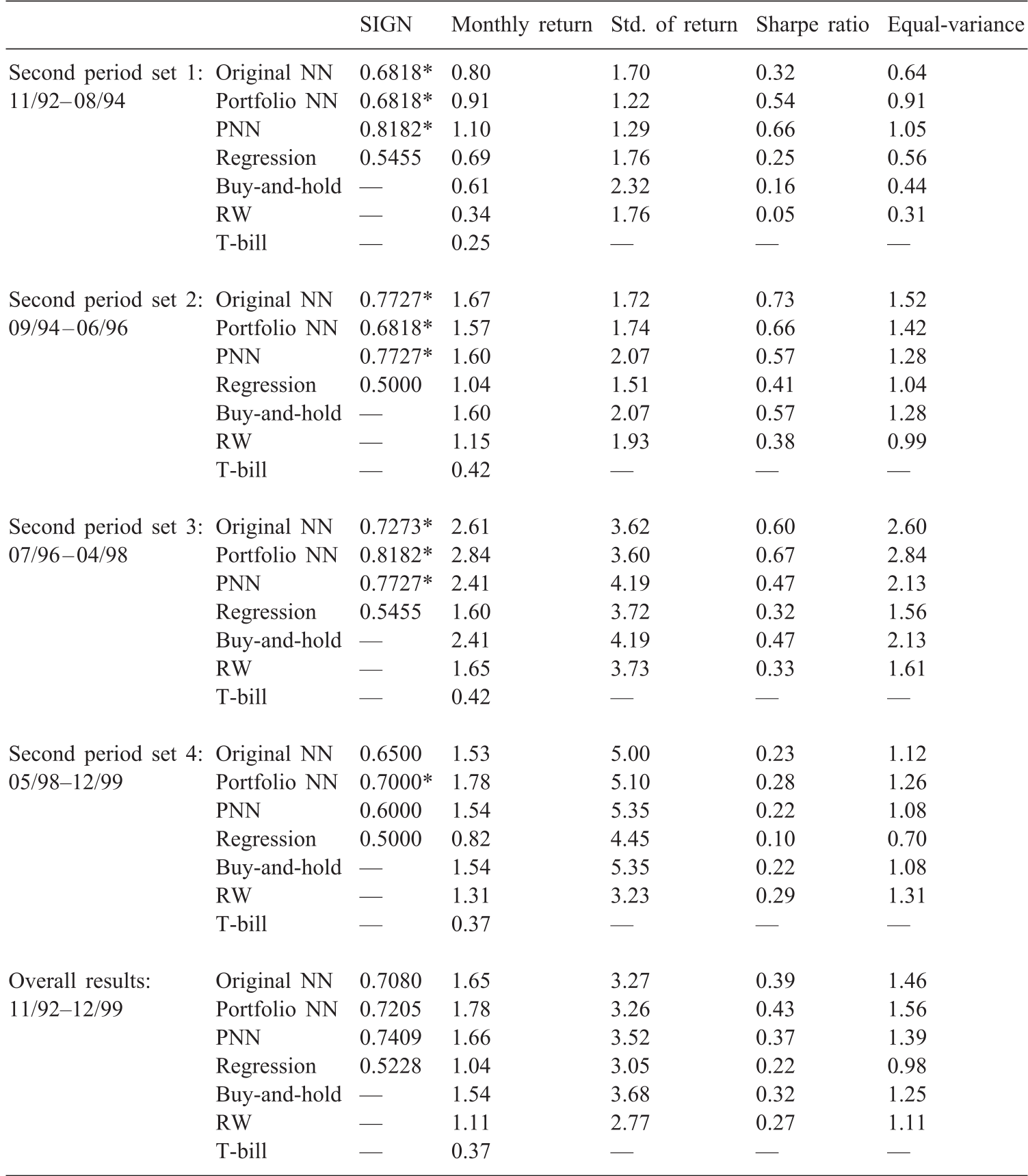 Table 1: Comparison showing Neural Networks (Original, Portfolio, and PNN) consistently beating the Buy-and-Hold and Regression benchmarks.
Key Performance Metrics
- Profitability: The Portfolio NN generated a monthly return of 1.78%, compared to the Buy-and-Hold's 1.54%.
- Risk Management: The neural models achieved higher Sharpe Ratios (up to 0.43), indicating they weren't just taking more risk to get more return—they were genuinely smarter.
- Visual Proof: The cumulative investment returns show a clear divergence between the Adaptive NN and the linear regression models, with the NN maintaining a steady upward trajectory even during market volatility.
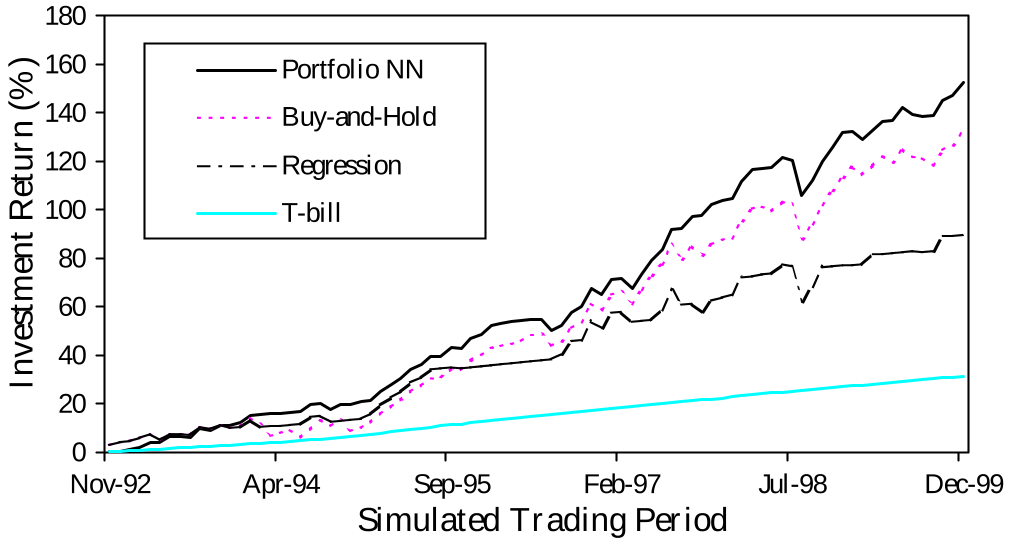 Figure 2: Cumulative returns showing the Portfolio NN's dominance over time.
Critical Insight: The "Portfolio" Effect
The authors highlight that a single Neural Network can be unstable due to random weight initialization. Their "Portfolio NN" solution—using the majority vote of five networks trained on different data folds—is a precursor to modern ensemble methods. This technique effectively "smoothed out" the noise, providing a more reliable signal for asset allocation between stocks and T-bills.
Conclusion & Limitations
While the results are impressive, the study acknowledges that transaction costs and dividends were not fully factored into the trading simulation. In a real-world high-frequency environment, the edge might be thinner. However, the fundamental takeaway is undeniable: Variable selection is not a one-time task. To maintain an edge in the markets, your model must know when to let go of yesterday's leading indicators.