
Beyond the Addiction Score: A Typological Theory of How We React to SNS Dependency
Addiction to Social Networking Sites and User Responses: Toward A Typological Theory and its Relation to Users' Personality Traits
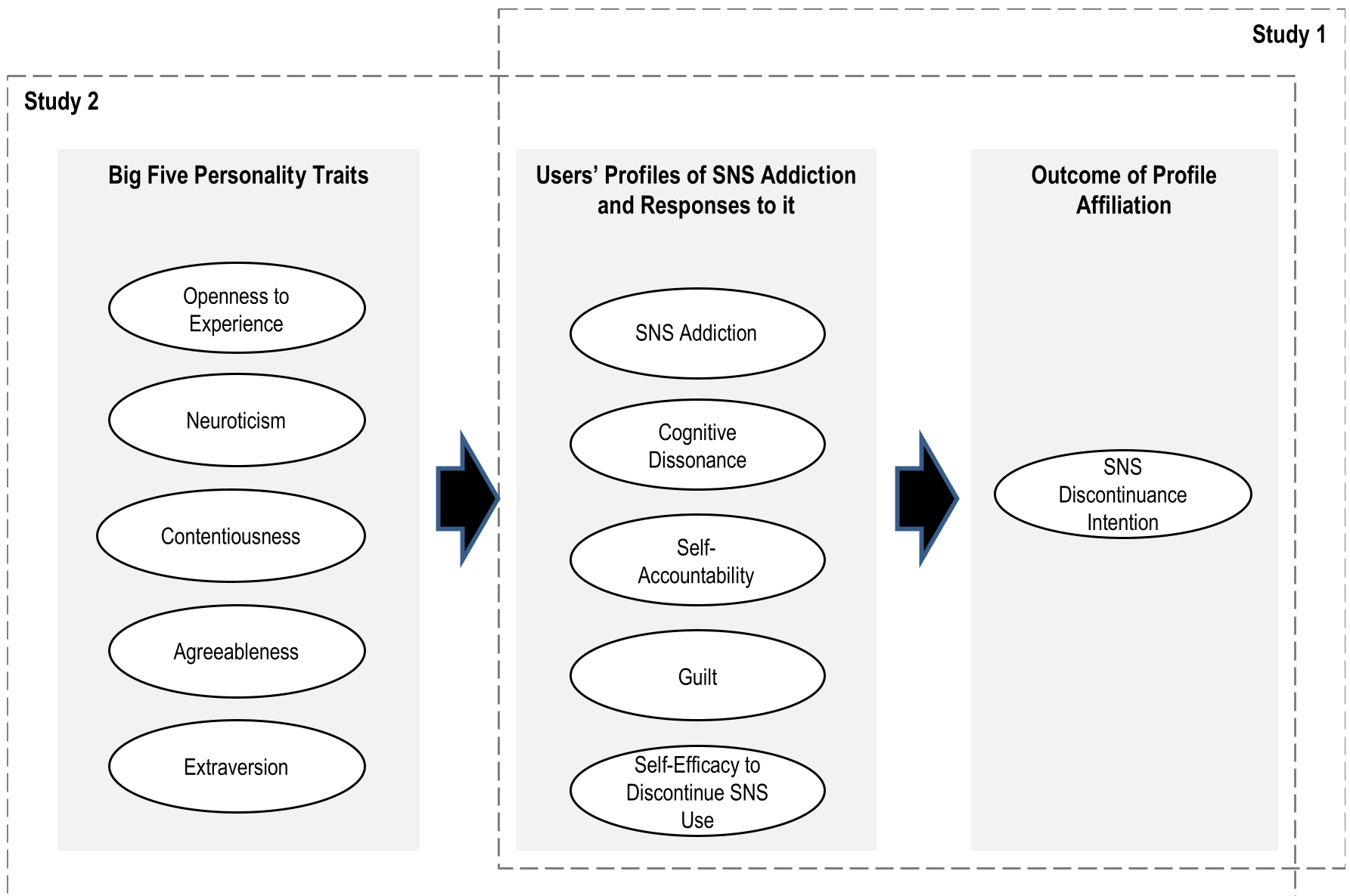
This study proposes a typological theory of Social Networking Site (SNS) addiction, shifting from traditional variable-centered analysis to a person-centered approach. Using Latent Profile Analysis (LPA) across two empirical studies, the authors identify five distinct user profiles—Cautious, Regular, Consonant, Dissonant, and Hooked—that explain how different subpopulations internalize and respond to addiction symptoms.
TL;DR
Researchers have moved beyond simply measuring "how addicted" someone is to a social network. By using a person-centered approach, this study identifies five distinct "profiles" of users—Cautious, Regular, Consonant, Dissonant, and Hooked. The findings reveal a critical paradox: feeling guilty about social media use only leads to quitting if the user also believes they have the ability to stop (Self-Efficacy). Without that belief, users become "Hooked"—trapped in a cycle of high guilt and low action.
The Problem with Averages
Most academic studies on social media addiction focus on variables: Does X lead to Y? While useful, this "variable-centered" approach ignores the reality that people are complex systems. Two people can have the same "addiction score" but feel completely different about it. One might be a "Consonant" user—highly addicted but totally unbothered—while another might be "Dissonant"—addicted, miserable, and desperate to quit. If we only look at averages, we miss the nuances required to help people effectively.
Methodology: The Five Faces of the SNS User
The authors conducted two studies (N=188 and N=284) using Latent Profile Analysis (LPA). Unlike traditional clustering, LPA allows for "degrees of membership," acknowledging that users might lean toward one profile while sharing traits with another.
The Prototypical Profiles:
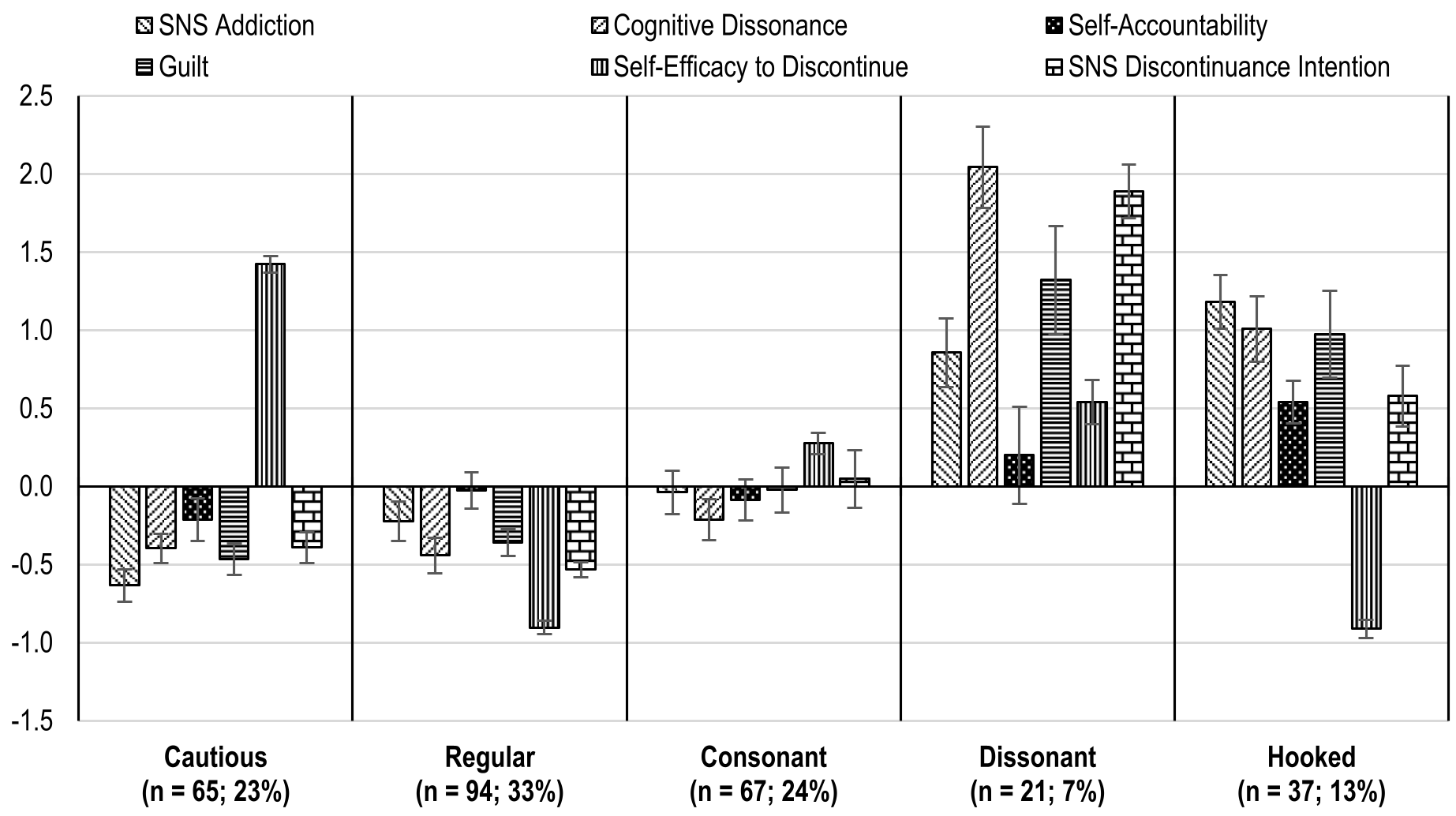
- Cautious: Low addiction, low guilt, lowest intention to quit (because there’s no problem to fix).
- Regular: The average user. Moderate use, low cognitive friction.
- Consonant: Highly addicted, but effectively "in denial" or comfortable with it. Low guilt and low intention to quit.
- Dissonant: High addiction, high guilt, and high self-efficacy. These users are the most likely to actually try to quit.
- Hooked: High addiction and high guilt, but low self-efficacy. They feel the "trap" of the platform and don't believe they can escape.
Key Insight: The Self-Efficacy Gap
The most striking finding is the comparison between the Dissonant and Hooked groups. Both recognize their addiction is a problem (high cognitive dissonance and guilt). However, because the "Hooked" group lacks confidence in their ability to stop, their intention to discontinue use is nearly as low as the users who aren't addicted at all.
This suggests that for certain users, "awareness" isn't the problem—capacity for change is.
Personality as a Predictor
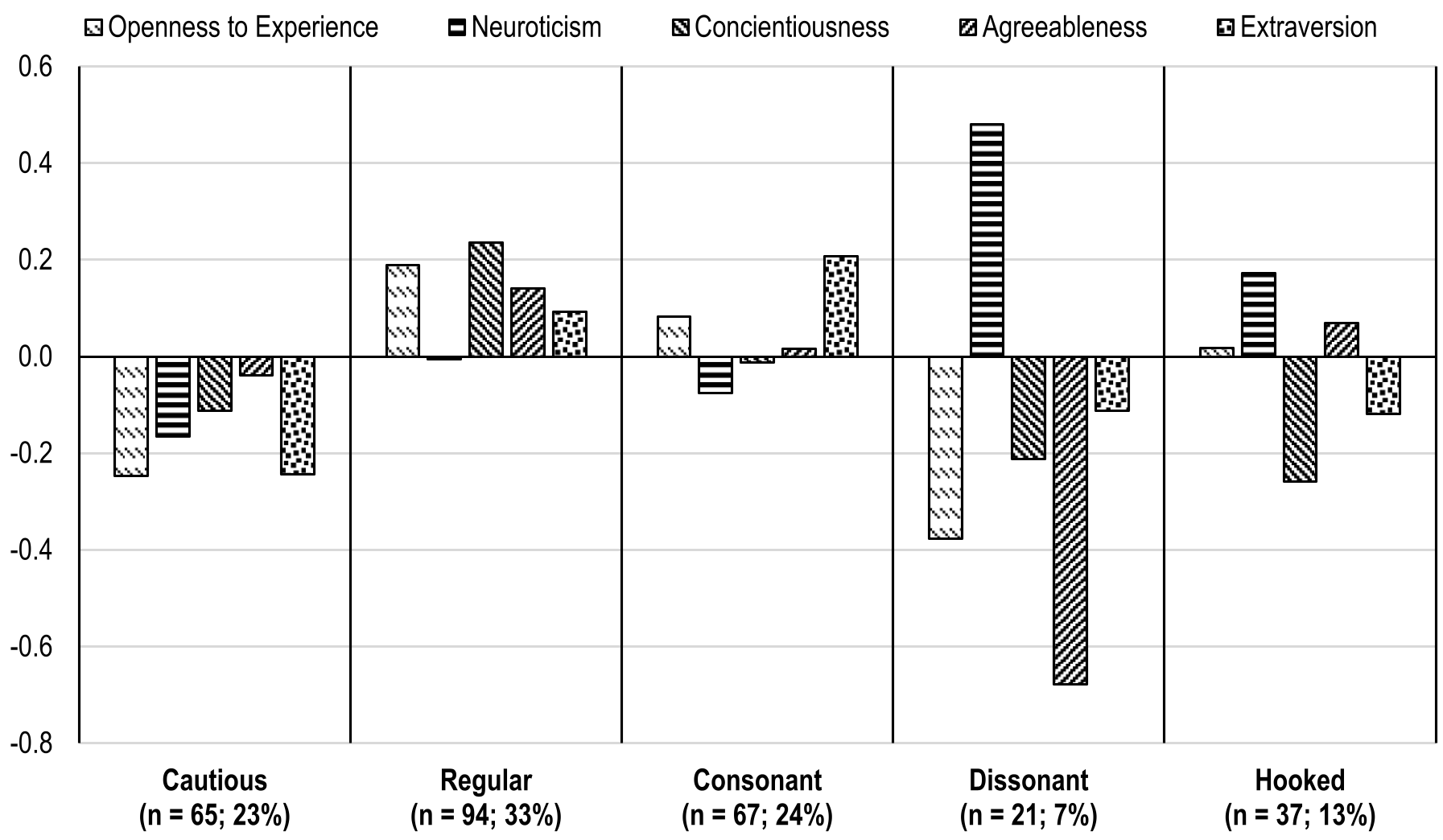
Through the lens of the Big Five Personality Traits, the study found that:
- Neuroticism is a magnet for the Dissonant and Hooked profiles.
- Low Conscientiousness is common across all high-addiction profiles (Consonant, Dissonant, and Hooked), suggesting a struggle with impulse regulation.
- Extraversion actually helps differentiate the "Hooked" (lower) from the "Consonant" (higher), perhaps suggesting that Consonant users view SNS as a successful social tool rather than a lonely habit.
Critical Analysis & Conclusion
Takeaway
This paper is a call to action for platform designers and health professionals to stop treating "addicted users" as a single block.
- For the "Consonant" user: They need awareness of the negative impacts.
- For the "Hooked" user: They don't need more guilt; they need empowerment. Strategies should focus on building small wins and increasing their "Self-Efficacy" to manage their digital lives.
Limitations & Future Work
The study relies on self-reported data from student populations. Future research should look at objective "screen time" data and expand into workplace environments where SNS addiction often manifests as "cyberloafing." Additionally, exploring the "Dark Triad" of personality might provide even more granular detail on the "Consonant" (high use, low guilt) profile.
In an era of "digital detox," this research provides the roadmap for who should detox and how to support those who feel they can't.