
Beyond the Pipeline: Dismantling the Invisible Barriers to Black Faculty Careers in Engineering
Addressing Negative Racial and Gendered Experiences That Discourage Academic Careers in Engineering
This study investigates the systemic barriers preventing Black PhD students and postdoctoral scholars from pursuing engineering faculty careers, introducing a race- and gender-conscious holistic mentoring framework. By analyzing qualitative data from 70 participants, the authors reveal how pervasive micro-aggressions and the "impostor phenomenon" obstruct the academic pipeline.
Executive Summary
TL;DR: This research tackles the "stagnant numbers" of Black engineering faculty by exposing the hidden psychological and social taxes—such as racial micro-aggressions and the impostor phenomenon—that drive brilliant scholars away from the professoriate. The authors propose a radical shift: moving from purely technical professional development to a race- and gender-conscious holistic mentoring model.
Background: While many institutions aim for diversity, current efforts often treat the problem as a "skills gap" rather than a "climate problem." This study positions the experience of the Black scholar at the center, evolving from mere recruitment strategies to a deep-seated reform of academic socialization.
The Problem: The High Cost of the "Invisible Tax"
The statistics are jarring. In a field that prides itself on objective innovation, 48% of US engineering schools lack even a single Black tenured or tenure-track faculty member. The research identifies that this isn't due to a lack of talent, but rather a series of "deterrents":
- Micro-aggressions: Subtle snubs and dismissive tones that leave students feeling simultaneously invisible (ignored in labs) and hypervisible (stereotyped).
- The Proven-Achievement Gap: Black scholars reported expending massive extra energy to "prove" themselves, as their past achievements were often viewed as "flukes" compared to their peers.
- The Impostor Phenomenon: For these scholars, feeling like a "fraud" isn't an internal defect; it’s a logical response to a "sink or swim" culture that privileges certain identities while isolating others.
Methodology: Listening to the Data
The authors conducted an extensive qualitative study involving 70 Black engineering PhD students and postdocs. They used a phenomenological approach—essentially trying to map the "reality" as perceived by the participants themselves across diverse institutions.
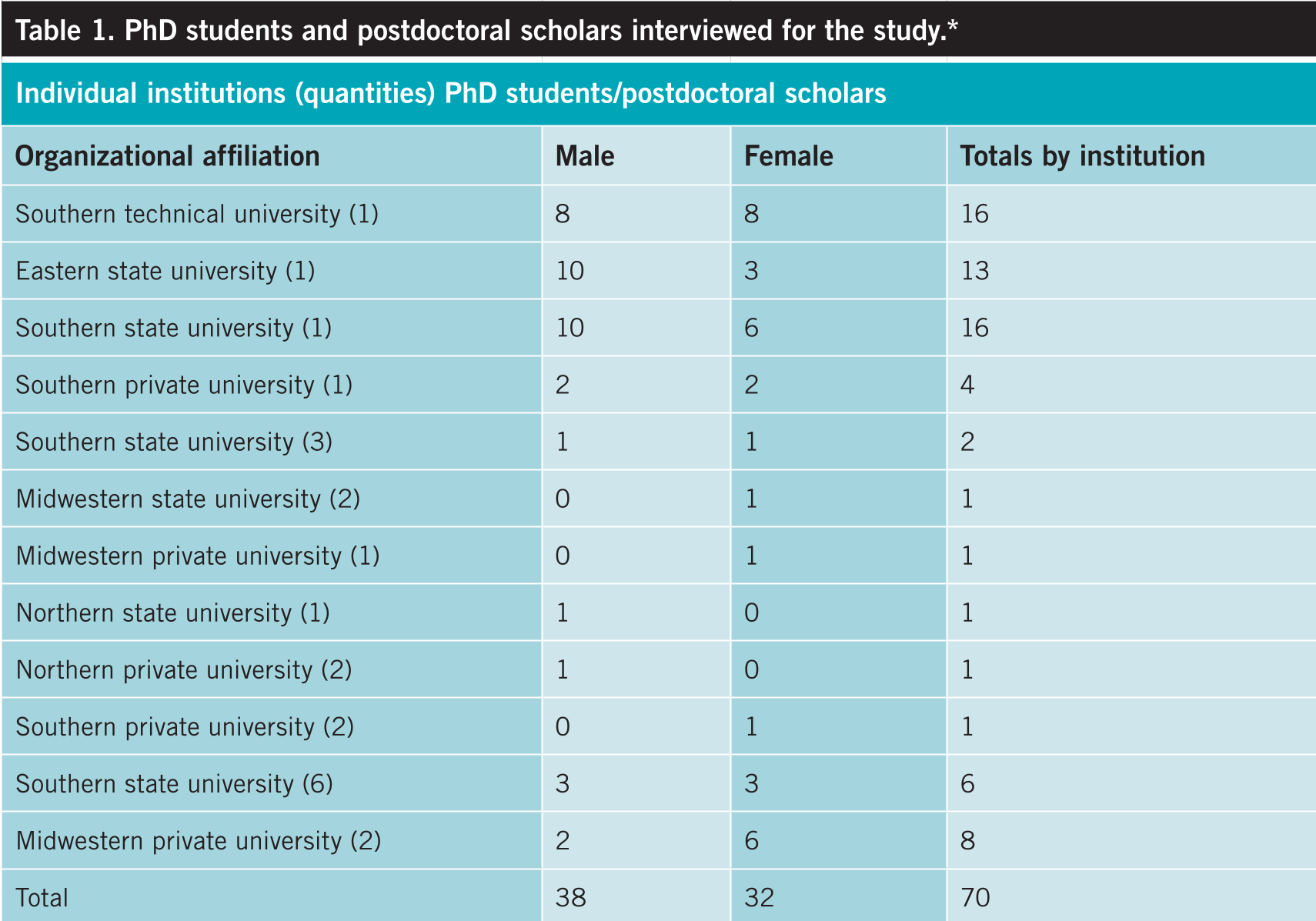
The study didn't just look at the scholars; it also audited existing Minority Faculty Development Workshops (MFDW). The findings were telling: while workshops covered "Tenure" and "Funding," they almost entirely ignored the intersectional race and gender issues that actually cause scholars to leave the field.
The Core Solution: Holistic Video-Based Mentoring
To bridge this gap, the authors didn't just write a report; they created a Race- and Gender-Conscious Mentoring Program. By bringing together experts in sociology, psychology, and education, they developed a curriculum that addresses:
- John Henryism: The physical and mental health cost of high-effort coping with environmental racism.
- Negotiation as Resistance: Teaching scholars how to negotiate for what they deserve in potentially hostile environments.
- Resilience Narratives: Using video presentations from successful Black faculty to provide the "counter-narratives" necessary to combat isolation.
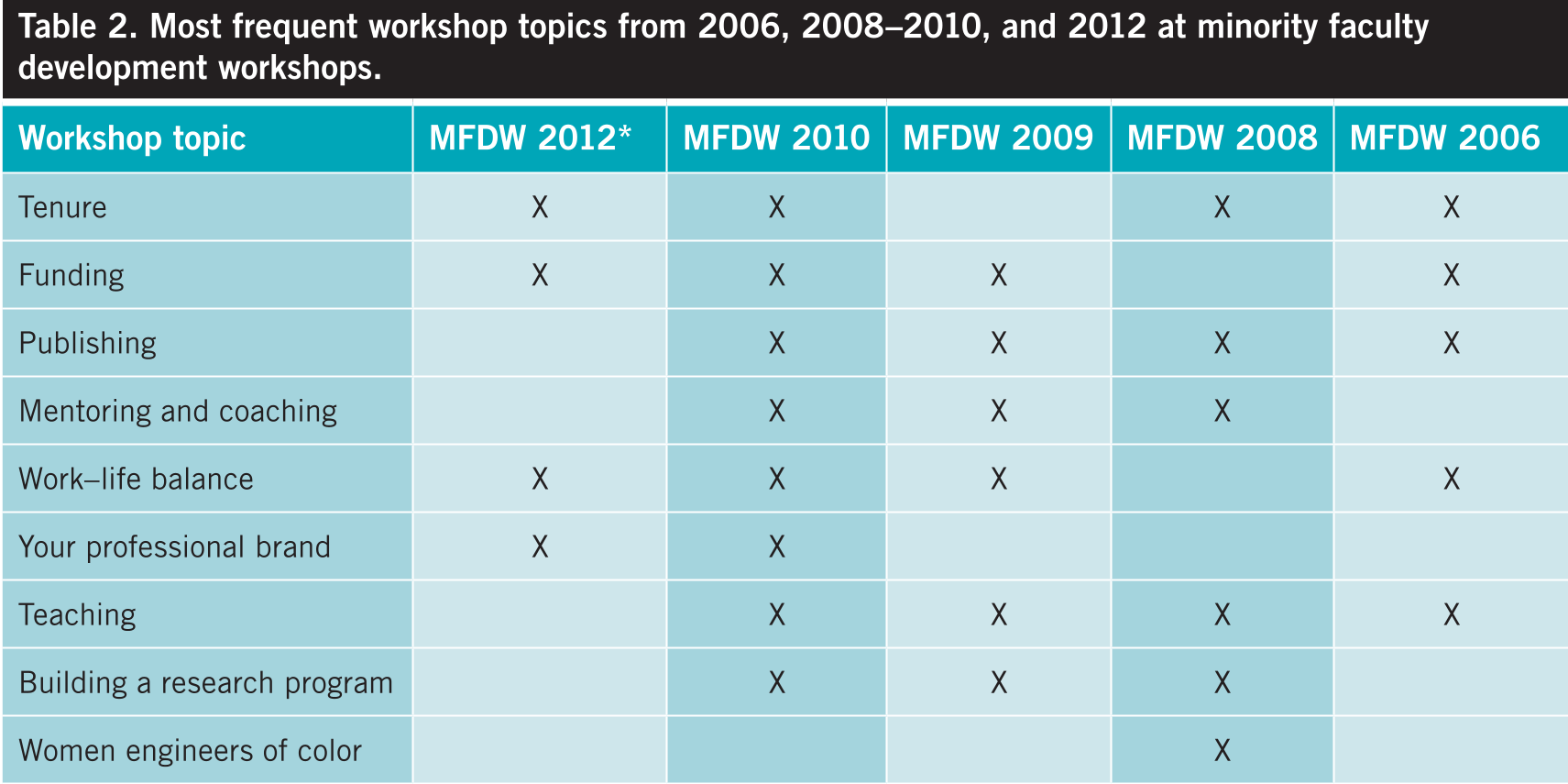
As seen above, traditional workshops (represented by 'X') frequently missed the critical "Women engineers of color" and "Identity-based" tracks that the new curriculum prioritizes.
Critical Insights & Future Outlook
Takeaway: The "Leaky Pipeline" isn't just about a lack of interest; it's about a structural "exhaustion" caused by toxic academic climates.
Limitations: While the study provides a robust framework for mentoring, it acknowledges that mentoring alone cannot fix a fundamentally biased institution. The responsibility must eventually shift from the mentee (learning to cope) to the institution (learning to provide a non-hostile environment).
Future Work: The success of the "BlackEngineeringPhD.org" portal suggests that digital, scalable mentoring can create a "virtual community of practice," potentially breaking the isolation of Black scholars in predominantly White institutions (PWIs).
By addressing the racialized and gendered "bottlenecks" of academia, this work serves as a blueprint for any technical field looking to move beyond performative diversity toward true structural inclusion.