
Adieu Features? The Transition to End-to-End Speech Emotion Recognition
Adieu features? End-to-end speech emotion recognition using a deep convolutional recurrent network
This paper introduces an end-to-end Speech Emotion Recognition (SER) framework that bypasses traditional hand-engineered acoustic features. By combining Deep Convolutional Neural Networks (CNNs) with Bidirectional Long Short-Term Memory (BLSTM) networks, the model learns affective representations directly from raw audio waveforms, achieving state-of-the-art results on the RECOLA database.
TL;DR
For decades, Speech Emotion Recognition (SER) has been tethered to hand-engineered features like MFCCs. This paper breaks that dependency by proposing a Deep Convolutional Recurrent Network that learns directly from the raw audio waveform. By replacing the feature extractor with a CNN and the classifier with an LSTM, and optimizing directly for the Concordance Correlation Coefficient (CCC), the authors achieved a massive leap in predicting spontaneous emotions.
Context & Positioning
In the academic coordinate system, this paper represents a pivotal shift from feature engineering to representation learning within the paralinguistics community. While computer vision and ASR had already begun moving towards end-to-end systems by 2016, SER remained dominated by standardized feature sets (ComParE, eGeMAPS). This work is one of the first to prove that raw audio contains patterns for emotion that "man-made" descriptors miss.
The Pain Point: The Gap Between Features and Emotion
Traditional SER pipelines are fragmented:
- Fixed Descriptors: Experts decide which acoustic properties (e.g., pitch, energy) are important.
- Objective Mismatch: Models are often trained using Mean Squared Error (MSE), but the industry standard for success is the Concordance Correlation Coefficient (CCC), which measures the linear correlation and the shift/scale bias simultaneously.
The authors argue that by using raw signals, the network can discover "hidden" filters better suited for capturing spontaneous emotional volatility than the rigid Mel-filters.
Methodology: Engineering the "Ear" of the Model
The architecture is a sophisticated bridge between spatial signal processing and temporal sequence modeling.
1. Two-Stage Convolutional Feature Extraction
Instead of a single layer, the model uses a hierarchical approach:
- Low-Level (Fine-scale): A 5ms window (at 16kHz) extracts high-frequency spectral information.
- High-Level (Long-term): A 500ms window captures the "roughness" and envelope characteristics of speech that correlate with emotional arousal.
2. Temporal Modeling with BLSTM
The extracted features are fed into Bidirectional LSTM layers. This allows the model to look at both the past and future context of a 6-second audio clip to predict the emotion at a specific 40ms frame.
3. The CCC Loss Function
The authors redefine the cost function . This direct optimization ensures the model learns to maximize the agreement between (prediction) and (gold standard) regarding both their mean and variance.
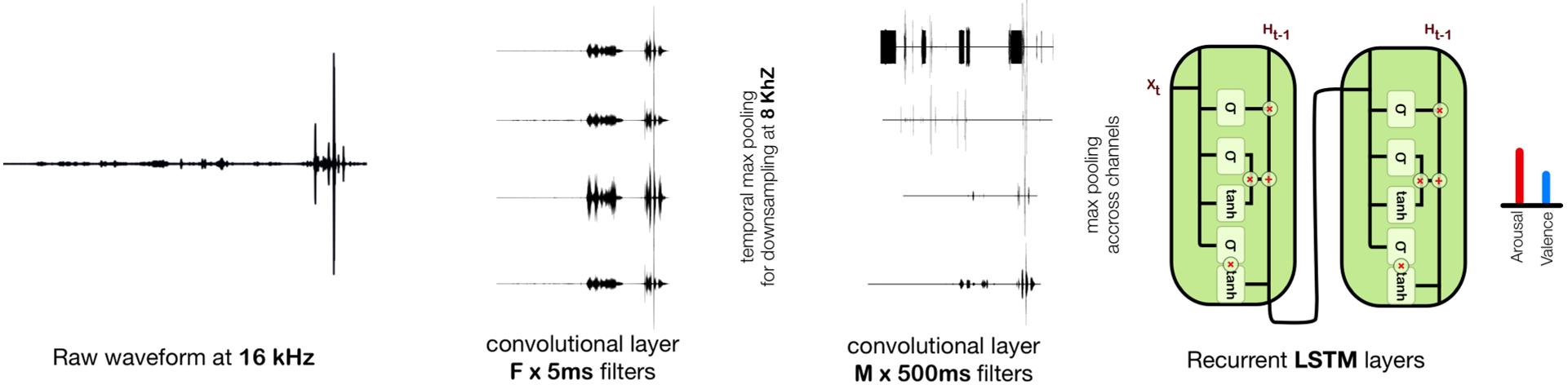 Figure 1: The proposed end-to-end topology replacing traditional hand-engineered features.
Experiments & Results: Crushing the Baselines
The model was tested on the RECOLA database, focusing on Arousal (intensity) and Valence (positivity/negativity).
- Arousal Breakthrough: The end-to-end model reached a CCC of 0.686, nearly doubling the performance of the ComParE + SVR baseline (0.366).
- Valence Gains: While Valence is notoriously difficult to extract from audio alone, the model still outperformed eGeMAPS features (0.261 vs 0.192).
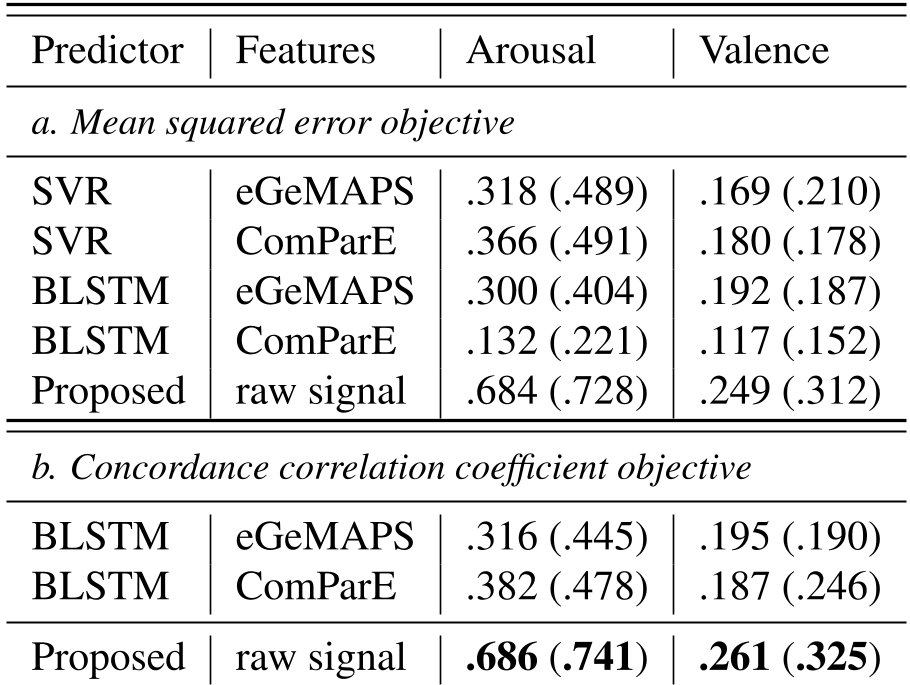 Table 1: Comparison showing the superiority of raw signal processing over designed features.
Deep Insight: What is the Network Actually "Hearing"?
One of the most striking parts of this research is the post-hoc analysis of LSTM gate activations. The authors found that specific cells in the recurrent layers were highly correlated with Loudness and Fundamental Frequency (F0)—features that paralinguists have used for years. This suggests the network "rediscovered" these acoustic principles from scratch because they are inherently useful for the task.
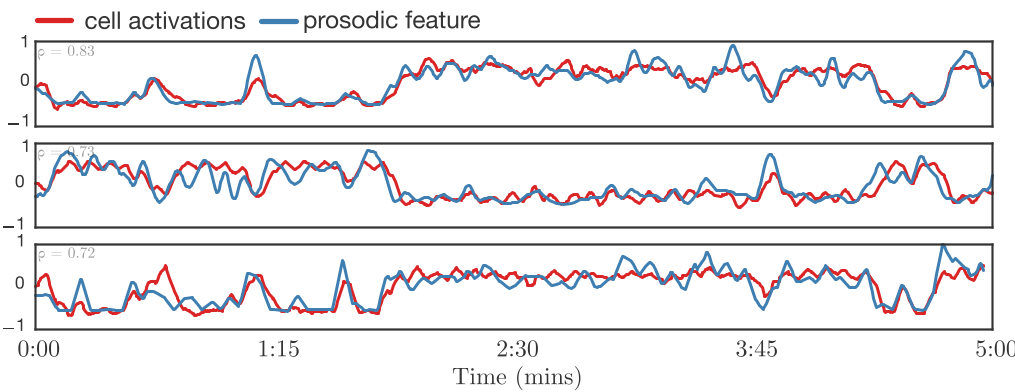 Figure 2: Recurrent cells show high correlation (up to ) with known prosodic features like RMS energy.
Critical Perspective & Conclusion
This paper was a "death knell" for the total dominance of hand-crafted features in SER.
- Takeaway: End-to-end learning is not just about convenience; it is about performance. By allowing the loss function to guide the filter weights, the model creates a task-specific "digital ear."
- Limitations: The model has ~1.5M parameters, requiring heavy regularization (Dropout) to prevent overfitting on the relatively small RECOLA dataset (46 speakers).
- Future Impact: This work paved the way for modern Transformer-based speech models (like Wav2Vec) that now dominate the field by training on raw waveforms at an even larger scale.