
From Public Vlogs to Digital Fortresses: How Teens Reclaimed Privacy Between 2006 and 2009
10105_Changes in adolescent online social networking behaviors from 2006 to 2009.
This longitudinal study examines changes in adolescent information disclosure on MySpace.com between 2006 and 2009. Utilizing a quantitative content analysis of thousands of profiles, the researchers identify a significant shift toward increased privacy and digital discretion among teenagers as the platform's popularity waned.
TL;DR
In the mid-2000s, the internet was often compared to the "Wild West," with teenagers posting deep personal details on MySpace for the world to see. This seminal study by Patchin and Hinduja reveals a major turning point: between 2006 and 2009, adolescents didn't just get luckier—they got smarter. By 2009, the percentage of teens hiding their profiles behind privacy walls skyrocketed from 39% to 85%, marking the end of the era of radical online transparency.
The Motivation: A Generation at Risk
The early days of MySpace were characterized by a naive openness. However, that openness came with a cost. By 2007, news headlines were filled with "MySpace predators," cyberbullying, and stories of college applicants losing spots due to party photos.
The researchers’ intuition was that as the "real-world" consequences of digital footprints became clearer, and as schools/parents began active education campaigns, teens would develop a more sophisticated sense of Information Reconnaissance. They wanted to prove that adolescents were capable of exercising "vigilance, discretion, and responsibility" rather than just being passive victims of technology.
Methodology: Digging Through the Digital Archives
To capture this shift, the researchers used a rigorous random sampling method based on MySpace's unique identification numbers.
- 2006 Baseline: 9,282 profiles reviewed.
- 2009 Follow-up: 8,669 profiles reviewed.
- Verification: Assistants checked for "at-risk" indicators: swimsuits, swear words, drug references, and PII (Personally Identifiable Information).
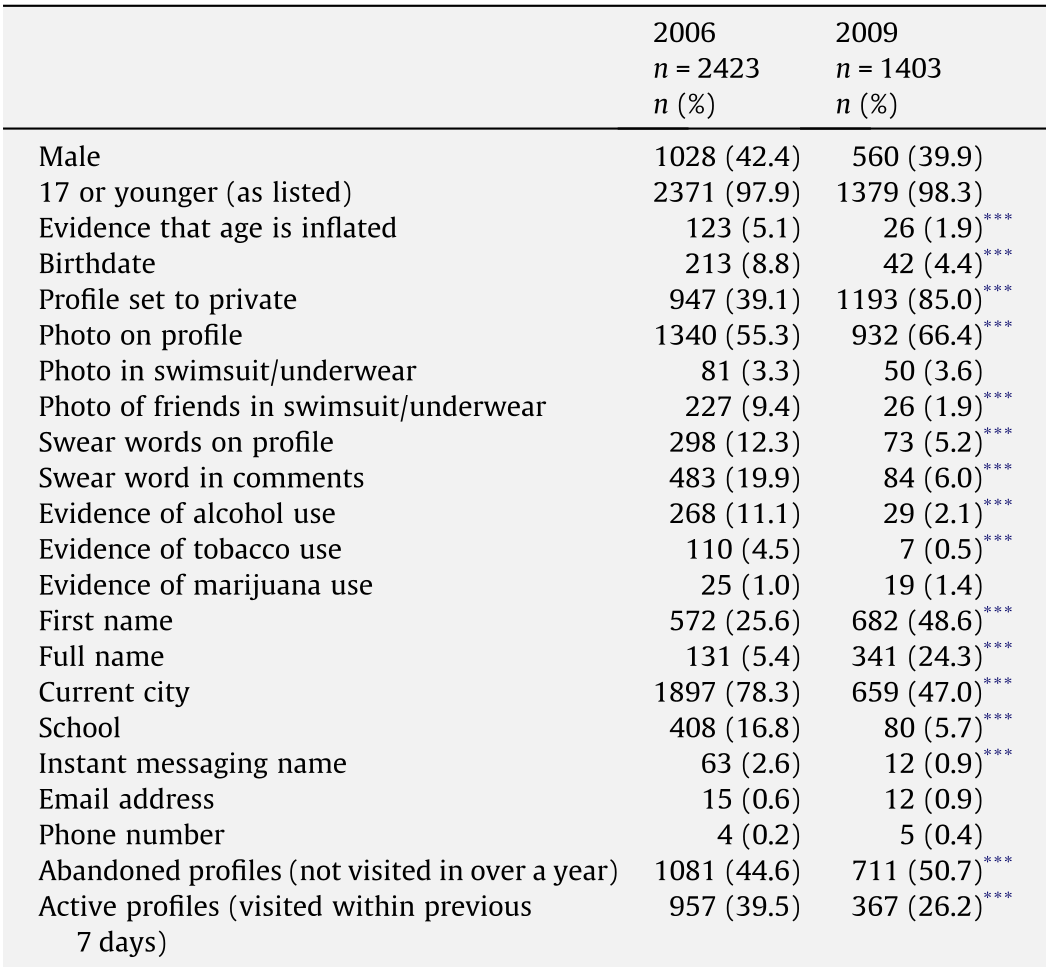 Table 1: The shift in visible content across three years reveals a sharp decline in risky disclosures.
Key Findings: The Death of the "Public" Profile
The data suggests two simultaneous trends: Abandonment and Restriction.
1. The Great Migration
By 2009, MySpace was becoming a "ghost town." The study found that 44% of profiles were deleted or invalid, and over half of the users hadn't logged in for a year. Teens were moving to Facebook, citing better control over their audience: "I'm barely on myspace... Get me on Facebook."
2. The Rise of the Private Setting
For those who stayed, "locking down" became the norm.
- Privacy Settings: 85.0% of teens set their profiles to "Private" in 2009, compared to only 39.1% in 2006.
- Reductions in Risk: Proactive censoring of swear words and references to alcohol/tobacco dropped significantly (p < .001).
 Table 2: General population trends showing the massive increase in private profiles and abandoned accounts.
Deep Insight: Is More Privacy Actually Safer?
The authors offer a critical perspective: while "private" profiles provide a buffer against the general public, they may create a false sense of security. Teens might still post risky content because they believe only "friends" see it, ignoring the fact that digital content can be easily screenshotted or shared by those same friends.
Furthermore, the increase in sharing full names (24.3% in 2009 vs 5.4% in 2006) suggests a shift in how social media is used: moving away from anonymous "screen names" toward a digital identity that reflects the real world—a precursor to the modern LinkedIn and Facebook era.
Conclusion & Future Outlook
This work highlights that Education > Regulation. Instead of punitive laws, the researchers argue that "cognitive restructuring" helped teens realize the stakes of their online presence.
Takeaway for Today: The transition seen here from 2006-2009 set the blueprint for the current social media landscape. Today's "Finstas" (fake/private Instagrams) and disappearing Snapchat messages are the direct evolutionary descendants of the privacy shift documented in this paper. However, as "stickiness" remains the goal for platforms, the tension between user privacy and corporate data mining continues to be the central conflict of the digital age.