
Hurwitz’s Bridge: Rediscovering the Physical Intuition of Galois Theory
This paper provides a historical and mathematical reconstruction of Adolf Hurwitz's lectures on Galois theory delivered between 1890 and 1909. It focuses on Hurwitz's unique proof of the Fundamental Theorem of Galois Theory using the classical language of substitutions, directly bridging the gap between Évariste Galois's original difficult memoir and modern algebraic exposition.
TL;DR
This article excavates and reconstructs a "lost" lecture series by the great mathematician Adolf Hurwitz (1890–1909). By analyzing his personal diaries and student notes, it reveals a remarkably elegant proof of the Fundamental Theorem of Galois Theory. Unlike modern abstract treatments, Hurwitz sticks to the classical Substitution Theory, providing a rare glimpse into how the pioneers actually visualized the internal symmetries of polynomial roots.
Background: The Gap in Mathematical History
Most modern students learn Galois Theory through the lens of Field Extensions () and Automorphisms. However, Évariste Galois himself worked with "substitutions"—the literal shuffling of roots. His original 1832 Mémoire was so cryptic that it took decades for the mathematical community to digest it. Adolf Hurwitz, a master of 19th-century analysis and algebra, acted as a vital translator, maintaining the "physical" intuition of the roots while introducing the rigor of what we now call Fields (Rationalitätsbereich).
The Core Insight: From Roots to Rational Functions
The central challenge was: How do we identify the group of an equation? Hurwitz follows Galois's "Lemma II," constructing a value which is a linear combination of the roots: If are chosen correctly, all permutations of the roots produce distinct values of .
The Methodology
Hurwitz’s "secret weapon" in his 1890 lectures was the use of calculus and rational reconstruction. He establishes that every root can be expressed as a rational function of this primitive element.
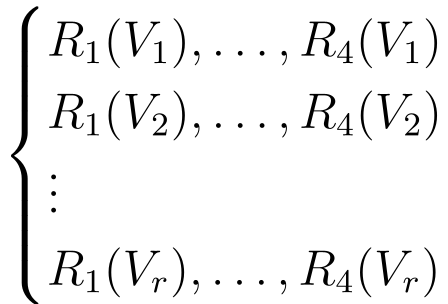
The beauty of Hurwitz's proof lies in how he connects the irreducibility of the polynomial (the minimal polynomial of ) to the structure of the Galois group. If and are roots of the same irreducible polynomial, there must be a substitution that carries one to the other, and this set of substitutions forms the group.
Experiments in Logic: Proving the Group Properties
Hurwitz breaks down the Fundamental Theorem into four manageable properties. The most striking is his proof of the Group Property (III). He demonstrates that if you take two substitutions and , their composition must result in another substitution within the same set, because they are all tied to the roots of the same irreducible polynomial .

By differentiating the identity , Hurwitz shows that: This allowed him to move from abstract group theory back to concrete algebraic manipulation, a feat that is often lost in modern textbook proofs.
Critical Insight & Conclusion
Adolf Hurwitz’s lectures are more than just a historical curiosity. In an era where mathematics is becoming increasingly abstract, Hurwitz reminds us that symmetry is about observation.
- Takeaway: The "Galois Group" is not just an abstract set of mappings; it is the set of all permutations that preserve the "hidden" rational relationships between roots.
- Limitation: While Hurwitz’s method is intuitive for equations of low degree (like the 4th degree examples in his notes), the notation becomes cumbersome for higher dimensions compared to modern notation.
- Future Impact: For educators, Hurwitz's approach offers a "middle path"—more rigorous than Galois’s original notes but more grounded than the sterile definitions of modern textbooks.
As Hurwitz told his students in 1909: "Galois is one of the greatest mathematical geniuses of all time... possessing at age 19 the theory that changed the character of algebraic equations forever." Through these rediscovered notes, we can finally see exactly how Hurwitz helped the world believe it.