
Beyond the Digital Divide: How Adult Learners Navigate the Social Media Landscape
Adult Learners and Their Use of Social Networking Sites
This study investigates the integration of Social Networking Sites (SNS) into adult learning experiences through a survey-based methodology. It identifies Facebook as the dominant platform for adult learners and explores how these students utilize SNS for both social connectivity and informal learning.
TL;DR
Is social media a bridge or a barrier for the returning student? This study dives into the habits of adult learners (34+), revealing that while they are surprisingly active on platforms like Facebook and Google+, they harbor significant reservations about bringing these tools into the classroom. The research finds a deep-seated desire to keep "study" and "life" in separate silos.
Background & Motivation
The demographic of higher education is shifting. Enrollment for students over 25 is outstripping that of their younger counterparts. However, Western academia often assumes a level of "digital nativism" that doesn't apply to the adult learner. The authors, Wang and Arfaa, sought to move beyond the stereotypes of the "technologically challenged" adult to see how these students actually use Social Networking Sites (SNS) and whether these tools can—or should—be used for formal education.
The "Facebook Dominance" in Adult Education
One of the most striking findings of the study is the absolute dominance of Facebook, even for tasks intended for other platforms. While sites like LinkedIn are marketed for professional networking, adult learners in this study were more likely to use Facebook or Google+ to understand the business environment or scout job prospects.
Key Methodology & Participants
The study surveyed 43 participants (predominantly female, average age 38) across nursing, business, and computer science majors.
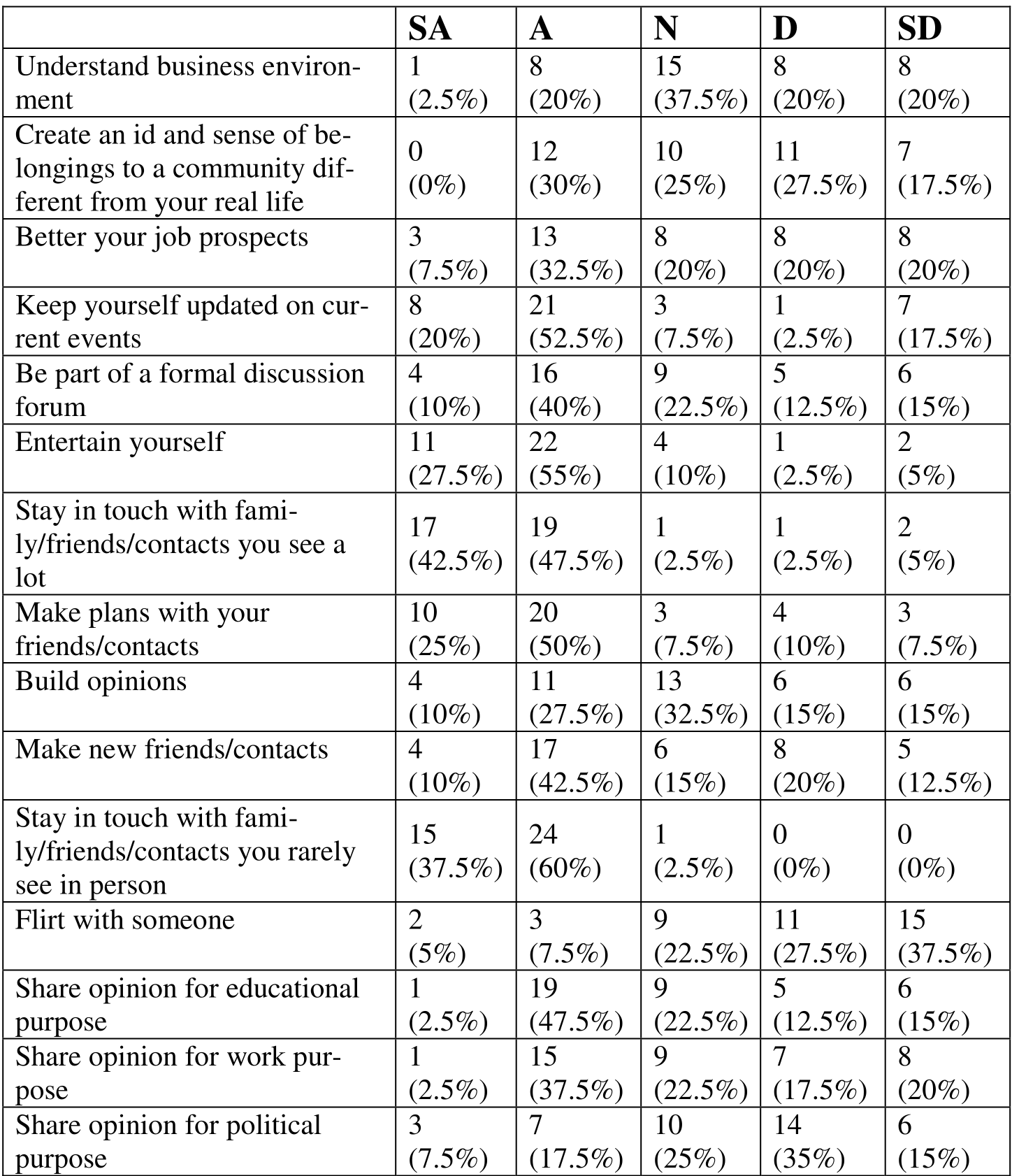 Table 1: Reasons for using social networking services, highlighting the drive for staying in touch and entertainment over educational purposes.
Methodology: The "Why" and "How"
The survey explored two types of learning:
- Informal Learning: 42.5% of respondents used SNS to post questions and solicit help. Interestingly, those who did so found it "fun" and "helpful," though they questioned the quality of responses.
- Formal Learning: This is where the friction lies. Despite their social activity, a majority of adult learners (over 51%) do not want to mix their personal social accounts with their university curriculum.
Critical Insight: The Privacy-Efficiency Paradox
The study uncovers a crucial tension: Adult learners value the efficiency of connection that SNS provides, but they are wary of the intrusion.
- The Barrier: Unlike traditional students who may have a blurred line between digital identity and reality, adult learners view SNS as a "waste of time" or a "personal space" that shouldn't be invaded by the stress of academic deadlines.
- The Technical Hurdles: The transition from "analog thinking" to "digital collaboration" remains a significant friction point.
Conclusion & Future Outlook
The study suggests that educators cannot simply "add a Facebook group" to a course and expect adult learners to thrive.
Takeaways for Future Learning Design:
- Community, not Crowd: Adult learners prefer controlled environments (like specific group pages or direct instructor updates) rather than broad social posting.
- Quality Control: If SNS are used for learning, instructors must teach students how to evaluate the credibility of the information they find there.
- Scaffolding: Lecturers must be prepared to provide technical support, as adult learners may not be as savvy with new UI/UX changes as their younger peers.
Ultimately, while the adult learner is increasingly "online," they are also "on guard," protecting the thin line between their educational aspirations and their personal lives.