
Beyond Static Portals: A Semantic Social Blueprint for eGovernment
Advanced mechanisms for supporting eGovernment services in the context of social networks. A semantic approach
This paper proposes a semantic-driven framework to integrate eGovernment services into social networks using an ontological approach. By combining the Elgg social engine with a Jena-based semantic back-office, the system enables personalized service recommendations and interoperable discovery of administrative services.
TL;DR
This research tackles the "engagement gap" in public services by embedding eGovernment functionality directly into social networks. By leveraging OWL ontologies and a Jena-based reasoning engine, the authors transform the citizen experience from manually searching for forms to receiving proactive, personalized service recommendations based on their social profile and peer interactions.
The Evolution of the Digital State
Public Administrations (PAs) have long chased the dream of "One-Stop Government." However, most implementations remain stuck at the transactional stage—functional but isolated. The authors argue that the final stage, Networked Government, requires eGov services to exist where citizens already spend their time: social networks.
The core challenge is two-fold:
- Interoperability: Different PAs use different data formats.
- Proactivity: How can a system know a citizen needs a specific permit before they ask for it?
The Semantic Integration Architecture
The proposed solution utilizes a hybrid tech stack to bridge the gap between social interaction and formal administrative logic.
1. The Knowledge Model (The "Brain")
Using Methontology, the researchers developed an OWL ontology that models the "Administrative Service" (AS).
- Entities: Citizens, PAs, Documents, and Regions.
- Logic: By defining properties like
generates(e.g., an AS generates a specific Document), the system can identify which services a citizen is missing based on their current profile.
2. The Technical Bridge
Since the social platform (Elgg) is PHP-based and the semantic powerhouse (Jena) is Java-based, the authors implemented a PHP/JavaBridge. This allows a social media "Widget" to trigger complex semantic queries in real-time.
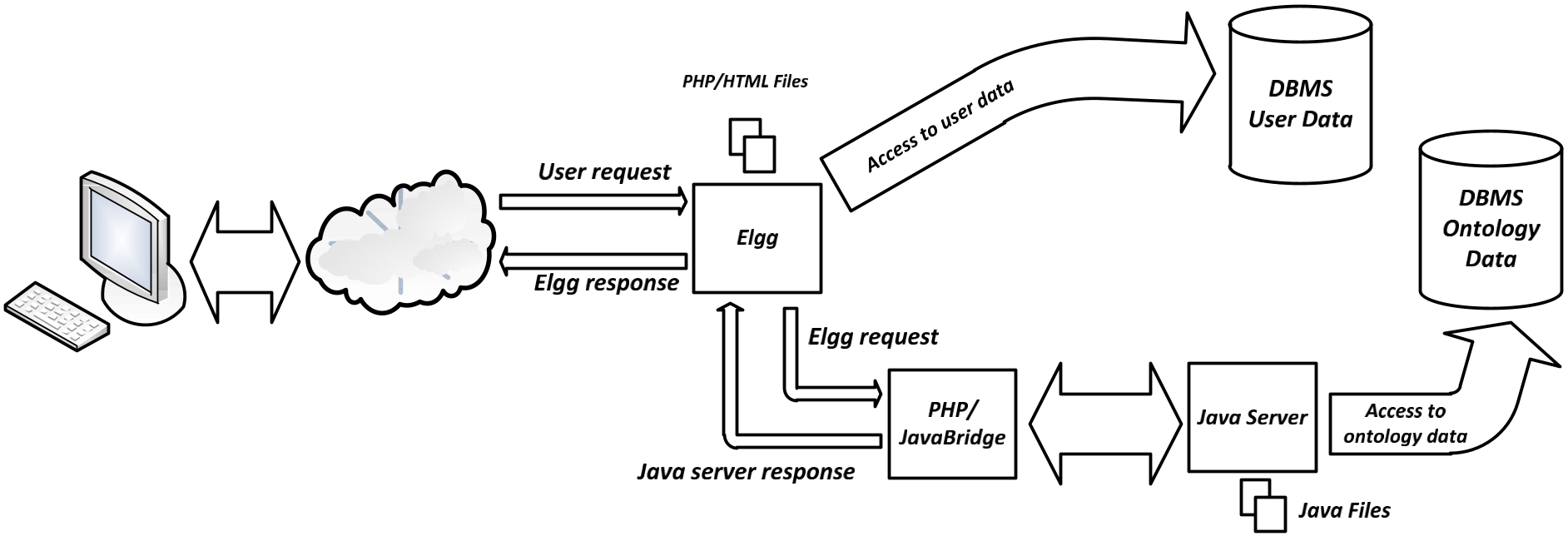 Figure 1: The multi-layered architecture connecting the Elgg social frontend to the Semantic back-office.
Methodology in Action: The Social Workflow
The system follows a specific sequence to deliver personalized value:
- Context Generation: As the user logs in, Elgg captures session variables (language, groups, profile).
- Semantic Reasoning: The Jena engine explores the ontology to find services that match the user's missing documents or interests.
- Social Discovery: The system analyzes "friend" behavior. If a specific threshold of friends has utilized a service, the widget proactively recommends it to the user.
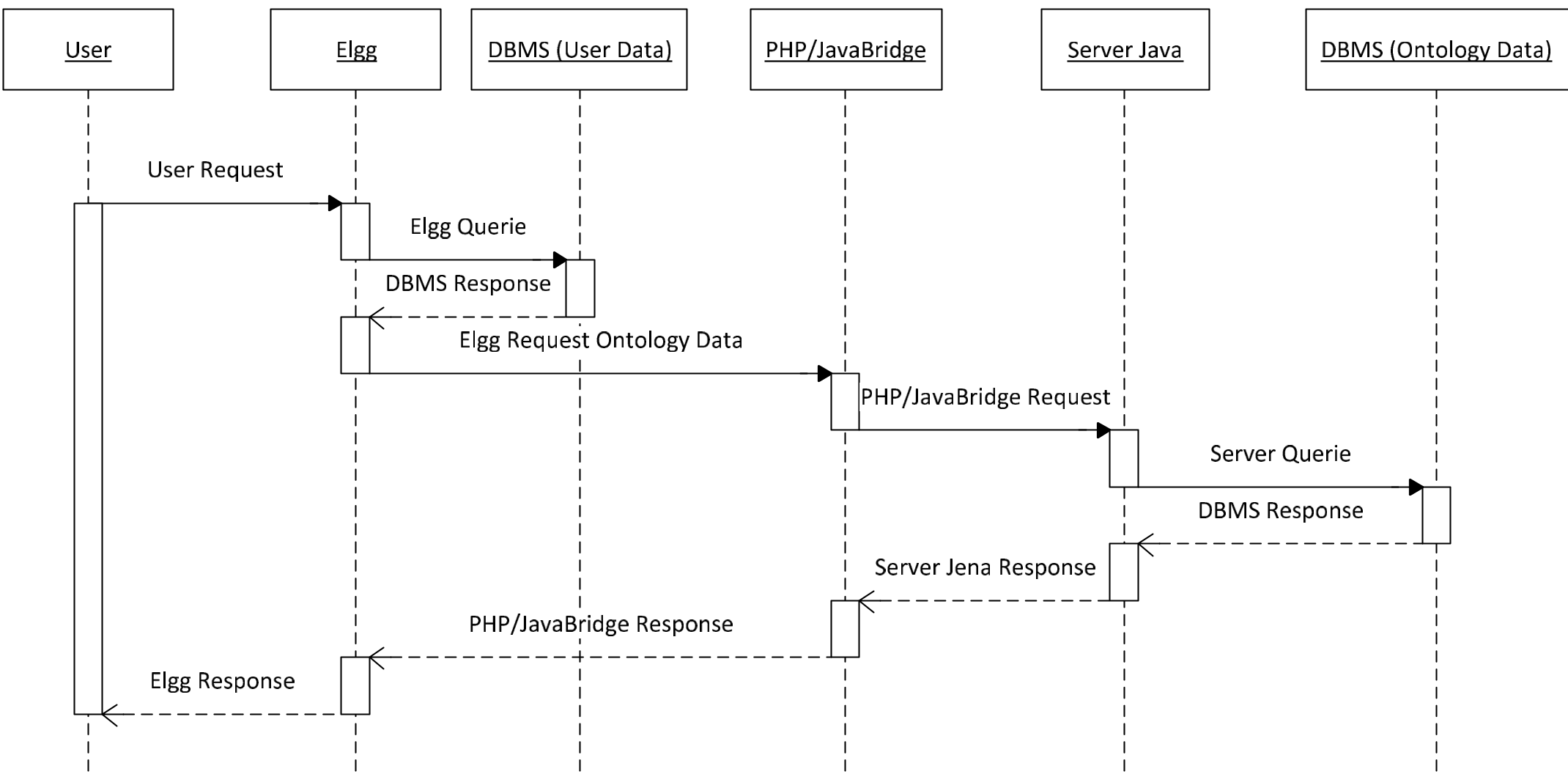 Figure 2: Sequence diagram illustrating the invocation of semantic logic from the social platform.
Key Features & Professional Insights
- Service Federation: The ontology allows for a shared pool of services. A citizen doesn't need to know which PA provides a service; the semantic layer resolves the responsibility.
- Social Tagging: The authors highlight "lightweight semantics" (like social tagging) as a way to improve discovery without the high overhead of formal ontological engineering.
- Scalability Concerns: The paper notes that semantic reasoning is computationally expensive. They suggest encapsulating time-demanding functions in a persistent
actionsclass to optimize servlet performance.
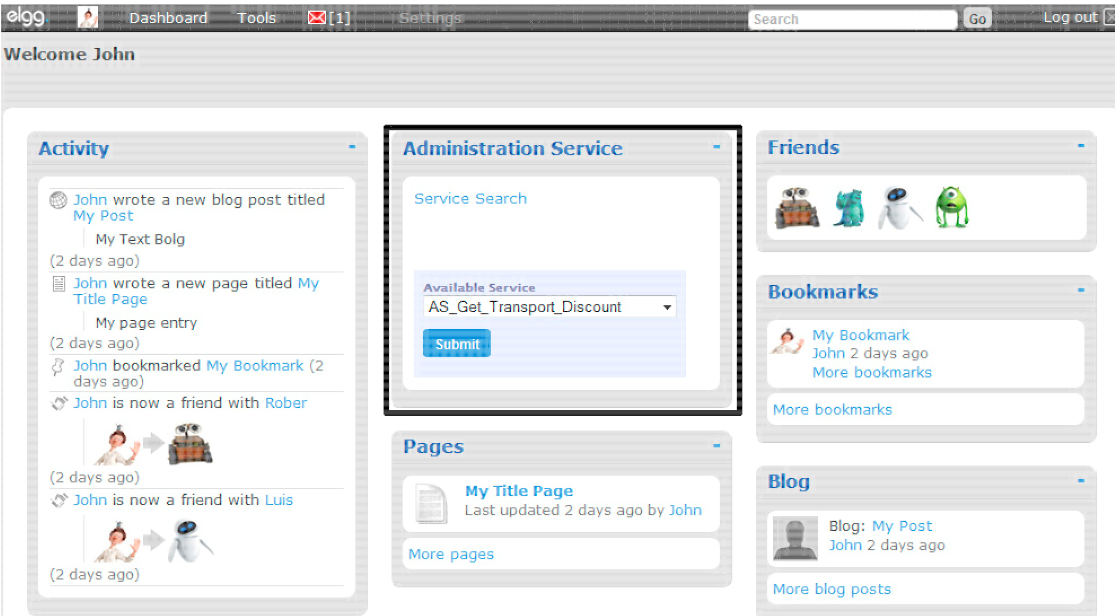 Figure 3: A glimpse of the user-facing widget embedded in the social network environment.
Critical Analysis & Future Outlook
The primary strength of this work is its Interoperability Framework. By adhering to CEN and Dublin Core metadata standards, it creates a reusable blueprint for cross-border eGovernment.
Limitations: The reliance on manual ontological mapping for every administrative document is a significant bottleneck.
Future Direction: The authors point towards RDFa and lightweight semantics. In an era where AI and Knowledge Graphs are dominant, this research provides the necessary logical foundation for moving from "Search-based Gov" to "AI-driven Proactive Gov."
Takeaway
The future of eGovernment isn't a better website; it's a semantic layer that follows the citizen, using social context to simplify the complexities of the state.