
AMPLE: Redefining Educational Social Networks through Multimodal Synergy
An Advanced Multimodal Platform for Educational Social Networks
The paper introduces AMPLE (Advanced Multimodal Platform for e-LEarning), a distributed client-server platform that integrates Web 2.0 social networking with multimodal interaction. It enables students and teachers to retrieve, edit, and share multimedia educational content using combinations of speech, gesture, and traditional inputs, achieving high user satisfaction in academic community trials.
TL;DR
The AMPLE (Advanced Multimodal Platform for e-LEarning) framework bridges the gap between Web 2.0 social technologies and natural human-computer interaction. By allowing students and teachers to interact with a centralized learning repository through speech, gestures, and sketches, AMPLE transforms static e-learning into a dynamic, collaborative, and highly accessible social ecosystem.
The Learning Barrier: Why Traditional GUIs Fail
Most current e-learning environments are "text-centric." While Social Networking (Web 2.0) has added collaborative elements like blogs and wikis, the interface remains a bottleneck. Users are often restricted to mouse-and-keyboard interactions, which can be unintuitive or inaccessible.
Prior works like MultiLezi or AmbiLearn attempted to solve this, but they faced a critical trade-off: they either lacked collaborative multi-user support or missed authoring tools for teachers. AMPLE was designed to eliminate this "accessibility vs. functionality" compromise.
Methodology: The "Brain" Behind the Multimodal Interaction
The core philosophy of AMPLE is its Distributed Architecture. To handle the heavy lifting of interpreting human behavior without lagging on consumer devices, AMPLE splits the workload:
- Client Side: Handles low-power tasks like feature extraction (capturing the coordinates of a gesture or the waveform of a voice).
- Server Side: Executes the "Recognition" and "Semantic Interpretation."
The Multimodal Interaction Management
This is the engine of the platform. It doesn't just process speech or touch in isolation; it uses a Multimodal Interpreter governed by a production-rule grammar. This allows for deictic references—for example, a student pointing at a complex diagram on a tablet and saying, "Show me the video tutorial for this," and the system correctly identifying "this" based on the spatial gesture coordinate and the vocal command.
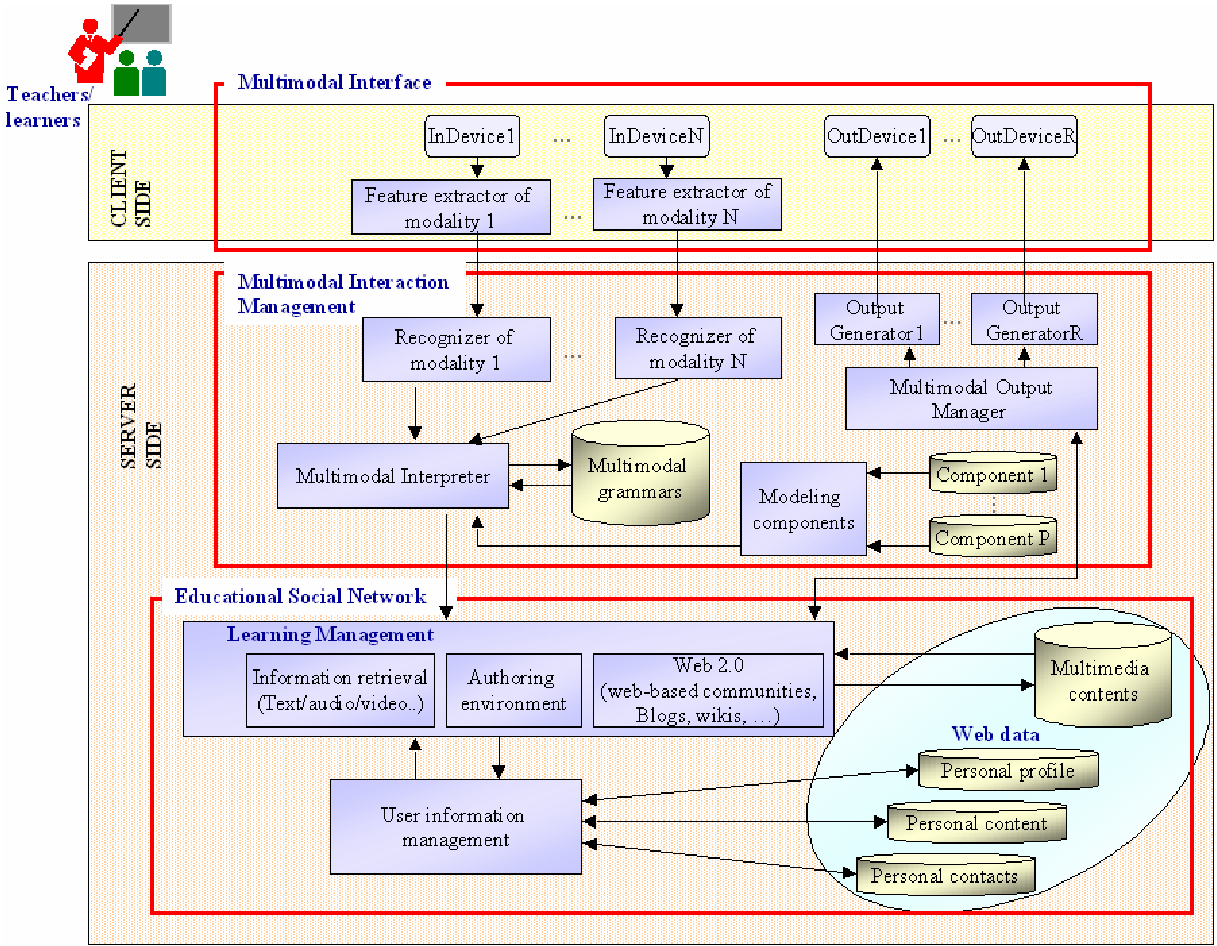 Figure 1: The distributed architecture connecting the multimodal interface with the Educational Social Network.
Visualizing Knowledge: The 3D Landscape Metaphor
One of the most striking features of AMPLE is how it presents data. Instead of lists, it uses a Landscape Metaphor to visualize the richness of learning materials.
- Ovoid Solids: Represent classes of media (Video, Text, Audio).
- Height/Isolines: Represent the "level of media access." The more ways a piece of content can be accessed, the higher it sits on the 3D peak.
- Temporal Evolution: Users can ask the system to "show temporal evolution," causing the landscape to shift and reveal how content has transitioned—for example, from a simple text document into an interactive video series over time.
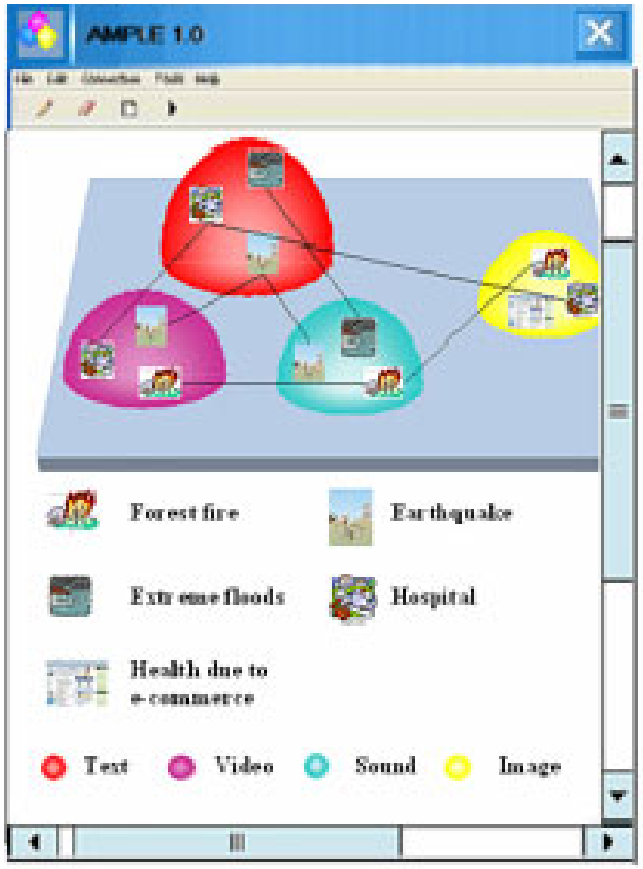 Figure 2: (a) Landscape visualization of media types; (b) Temporal evolution mapping.
Experimental Insights
The researchers benchmarked AMPLE against three major precursors: MultiLezi, AmbiLearn, and LEMMA.
| Feature | MultiLezi | AmbiLearn | LEMMA | AMPLE |
|---|---|---|---|---|
| Collaborative Tasks | No | Yes | No | Yes |
| Authoring Environment | No | No | Yes | Yes |
| Multimodal Personalization | Yes | No | Yes | Yes |
In a real-world trial with 77 participants, the system proved that multimodal interaction isn't just a "gimmick"—it significantly lowered the barrier for non-technical users and increased engagement across a wide age range (25–65).
Conclusion & Future Horizon
AMPLE successfully demonstrates that multimodality is the key to unlocking the full potential of Social e-Learning. By moving away from rigid menus and toward natural "speech + gesture" interactions, the platform creates a more inclusive and intuitive digital classroom.
The next frontier for this research is a direct usability comparison with massive open online course (MOOC) platforms to see if these multimodal benefits can scale to thousands of simultaneous users.