The Architecture of Collective Reason: Building a Societal-Scale Problem-Solving Engine
Advances towards a general-purpose societal-scale human-collective problem-solving engine
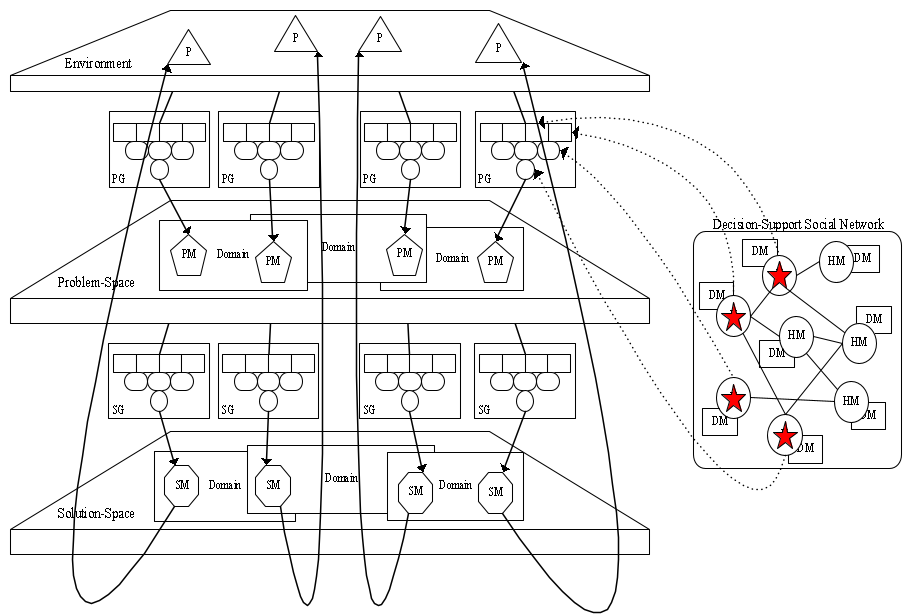
This paper introduces a conceptual framework for a "societal-scale human-collective problem-solving engine." It proposes a novel system architecture that integrates collective workspace modeling with a social-network-based representative decision-making mechanism to harness large-group intelligence.
TL;DR
Marko A. Rodriguez proposes a blueprint for a "human-collective problem-solving engine" designed to scale beyond small groups to entire societies. By merging a shared digital workspace with a social-network-based power delegation system, the framework allows a massive, fluctuating population to solve complex problems and make decisions as if the entire group were participating, even when most are inactive.
Background: The Scalability Crisis in Democracy
As societies grow, the "information-processing infrastructure" of traditional representative structures begins to fail. We move from direct participation to rigid representation, often losing the nuance of collective intelligence. The core challenge is fluctuating participation: if only 5% of a group votes, how do we ensure that their decision reflects the "collective perspective" of the 100%?
The Collective Workspace: Beyond Simple Voting
Rodriguez argues that problem-solving is a transformation process. It begins in the Objective Environment, moves through shared Problem/Solution Spaces, and results in an implementation that brings the collective back to equilibrium.
Unlike traditional systems that focus on just "picking an option," this engine emphasizes:
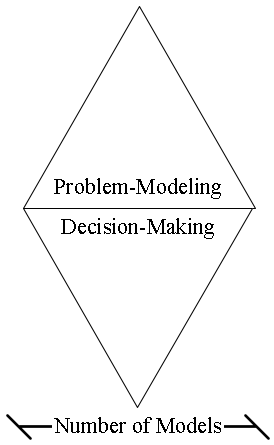
- Problem-Modeling: Collaboratively defining the constraints of a challenge.
- Solution-Generation: Parallel creation of models where "a good representation can make a hard problem trivial."
Methodology: Holographic Representation via Social Networks
The "secret sauce" of this paper is the Representative Social-Network. To solve the loss of perspective from low participation, the author proposes a graph-based delegation of power:
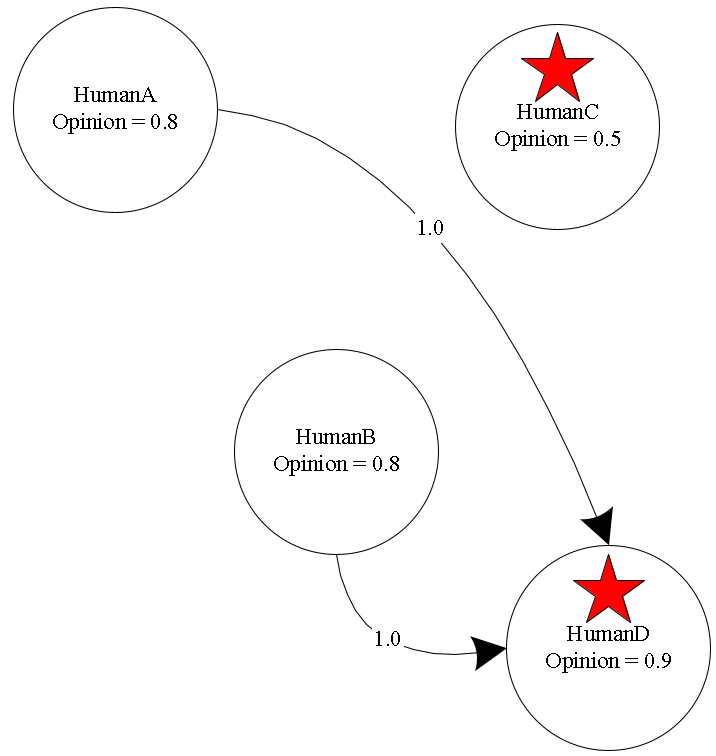
- Connectivity (K): Each individual chooses peers they trust to represent their viewpoint.
- Power Dissemination: If a person is inactive, their "vote strength" flows through the network until it reaches an active participant.
- Expertise Labeling: Peers aren't just chosen for general opinion but for specific domain expertise, allowing for a "bottom-up peer-reflective model" of knowledge.
Experimental Insights: The Power of Three
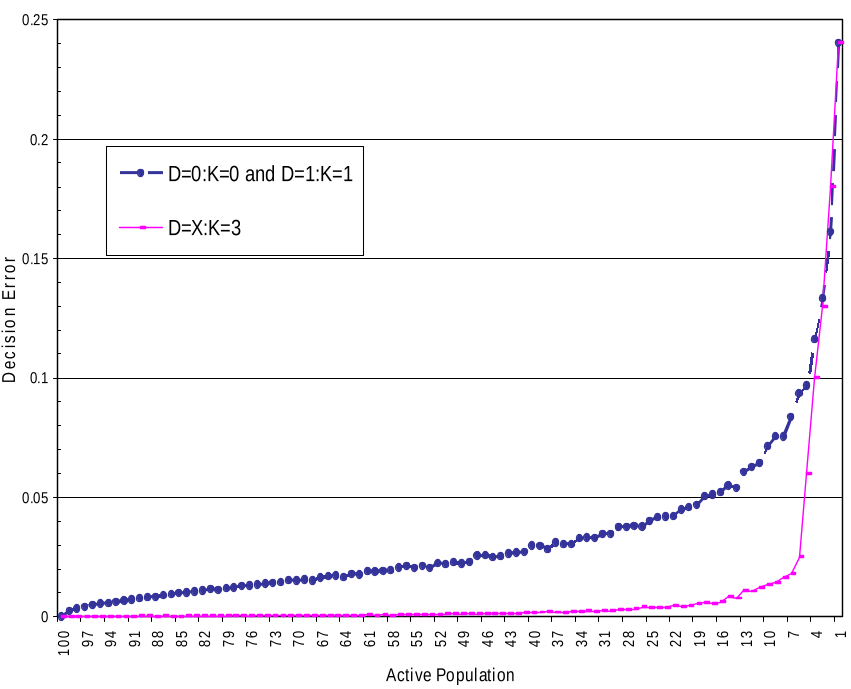
Through simulations of 1,000 nodes with varying opinions, Rodriguez tested different network topologies to see which best minimized the Decision Error (the gap between a partial-participation outcome and a full-participation outcome).
- K=1 (Single Representative): Prone to error as power flow is brittle.
- K=3 (Variable Depth): This emerged as the "sweet spot." A 3-degree network effectively "dampens" the error caused by non-participation, allowing the active subset to act as a holographic model of the whole population.
Critical Analysis & Conclusion
This paper is a seminal look at what we now call Liquid Democracy. By formalizing the flow of power through social graphs, Rodriguez provides a mathematical basis for digital governance.
Limitations: The current model assumes opinions are static and that individuals can accurately identify peers who share their views. In a real-world social network, "echo chambers" or strategic manipulation of delegation could introduce biases not captured in these random-opinion simulations.
Future Outlook: The unification of the Social-Network and the Collective-Workspace is the precursor to modern decentralized governance (DAOs) and collaborative AI. The next step in this research would be integrating natural language processing to automatically categorize domain expertise, making the "expertise-reflective" model truly autonomous.