
Decoding the Human Mind: Optimal Feature Selection Meets Deep Ensembles in EEG Emotion Recognition
SPECIAL SECTION ON ADVANCES OF MULTISENSORY SERVICES AND TECHNOLOGIES FOR HEALTHCARE IN SMART CITIES
This paper introduces a robust EEG-based emotion recognition framework using Hjorth parameters for time-frequency feature extraction combined with a balanced one-way ANOVA for optimal feature selection. By integrating deep learning and ensemble methods like Voting and Bagging, the system achieves a state-of-the-art recognition rate of 76.6% across four distinct emotional states (happy, calm, sad, scared).
TL;DR
Researchers have developed a high-accuracy system for identifying human emotions (Happy, Calm, Sad, Scared) by analyzing brainwaves. By combining Hjorth parameters for rapid signal description, ANOVA for statistical feature pruning, and a Voting Ensemble of deep learning models, the team achieved a 76.6% accuracy rate, significantly outperforming traditional spectral power methods.
The Challenge: Why Brainwaves are Hard to Read
Detecting emotions via Electroencephalography (EEG) is notoriously difficult. Unlike structured data, EEG signals are:
- Non-stationary: They change rapidly over time.
- Subject-dependent: "Happy" brainwaves in one person might look like "Calm" in another.
- High-dimensional: With 14+ sensors recording 128 samples per second across multiple frequency bands, the "noise" often drowns out the "signal."
Most prior works relied on Fast Fourier Transforms (FFT), which fail to capture the temporal shifts in non-stationary signals, or used too many features, leading to model overfitting.
Methodology: The "Less is More" Approach
The authors' strategy focuses on extracting high-quality descriptors rather than massive amounts of raw data.
1. Feature Extraction: Hjorth Parameters
Instead of complex transforms, they used Hjorth Parameters, which describe the signal in the time domain with physical significance:
- Activity: Mean power of the signal.
- Mobility: The mean frequency.
- Complexity: The bandwidth/change in frequency.
2. The Filter: Balanced One-Way ANOVA
Not every brain region reacts to every emotion. To find the "Optimal Features" (OF), the authors applied a statistical filter (ANOVA). Only features with a p-value < 0.05 (indicating a significant difference across emotional states) were kept.
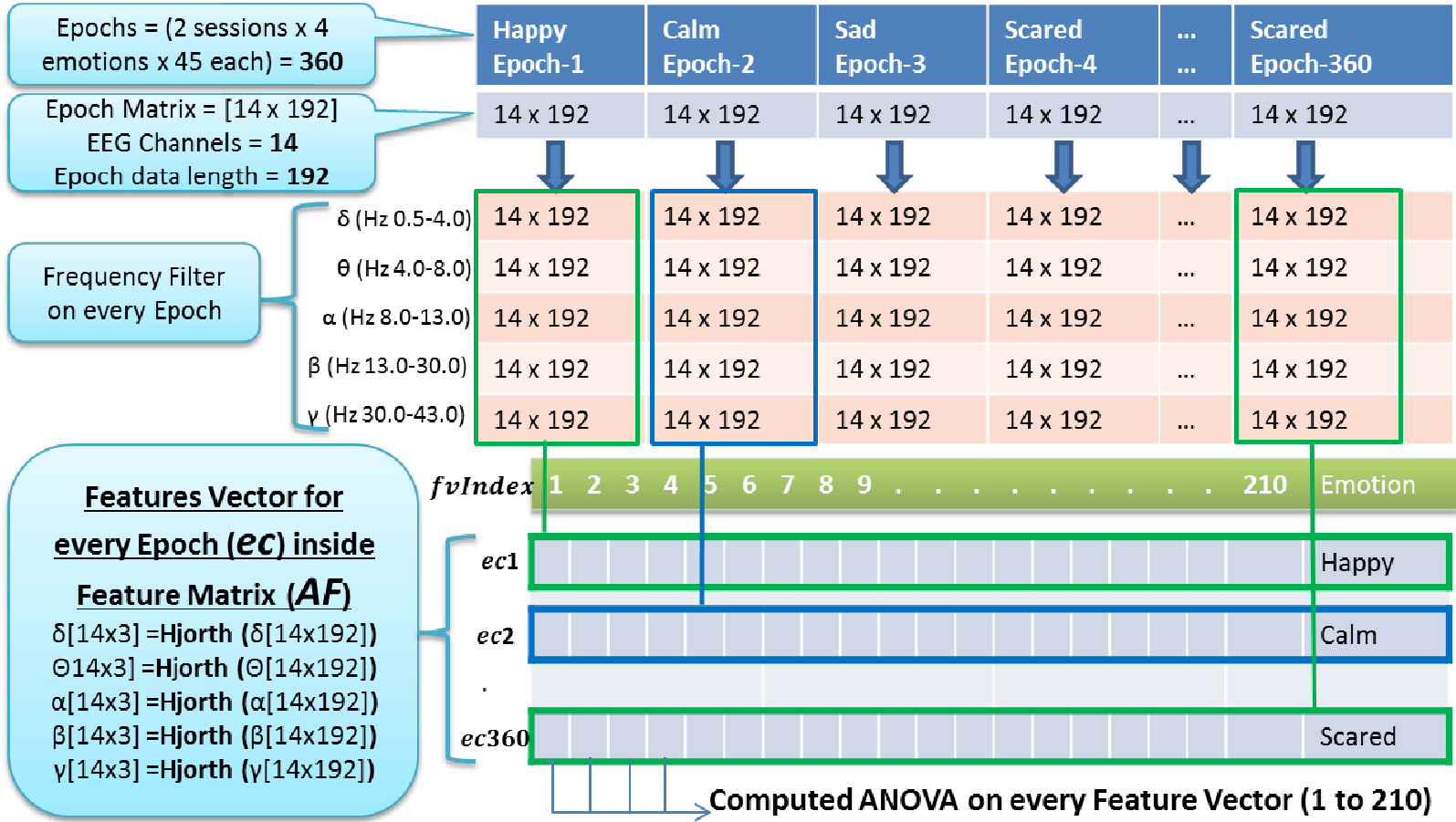 Figure 1: The flow from raw EEG epochs to Hjorth calculation and ANOVA-based selection.
3. The Power of the Ensemble
Recognizing that no single classifier is perfect, the study utilized a Voting Ensemble. This "wisdom of the crowd" approach combines the strengths of Deep Learning, KNN, SVM, and Naive Bayes to reach a consensus on the subject's emotional state.
Experimental Results: A Significant Leap
The results confirm the hypothesis: Feature selection is the secret sauce.
| Classifier | All Features (AF) | Optimal Features (OF) | Improvement |
|---|---|---|---|
| Deep Learning | 50.1% | 73.6% | +23.5% |
| Voting Ensemble | 53.2% | 76.6% | +23.4% |
| SVM | 32.5% | 54.3% | +21.8% |
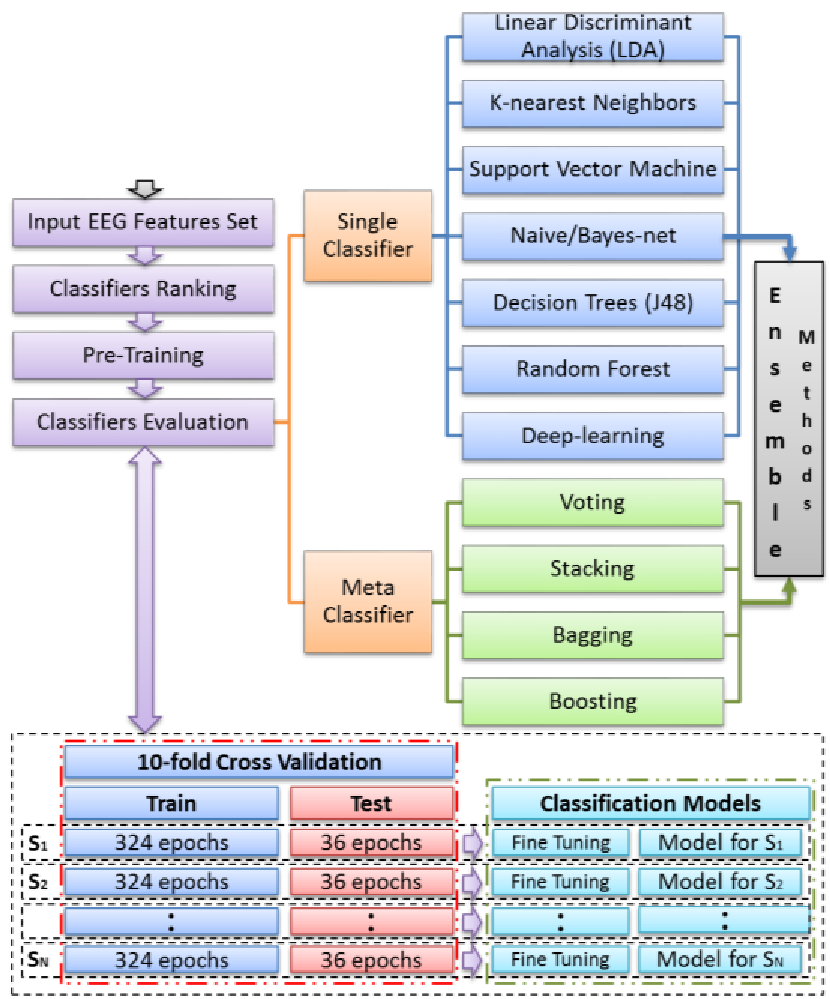 Figure 2: The classification pipeline including pre-training and fine-tuning stages.
The data shows that across the board, reducing the feature set to only the statistically significant ones (OF) increased accuracy by over 20%. The Voting method stood out as the most robust architecture, proving that combined models handle the variance of EEG data better than single-algorithm solutions.
Critical Insight: Why This Matters
This research moves BCI technology closer to clinical application. By specifically targeting the Arousal-Valence domain (low/high intensity and positive/negative feelings), the system can distinguish between nuanced states like "Calm" and "Sad."
Key Takeaways:
- Efficiency: Hjorth parameters are computationally "cheap," making them ideal for real-time mobile BCI applications.
- Consistency: Statistical pruning (ANOVA) prevents the model from learning "random noise" as emotional patterns.
- Scalability: The pre-training and fine-tuning approach allows the model to learn general human brain patterns before adapting to a specific user's unique neural signatures.
Limitations and Future Work
While 76.6% is a strong result for 4-class EEG recognition, it is not yet infallible. Future research will likely need to integrate Multimodal Fusion (combining EEG with heart rate or facial recognition) to bridge the gap toward 90%+ accuracy required for critical medical diagnostics.