
Facebook in Higher Education: A Pedagogical Revolution or a Productivity Trap?
Advances in Teaching and Learning on Facebook in Higher Institutions
This paper provides a comprehensive systematic review of the integration of Facebook as a teaching and learning tool in higher education, specifically analyzing studies published between 2013 and 2015. It categorizes the impact of Facebook on student engagement, collaborative learning, and academic performance, highlighting its role as a ubiquitous supplementary tool in various academic disciplines.
TL;DR
This research provides a deep-dive into the "Facebook-ification" of higher education. By analyzing high-quality empirical data from 2013-2015, the authors demonstrate how Facebook can transform passive classrooms into active, collaborative hubs—while simultaneously warning of its potential to erode memory and academic performance through distraction.
The Core Motivation: Beyond the Traditional LMS
For years, higher education has relied on formal Learning Management Systems (LMS) like Moodle or Blackboard. However, these platforms often feel like "academic silos"—places students visit only when mandatory. The author's insight is simple: why not meet students where they already live? In 2004, Facebook was built for college students, making its "heutagogical" (self-determined learning) potential uniquely high.
The paper addresses a critical research gap: while early studies hinted at Facebook's utility, this review synthesizes the "Goldilocks" era of its growth, identifying precisely how it helps—and how it hurts.
Methodology: Mapping the Facebook Learning Landscape
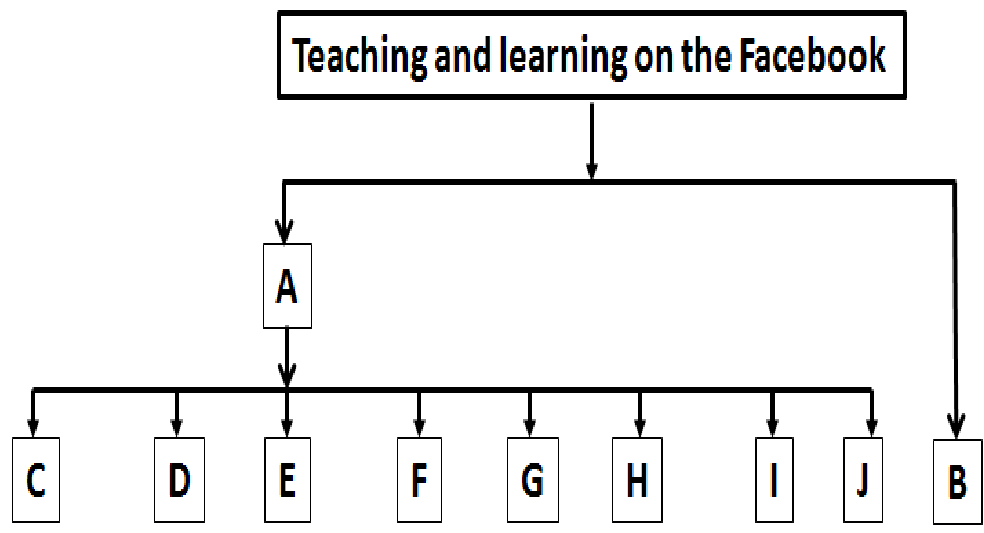
The authors categorized the diverse ways Facebook is utilized in academia into a clear taxonomy.
1. The Positive Spectrum
- Collaboration & Interaction: Breaking geographical barriers by connecting students from different countries (e.g., Colombia, Finland, Sweden) for language exchanges.
- Blended Learning: Using private groups to "flip" the classroom, providing materials before lectures to maximize face-to-face discussion time.
- Specialized Fields: In Pharmacy and Medicine, Facebook serves as a real-time feed for FDA updates and new drug guidelines, keeping students more current than textbooks ever could.
The Results: A Double-Edged Sword
The empirical findings are striking. On the positive side, interaction on Facebook promotes "academic networking" and can significantly reduce "writing anxiety" in language learners. For instance, in mass media courses, users of Facebook study groups scored significantly higher than non-users.
However, the "Negative Findings" section serves as a sobering counter-point. The study highlights that:
- Memory Recall: High Facebook users (spending >1 hour/day) performed significantly worse on free recall memory tests.
- The GPA Inverse: There is a documented negative correlation between the time spent multitasking on Facebook and a student's undergraduate GPA.

Critical Analysis: Privacy and the "Lurker" Problem
The review doesn't shy away from the darker side of technical integration. Two major "Open Research Problems" are identified:
- Privacy & Security: Many students and instructors are reluctant to "friend" each other, fearing a breach of professional boundaries. This has led to institutional bans in regions like Israel and parts of the USA.
- Distraction: If a student's interest in the primary task (the lecture) is low, Facebook becomes the ultimate "off-task" distraction, leading to poor cognitive processing.
Conclusion & Future Outlook
The takeaway is clear: Facebook is not a "plug-and-play" solution for education. It is a powerful social catalyst that requires uniform guidelines. The authors suggest that future research must move beyond undergraduate surveys and focus on:
- Testing formal interaction guidelines (e.g., mandatory vs. voluntary participation).
- Analyzing the "Cognitive Domain"—ensuring that social interaction actually leads to higher-order synthesis and evaluation, not just "likes."
For educators, the message is simple: Facebook can break the walls of your classroom, but only if you provide a map and a shield to protect your students' focus.