
Beyond the Banner: The Rise of "Advertisingness" and the Digital Show
Advertising or not Advertising: Representations and Expressions of Advertising Digital Literacy on Social Media
This paper explores the evolution of brand communication on social media, identifying two core strategies: "Unadvertization" (hiding advertising traits) and "Hyperadvertization" (intensifying brand signs). Using a socio-semiotic approach, the authors demonstrate how brands mimic journalistic and vernacular discourses to navigate growing consumer skepticism.
TL;DR
As consumers become increasingly "ad-immune," brands are shifting from traditional commercials to subtle "unadvertization" and spectacular "hyperadvertization." This paper argues that brand communication is no longer about simple selling—it has become a "prophetic language" and a cultural show that users consume as entertainment, even as they remain fully aware of its marketing intent.
The Paradox of the Modern Consumer: Suspicion vs. Ubiquity
We live in a complex paradox. While social and economic contexts in developed nations have turned unfavorable toward traditional advertising (the "anti-advertising" movement), brand presence is more ubiquitous than ever. The saturation of physical and digital space has forced a metamorphosis.
The authors, Marti and Berthelot-Guiet, identify two divergent professional reactions to this crisis:
- Unadvertization: Erasing classical features to enter publishing spaces (Native Advertising) or social circles (the "Conversation" myth).
- Hyperadvertization: Maximizing brand presence through high-budget aesthetic "shows" or transforming unexpected objects (like metro tickets or smart cities) into media.
Methodology: Peeling Back the Semiotic Layers
The research employs a socio-semio-communication method, treating brand messages as "market mediations"—systems that are simultaneously social, symbolic, and economic.

The researchers argue that even when brands try to "hide," they leave behind a matrix of Advertisingness. This is an "over-semiotization" where brand signs (logos, slogans, brand colors) saturate the space, often leading to Hyperadvertization unintentionally.
Myth vs. Reality: The "Conversation" Trap
One of the most profound insights of the paper is the deconstruction of the "Brand Conversation." Marketing professionals often cite the Clue Train Manifesto, dreaming of a horizontal, non-hierarchical dialogue with consumers (mimicking an "old farmers' marketplace").
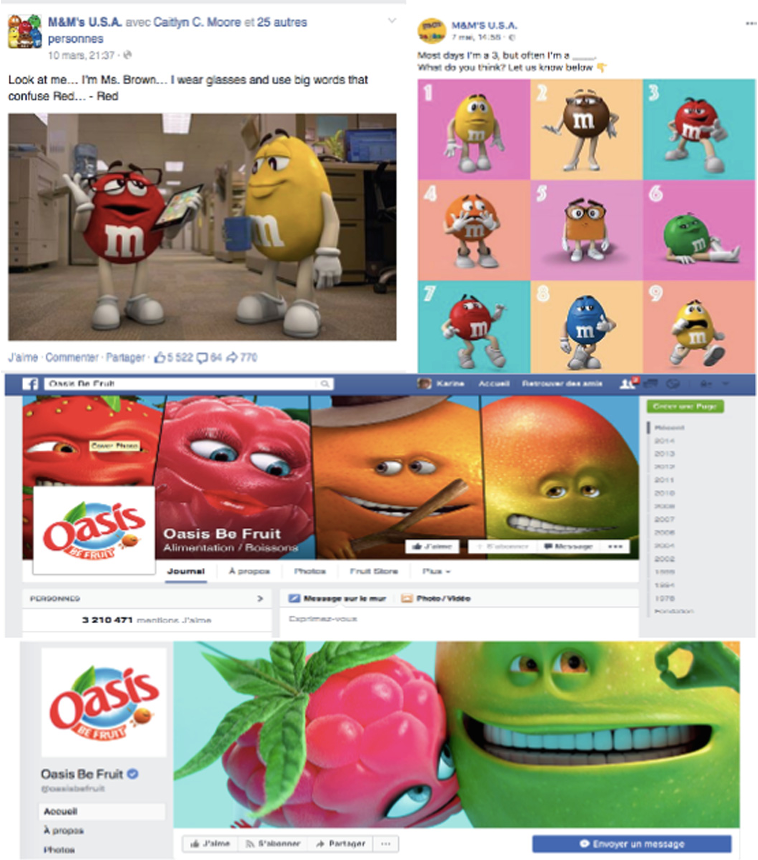
However, the data shows a different story. In an analysis of M&M’s and Oasis Facebook pages:
- Low Dialogue: Users rarely engage in actual conversation; they react with "likes" or short, enthusiastic "show" responses (e.g., "LMAO!", "I love it!").
- The Spectator Effect: The "architext" of social platforms actually isolates exchanges and transforms social interaction into a metrics-driven "audience counting system."
Case Study: Red Bull and the "Global Entertainment Factory"
The paper highlights Red Bull as the ultimate example of modern "Advertisingness." By analyzing their digital ecosystem, the authors find that the product (the energy drink) is almost entirely evicted from the homepage. Instead, the brand exists as a "mentor coach" and an "entertainment factory," producing high-risk sports and cultural festivals. Here, the "advertising show" becomes the primary product being consumed.
Deep Insight: The Prophetic Language
Drawing on the theories of Walter Benjamin and Jean Baudrillard, the authors conclude that modern advertising functions like the "Logic of Father Christmas." Consumers don't necessarily believe the claims, but they "go along with the fable" because they appreciate the aesthetic effort and the "care" the brand shows through high-quality spectacular content.
Conclusion & Future Outlook
The "metamorphosis" of advertising isn't just about moving from TV to TikTok. It is a fundamental shift where brands seek authority and legitimacy by intertwining themselves with our cultural and vernacular discourses (like #foodporn).
The Takeaway: Digital literacy isn't just about spotting an ad; it's about navigating a world where "Advertisingness" is the very fabric of our digital interactions. Brands are no longer just sellers; they are the architects of our "liquid" digital reality.