
Beyond the Script: How Chilean Students Navigate the New Frontier of Gender in Advertising
Exploring Advertising Literacy Digital Paths: Comparison Between Gender Approaches Among Chilean Students
This exploratory study investigates digital advertising literacy among Chilean university students by comparing "Femvertising" and inclusive male portrayals. Using Schema Congruence Theory, the researchers analyzed how students decode gender roles and associated values across six hybrid media advertising messages.
TL;DR
As the advertising landscape shifts from rigid traditionalism to "Femvertising" and "Inclusive Masculinity," university students are not just passive viewers—they are active critics. This study reveals that while Chilean students generally embrace progressive gender roles, their academic "advertising literacy" makes them increasingly skeptical and discerning of how these values are packaged.
Background Positioning: This is an exploratory empirical study that bridges Media Literacy and Gender Studies, providing a rare snapshot of how the "Persuasion Knowledge Model" operates within the specific cultural coordinate system of Chile.
The Friction Between Old Schemas and New Realities
For decades, ads were simple: women sold vacuum cleaners, and men sold adventure. However, the Schema Congruence Theory suggests that when we see something that fits our mental "map," we feel comfortable. Today, those maps are being redrawn.
The authors identify a specific pain point: while the world is moving toward "Femvertising" (empowerment) and inclusive male roles (the caring father), we don't fully understand if these new messages "click" with the very people they target. Is a woman boxing in a makeup ad seen as authentic, or just another persuasive tactic?
Methodology: Testing the "Schemer Schema"
To find out, the researchers exposed 110 students to six distinct campaigns, ranging from P&G's "Best Job in the World" (mothers' strength) to Ariel's "Share the Load" (fathers doing laundry).
Core Framework
The study measured two primary dimensions:
- Cognitive Congruence: Does the ad match what the student thinks society should look like?
- Moral Literacy: Is the message fair, impartial, and morally "correct" in the Chilean context?

Key Insights: Literacy Leads to Skepticism
The results provide a fascinating look at the "literacy effect":
- Femvertising Wins on Congruence: Messages empowering women (Approach 1) were more easily accepted as "congruent" than those redefining men.
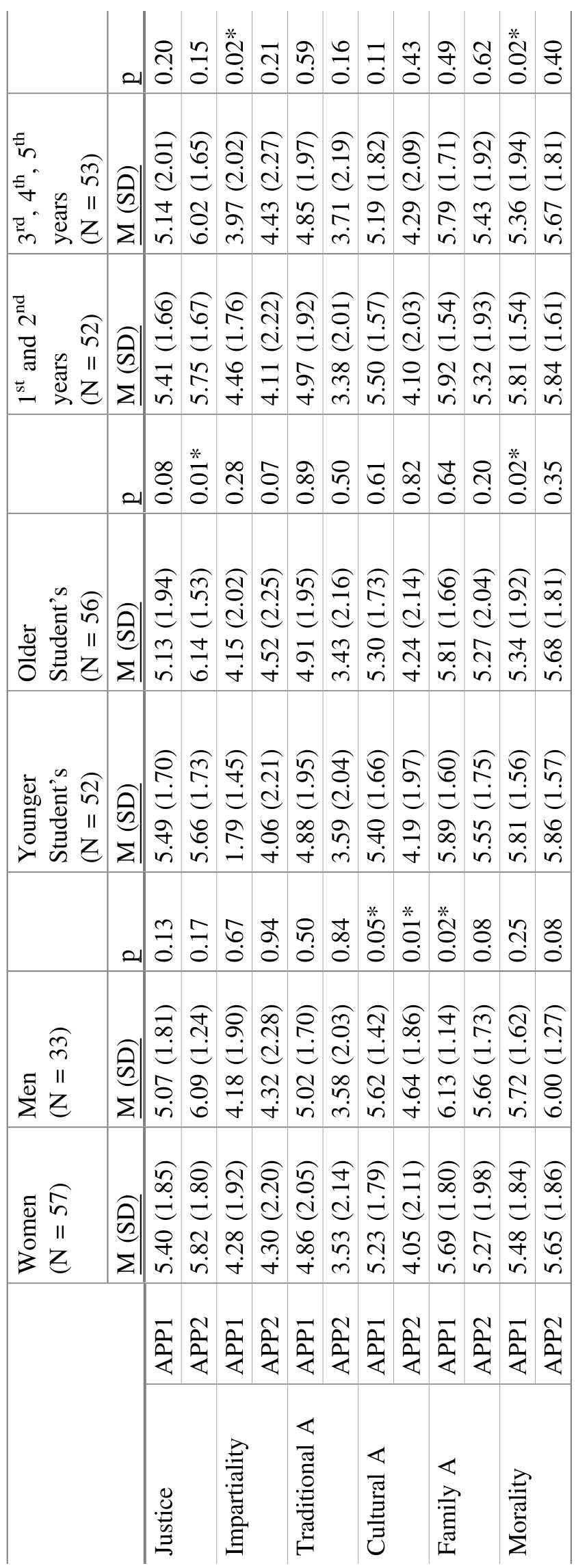
- The Academic Shift: Students in their 3rd to 5th years of study—those with the highest "Advertising Literacy"—were significantly more critical. They were less likely to blindly accept the "inclusive" messages, suggesting that as we learn how ads work, we become harder to satisfy.
- Gendered Perception: Interestingly, male students showed a more favorable perception of "inclusive" male roles (e.g., men as caregivers) than their female counterparts in specific contexts, perhaps indicating a personal aspiration toward breaking free from "machismo."
Data Deep Dive
The study utilized detailed statistical tables to track "Value Perception" across variables like Justice and Morality.
Deep Insight & Conclusion
Takeaway
The core contribution of this work is the confirmation that Advertising Literacy acts as a filter. The more a student knows about the "tricks of the trade," the more they evaluate the moral appropriateness of the message rather than just its visual appeal.
Limitations & Future Work
The study's sample was limited to one prestigious university (UC Chile). Future research needs to expand into diverse socioeconomic backgrounds to see if "empowerment" translates the same way across different social strata. Furthermore, adding qualitative interviews would help uncover why specific visual cues—like the "Billie" razor ad—trigger such localized moral responses.
Final Thought
For brands, the message is clear: You cannot "perform" inclusivity. High-literacy audiences, like the students in this study, can deconstruct a campaign in "double-quick time." Authenticity is no longer a buzzword; it's a structural requirement for the next generation of digital citizens.