
Affectional Ontology: Why Structured Knowledge Still Beats Machine Learning in Sentiment Analysis
Affectional Ontology and Multimedia Dataset for Sentiment Analysis
The paper introduces Affectional Ontology (AFO), a domain-independent sentiment analysis framework based on psychological theories and lexicons, coupled with a new Domain-Free Sentiment Multimedia Dataset (DFSMD). The researchers demonstrate that this ontological approach slightly outperforms traditional machine learning classifiers in processing informal social media content.
TL;DR
In a world dominated by "black-box" machine learning, this paper makes a compelling case for Affectional Ontology (AFO). By leveraging psychological theories and a newly created Domain-Free Sentiment Multimedia Dataset (DFSMD), the authors demonstrate that a structured, semantic understanding of language can outperform traditional ML classifiers like SVMs, achieving a 66% accuracy rate in sentiment detection without being tied to a specific domain.
Problem & Motivation: The Limits of Domain-Specific Learning
Most sentiment analysis tools are "silos." They work brilliantly for movie reviews but fail on political tweets. This is because machine learning (ML) models often rely on statistical patterns specific to a training set.
The authors identify three critical gaps:
- Semantic Blindness: ML treats messages as a whole, missing the nuanced relationships between concepts.
- Domain Dependency: Existing ontologies are often narrow (e.g., specific to mobile phones or electronics).
- Dataset Bias: Most public datasets lack a "neutral" class or use noisy labels like hashtags, which don't always reflect true human emotion.
Methodology: Building the Affectional Ontology (AFO)
The researchers moved beyond simple word lists. They built AFO by synthesizing:
- Psychological Theories: Integrating frameworks from Parrott and Frijda to categorize emotional states.
- Sentiment Lexicons: Utilizing WordNet-Affect, SentiStrength, and AFINN for granular valence scores (-5 to +5).
- Emoji Processing: Converting modern emojis into textual sentiment values to handle the "slang" of social media.
Architecture Overview
The ontology was modeled using RDF/OWL. It categorizes "Affective States" and links them to "Affective State Models" via SPARQL queries.
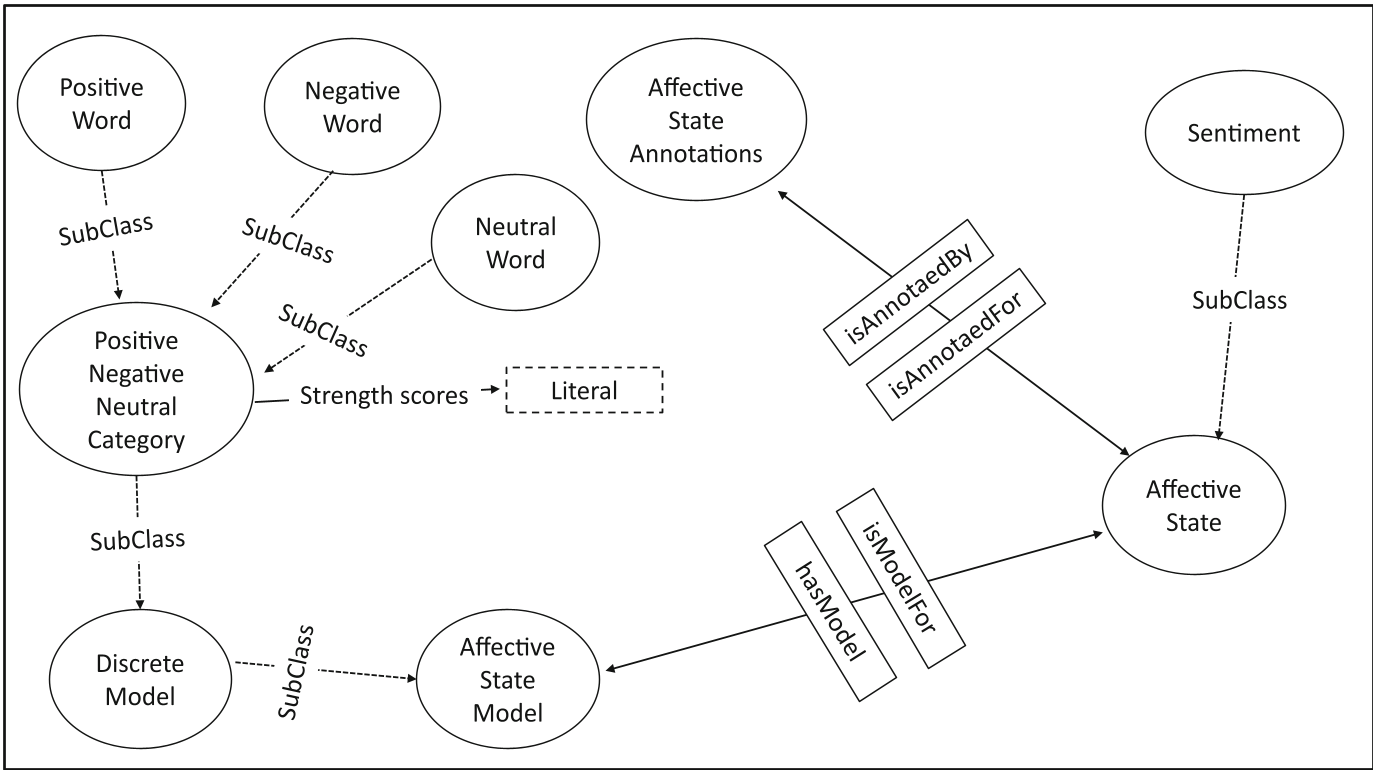 Figure 1: The hierarchical structure of the Affectional Ontology.
The DFSMD Dataset
To test AFO, the authors created the Domain-Free Sentiment Multimedia Dataset (DFSMD). Unlike prior work, they enforced:
- High-Standard Annotation: 55 qualified annotators with diverse cultural backgrounds.
- Confidence Scoring: Annotators rated their own certainty, used to resolve disagreements in the 12,800-tweet corpus.
Experiments & Results: Ontology vs. Machine Learning
The authors pitted AFO against three ML heavyweights: Support Vector Machines (SVM), Multinomial Naïve Bayes (MNB), and Random Forest (RF).
| Method | Avg. Accuracy | Avg. F-score |
|---|---|---|
| Ontology (AFO) | 0.660 | 0.66 |
| Machine Learning (Best Model) | 0.647 | 0.64 |
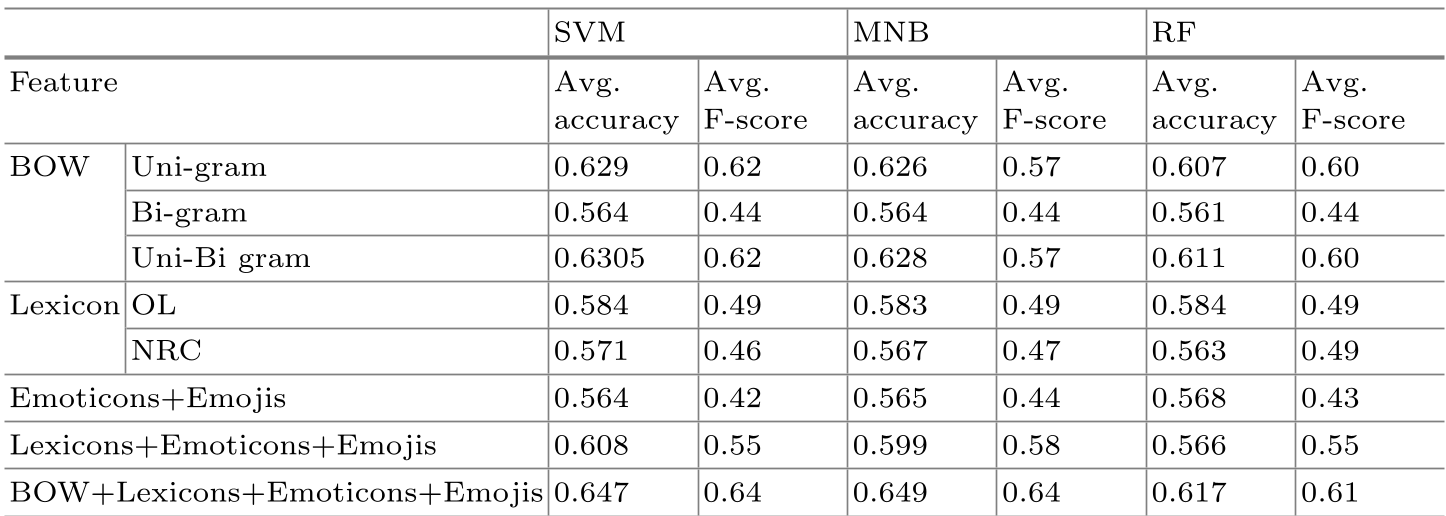 Table: Comparison of various ML features (Bag-of-Words, Lexicons) against the baseline.
Key Findings:
- AFO outperformed ML because it wasn't biased by the training distribution of words; it relied on the inherent "meaning" defined in the ontology.
- Combining Bag-of-Words with Lexicon features helped ML, but it still couldn't match the AFO's semantic depth.
- The transition from emojis to text was a critical preprocessing step that significantly improved sentiment capture.
Critical Insight & Conclusion
The success of the Affectional Ontology proves that Human-in-the-loop knowledge engineering is far from obsolete. While ML remains the "go-to" for speed, ontologies offer superior interpretability and transferability. You don't need to retrain AFO when a new topic trends on Twitter; its psychological foundation remains constant.
Future Outlook: The authors plan to extend AFO beyond basic sentiment (Positive/Negative/Neutral) to more complex affective states like "Mood" and "Fine-grained Emotions," and potentially leverage the visual image data in DFSMD for multi-modal analysis.