
Affective BCI: Decoding the Silent Language of Emotion for ALS Patients
Affective brain-computer interfaces: Psychophysiological markers of emotion in healthy persons and in persons with amyotrophic lateral sclerosis
The paper introduces the concept of Affective Brain-Computer Interfaces (aBCIs), which utilize peripheral (GSR, HR, EMG) and central (EEG) nervous system signals to detect a user's emotional state. Beyond active control, it focuses on passive BCIs (pBCIs) to adapt human-computer interaction, specifically achieving classification accuracies between 70% and 90% in healthy subjects.
TL;DR
While traditional Brain-Computer Interfaces (BCI) act as a "mental keyboard," Affective BCIs (aBCI) aim to be a "mental mirror." This research explores using brainwaves and physiological signals (like heart rate and skin conductance) to detect emotions in healthy individuals and those with Amyotrophic Lateral Sclerosis (ALS). By decoding affect, we can restore the "sarcasm, joy, and frustration" that paralysis often silences.
Perspective: From Action to State
Historically, BCI research has been split into Active (intentional commands) and Reactive (responding to external stimuli). This paper highlights a third, transformative pillar: Passive BCI (pBCI).
A pBCI does not wait for a command. Instead, it monitors the user’s ongoing state—fatigue, frustration, or joy—and adapts the interface accordingly. For a patient with ALS, this means a caregiver could "see" an involuntary smile through a digital avatar, even when the patient's physical face remains still.
The "Why": The Poker-Face Dilemma
In late-stage ALS, patients often reach a "locked-in" state. Even if they can use a BCI to type "I am fine," the lack of facial expression and vocal prosody strips the message of its emotional truth. The authors argue that detecting bioregulatory reactions (emotions) is more objective than asking for subjective feelings.
Methodology: The Multimodal Decoder
How do you "measure" an emotion? The paper leans on the Bi-phasic model, mapping emotions onto a 2D space:
- Valence: How positive or negative the feeling is.
- Arousal: The intensity of the energy.
The Core Architecture
To build a robust classifier, the authors suggest a fusion of signals:
- Central (EEG): Specifically looking at alpha-power asymmetry in the prefrontal cortex.
- Peripheral (The Bio-Suite): Heart rate (HR), Galvanic Skin Response (GSR/Skin Conductance), and Electromyogram (EMG) for micro-muscle movements.
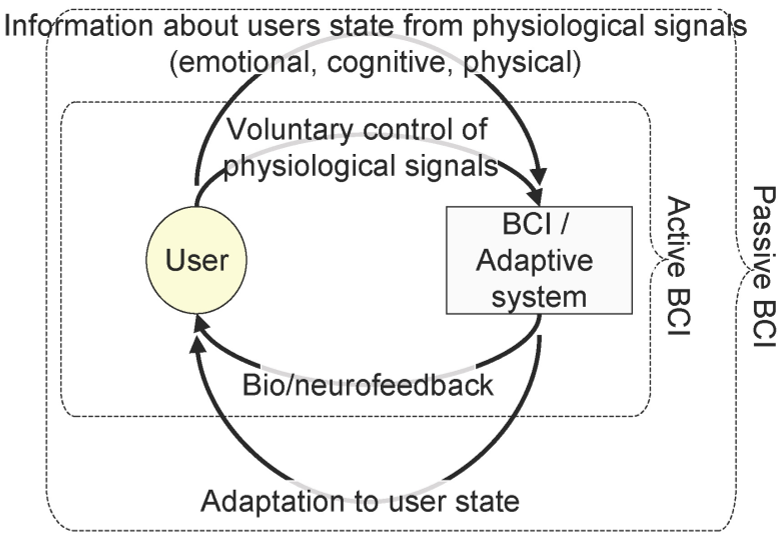 Figure 1: Distinguishing between intentional brain commands (Active) and the involuntary monitoring of internal states (Passive).
Results & The "ALS Shift"
The study highlights a fascinating and critical nuance: Emotional processing changes in ALS.
- Classification Performance: In healthy groups, accuracies hit 70-89%, proving that machines can indeed distinguish between states like "Joy" and "Disgust" using physiological "fingerprints."
- The Positivity Bias: ALS patients often show a "coping mechanism" where they rate negative stimuli as less intense than healthy peers.
- Delayed Response: Their GSR (sweat gland response) is significantly slower.
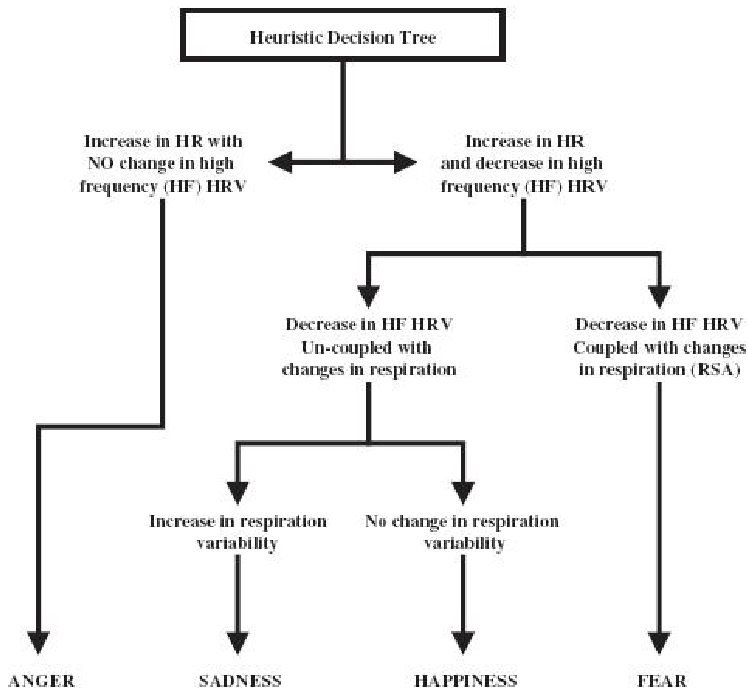 Figure 5: A simplified heuristic for classifying states based on Heart Rate and HRV.
Critical Insight: Beyond Content
The most profound takeaway is the concept of Caregiver Mimicry. When a caregiver can perceive the patient's affective state through an aBCI-driven monitor, it triggers a natural empathetic response. This "social loop" is often what is lost first in neurodegenerative diseases.
Limitations & Future Work
- Individual Baselines: Physiological responses vary wildly between people and even between different days. A classifier trained on Monday might fail on Tuesday.
- The "Closed-Loop" Challenge: Future research must focus on how to use this data to automatically adjust system difficulty or trigger emergency alarms when psychological distress (and not just physical distress) is detected.
Conclusion
Affective BCIs represent a shift from "computing as a tool" to "computing as a companion." By integrating these systems into wheelchairs and communication kits, we move closer to a technology that doesn't just hear what a patient says, but understands how they feel.