
Affective Interaction: Transforming Facial Expressions into the Next-Gen Game Controller
Affective interaction: Using emotions as a user interface in games
This study evaluates "Facial Battle," a shoot 'em up game that utilizes facial expressions (joy, anger, surprise, fear) as a novel user interface (UI) modality. It proposes the AFFUIDE framework (Affective User Interface Design and Evaluation) and demonstrates that while traditional UIs excel in usability, hybrid affective-traditional modes significantly enhance fun and user experience (UX).
TL;DR
Can your smile replace a mouse click? This research introduces the AFFUIDE framework to bridge the gap between human emotion and machine input. By testing a custom game, "Facial Battle," the study reveals that while controlling everything with your face is exhausting, a hybrid approach (mixing keys for movement and smiles for shooting) creates a "sweet spot" of high usability and peak player immersion.
Background: Beyond the Keyboard
Standard Human-Computer Interaction (HCI) is functionally efficient but emotionally "cold." While we naturally communicate through body language and facial expressions, gaming remains tethered to plastic buttons. The authors argue that for a truly Natural User Interface (NUI), computers must recognize and respond to the user's affective state.
The Problem: The Cognitive Cost of Full Emotion
Prior work in affective computing often fell into two traps:
- Invasiveness: Requiring bulky sensors (ECG/EEG).
- Usability Collapse: Replacing all controls with facial features often makes games frustratedly difficult, as "making a face" requires more conscious effort than a finger twitch.
Methodology: The AFFUIDE Framework
The researchers proposed the Affective User Interface Design and Evaluation (AFFUIDE) framework. It treats the user's emotional state not just as data to be watched, but as a live control input.
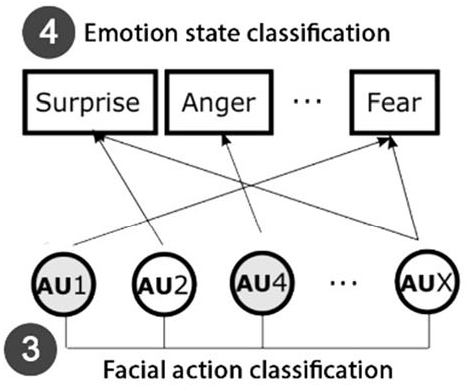 Figure 1: The conceptual framework structuring how emotional data flows from detection to game output.
The "Facial Battle" Experiment
To test this, they developed a Shoot 'em up game with four modes:
- Full Traditional: Keyboard/Mouse only.
- Full Affective: Surprise/Anger moves the ship; Joy shoots; Fear casts spells.
- Hybrid (Affective Shooting): Keyboard moves; Joy shoots.
- Hybrid (Affective Movement): Anger/Surprise moves; Mouse shoots.
 Figure 2: A player triggering a shot by "producing a joy expression" (smiling) during gameplay.
Experiments & Results: Finding the "Sweet Spot"
The study utilized SUS (System Usability Scale), AttrakDiff (for UX quality), and in-game performance logs.
1. Performance vs. Hedonics
- Full Affective was the "funnest" but most difficult. Players had lower scores and shorter survival times because "memorizing 4 expressions as inputs causes high cognitive load."
- Hybrid (Affective Shooting) was the winner. It was perceived as just as usable as a mouse but significantly more attractive and immersive.
2. The Power of "Spells"
Interestingly, using facial expressions for "Spells" (Impact-based input) was highly successful. Players used more spells when they were tied to their expressions than when tied to a 'Shift' key, suggesting that state-based emotional inputs feel more natural for "special" high-stakes actions.
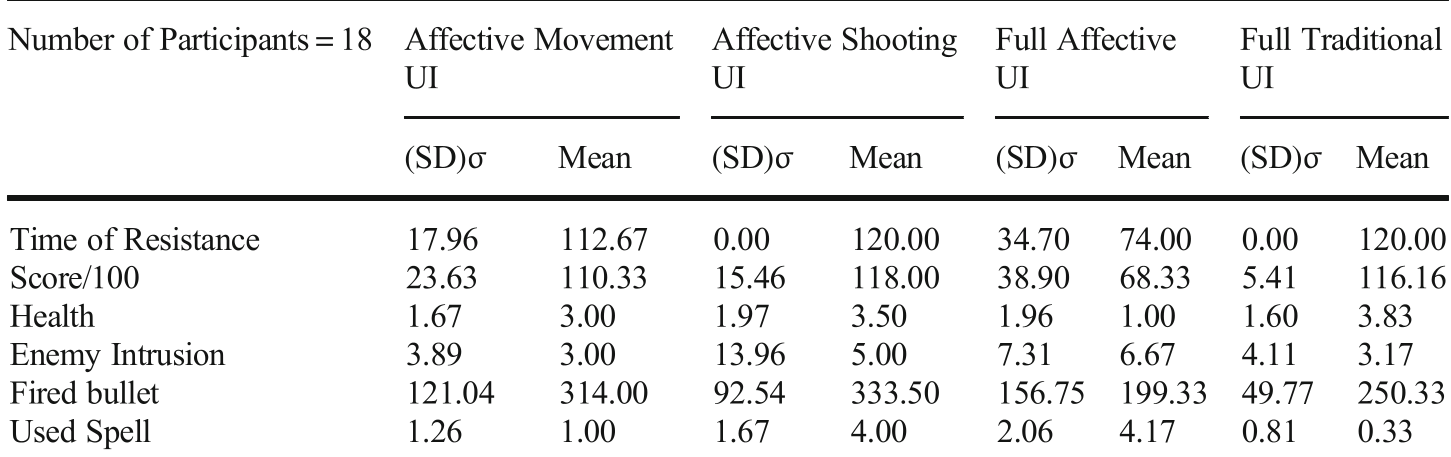 Table 1: Quantitative data showing that Hybrid modes maintain near-traditional performance levels.
Critical Insight & Conclusion
The study proves that emotions are viable game controllers, but with a caveat: Context is everything.
- Takeaway: Don't force players to "act" their way through every movement. Instead, use affective inputs for actions that naturally align with emotion (e.g., a "Joy" expression to fire a weapon or "Fear" to trigger a shield).
- Limitations: The study was limited to a male-only student population and a specific game genre. Future work needs to explore how difficulty scaling affects these results.
- Future Impact: This technology holds immense potential for accessibility, allowing gamers with limited hand mobility to interact with virtual worlds using only their facial muscles.
By moving toward a hybrid UI, developers can create games that aren't just played with the hands, but felt with the face.