
ADA-SC: Boosting Crowdsourced QoS through Social Affinity and Knowledge Diversity
Affinitive Diversity-Aware Task Allocation in Spatial Crowdsourcing
This paper introduces the Definitive Diversity-Aware Spatial Crowdsourcing (ADA-SC) framework, which optimizes task allocation by jointly considering team Diversity (union of experiences) and Affinity (collaboration efficiency via social leader distance). The authors propose submodular approximation algorithms for single-task scenarios and a greedy-based heuristic for multi-task environments, achieving State-of-the-Art (SOTA) Quality of Service (QoS) on real-world datasets like Weeplace.
TL;DR
Spatial Crowdsourcing (SC) is evolving from simple tasks (like taking photos) to complex, collaborative projects (like technical assessments). This paper proposes ADA-SC, a framework that maximizes Diversity (what the team knows) while satisfying Affinity (how well they talk) under strict budget constraints. By treating team selection as a submodular optimization problem on social star graphs, the authors achieve superior Quality of Service (QoS) compared to traditional greedy methods.
The "Collaboration Gap" in Spatial Crowdsourcing
Current SC platforms (like Gigwalk or TaskRabbit) focus heavily on worker availability and basic reliability. However, for specialized tasks—say, a comprehensive audit of a theme park's catering and logistical services—individual performance is insufficient.
- Diversity Matters: A team that has visited 10 unique restaurants offers more value than a team where everyone has visited the same two.
- Affinity Matters: Information exchange is expensive. If team members are social strangers, the "coordination tax" degrades the final output.
The authors identify a critical gap: No existing model effectively binds spatial constraints, budget limits, social connectivity (Affinity), and experience breadth (Diversity) into a single optimization target.
Methodology: The Geometry of a Team
The core of the ADA-SC methodology is the reduction of the social network into manageable structures called Star Graphs.
1. The Star Graph Framework
Instead of searching all possible worker combinations (which is computationally explosive), the algorithm iterates through each worker as a potential Leader. For each leader, it builds a star graph consisting of workers within a specific "Leader Distance" (e.g., ). This naturally satisfies the Affinity constraint.
2. Pruning via "Father Workers"
To handle large-scale datasets, the authors introduce a pruning strategy. If a potential leader's maximum possible diversity contribution (calculated using a top-tier worker in their vicinity, the "Father Worker") is lower than the current best team's diversity, the entire star graph is skipped.
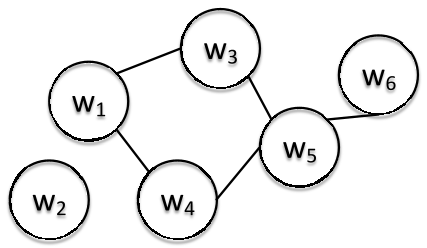 Fig 1. & 2. Visualization of the Social Graph and its reduction to a Star Graph with a depth of 2 (Leader Distance).
Algorithm Deep-Dive
The paper provides specific selection logic for two payment scenarios:
- Homogeneous Payments: A greedy approach that selects the highest residual diversity increasers while ensuring "bridge workers" are included to maintain the social chain to the leader.
- Heterogeneous Payments: A more complex logic that accounts for the cost-benefit ratio (). It includes a "replacement" mechanism where a new, well-connected worker can replace an expensive bridge worker to save budget.
Experimental Insights
The researchers utilized the Weeplace dataset, extracting check-in records from New York City to simulate real-world experience and social ties.
Key Findings:
- Scalability: As the number of workers () increases, ADA-SC's diversity advantage grows exponentially compared to baselines. More workers provide more "raw material" for diversity, which ADA-SC harvests more efficiently.
- The Payment Threshold: There is a "sweet spot" for worker payments. If payments are too high, the diversity drops sharply as the budget can only afford a few "experts," sacrificing the breadth of the team.
- Affinity sensitivity: Increasing the allowed leader distance () significantly boosts diversity, proving that "looser" social constraints allow for a much richer pool of knowledge.
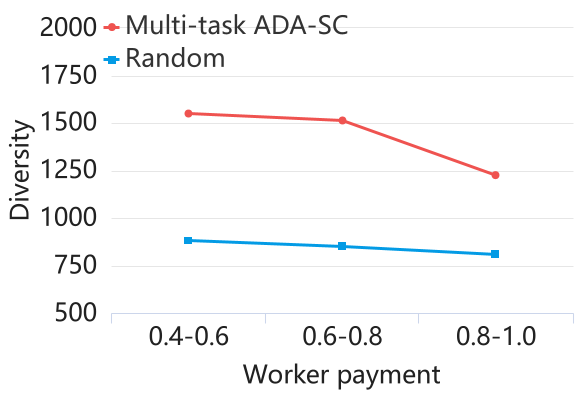 Fig 3. Performance comparison across different worker population sizes.
Critical Analysis
Strengths:
- Theoretical Rigor: Unlike many heuristic-only papers, this work provides solid approximation ratios, giving practitioners confidence in the "worst-case" performance.
- Practicality: The pruning strategies make it viable for real-time mobile platforms where latency in task assignment is a deal-breaker.
Limitations:
- Social Graph Availability: The model assumes the platform has access to a reliable social graph. In reality, privacy settings or "cold start" problems for new workers might make the Affinity metric hard to calculate.
- Static Categories: The diversity is measured against fixed categories. Dynamic or overlapping task categories might require a more fluid definition of diversity.
Future Outlook
This work sets the stage for "Human-Centric Optimization" in the gig economy. Future iterations could integrate Dynamic Pricing (where workers bid for tasks) or Multi-objective RL to learn the optimal trade-off between speed, cost, and diversity in real-time.