
Beyond the Feed: How Social Media Affordances Power the Next Generation of Public Services
Exploring the Affordances of Social Media Platforms in Supporting Emerging Public Service Paradigms
This paper investigates how the functional properties (affordances) of social media platforms like Facebook and Twitter can support emerging public service paradigms, specifically Citizen-to-Government (C2G), Citizen-to-Citizen (C2C), and Intermediary-to-Government (I2G) interactions. The authors map platform features to nine specific affordances to demonstrate that social media is a more "natural" environment for co-delivered public services than traditional government websites.
TL;DR
The era of "Push-only" government communication is ending. This research argues that the inherent features of social media—its affordances—make it the superior engine for co-producing public services. By transitioning from traditional websites to platforms such as Facebook and Twitter, governments can tap into C2G (Citizen-to-Government), C2C (Citizen-to-Citizen), and I2G (Intermediary-to-Government) paradigms that were previously hampered by bureaucratic friction.
The "We-Government" Urgency
For decades, "Electronic Government" meant moving paper forms to a digital portal. While efficient for taxes, it's a dead-end for collaboration. The authors point out a critical gap: public services are becoming inherently social. Whether it’s citizens reporting potholes or volunteers organizing disaster relief, traditional government websites lack the "social glue" (like real-time notification, location-sharing, and community building) required for these tasks.
The authors pivot our focus from what social media is to what it allows us to do—its affordances.
Mapping the Architecture of Interaction
The paper meticulously deconstructs popular platforms (Facebook, Twitter, LinkedIn, etc.) into a matrix of features, synthesizing them into nine core affordances.
The Affordance Matrix
- Manage Community: Creating groups with shared interests.
- Location-based Networking: Proximity-aware services.
- Upload/Broadcast Media: Propagating rich data (video/text).
- Interaction Monitoring: Using "likes" and "shares" as real-time feedback loops.
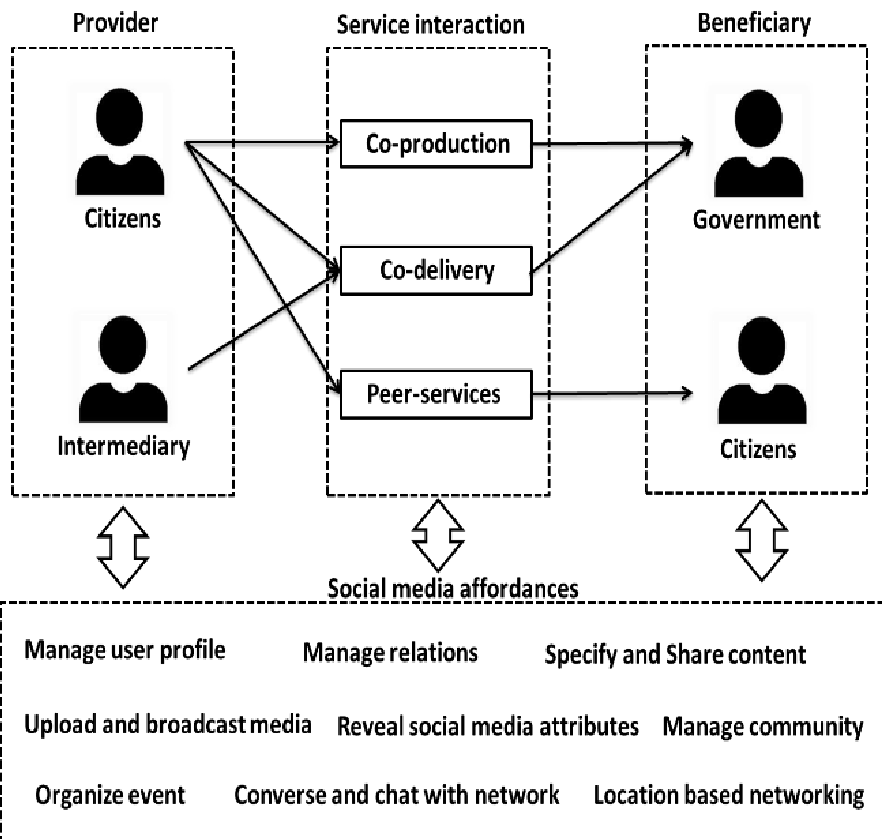 Figure 1: General model of how social media affordances integrate into service interaction paradigms.
Methodology: From Theory to Scenarios
The authors apply these affordances to real-world cases to reveal the "Relative Advantage" of social media.
Case 1: Co-production (C2G) - Campus Rain Works
Traditional process: Students submit design entries via mail; judges decide in isolation. Social Media Scenarios: By moving to a Facebook-centric model, "community management" and "content interaction" affordances allow the public to view, discuss, and "like" designs, providing the government with immediate sentiment analysis of proposed public infrastructure.
Case 2: Co-delivery (I2G) - FixMyStreet
This involves an intermediary (NGO) acting as a bridge. The platform's Location-based Networking affordance allows citizens to pin issues on a map, which is then broadcasted to the council. This transforms a private complaint into a public "lobbying community."
Case 3: Peer Services (C2C) - NYC Service Network
This is perhaps the most radical shift: Do-It-Yourself Government. Citizens request help; other citizens (volunteers) respond. Here, Social Ties and Visibility affordances are crucial. The platform establishes trust through profiles and public track records, effectively outsourcing service delivery to the community itself.
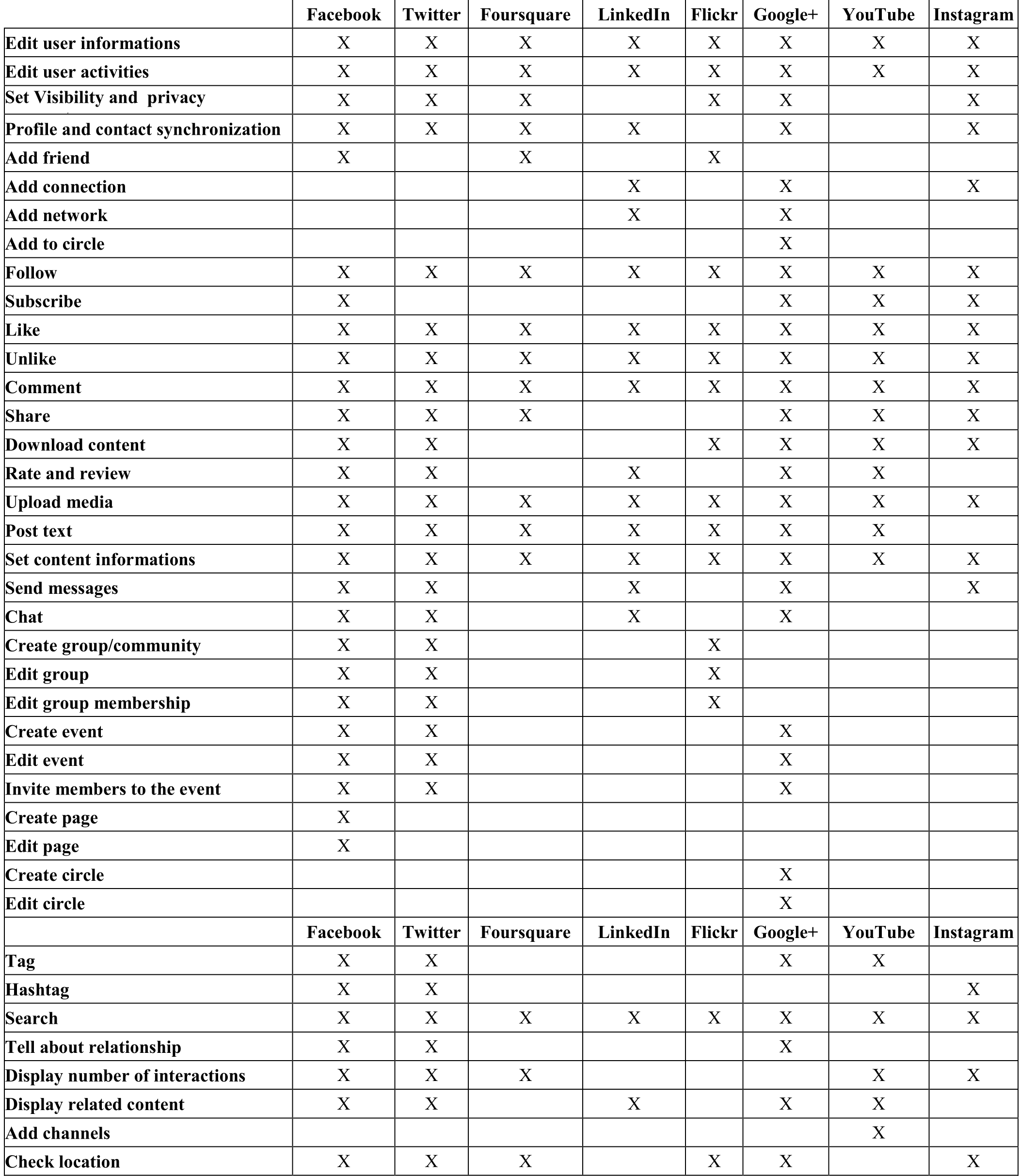 Figure 2: A comprehensive breakdown of features across major platforms, highlighting the versatility of Facebook and Google+ for service delivery.
Critical Insight: The Shift in Governance
The paper’s true value lies in its challenge to current government policies. Most agencies use Twitter as a "News Feed." The authors argue this is a waste of capital.
The "Natural Platform" argument posits that because citizens already spend their time on these apps, the cost of engagement is near zero. The government shouldn't build new portals; they should "colonize" existing social networks where the digital infrastructure for collaboration is already battle-tested.
Limitations & Future Outlook
While the technical affordances are there, the authors are honest about the "Bureaucratic Lag." Specifically:
- Liability: If a citizen-delivered service (C2C) fails, who is responsible?
- Quality Control: How does a government set "standards" for crowdsourced solutions?
- Ethical Barriers: Privacy concerns regarding location tracking and profile synchronization.
Conclusion
Social media is no longer just for "chatting." It is a robust infrastructure for Service Delivery. This paper provides a roadmap for public administrators to move beyond "participation" (asking for feedback) to "co-production" (building together). For researchers, the next frontier is clear: solving the legal and trust-based frameworks to match these powerful technical affordances.