
Trust, Tech, and Testimonials: How African-American Pregnant Women in Detroit Navigate the Digital Information Ecology
An Exploration of African-American Pregnant Women's Information-Seeking Behavior in Detroit
This qualitative study explores the information-seeking behavior of 16 low-income African-American pregnant women in Detroit. Using semi-structured interviews, the researchers identify a high reliance on digital platforms—specifically Facebook groups, YouTube, and pregnancy apps—to navigate a high-risk maternal health landscape where formal medical sources are often treated with skepticism.
TL;DR
In a landscape where maternal mortality for Black women is three times higher than for White women, this study dives into how low-income mothers in Detroit use technology to survive. It finds that "Dr. Google" and YouTube peers are often more trusted than actual doctors, not due to lack of intelligence, but due to a sophisticated need for corroboration and authenticity.
The "Trust Gap" in Maternal Health
The statistics are harrowing: in Detroit, the infant mortality rate for Black children is higher than in some developing nations. While public health literature often points to "social determinants," this paper shifts the lens toward the Information Ecology.
The core problem isn't just a lack of data; it's a lack of relatable and timely data. The participants expressed a deep-seated skepticism toward formal medical institutions—often feeling "talked down to" or ignored. This creates a vacuum filled by Facebook groups and YouTube vlogs.
Methodology: Listening to the Community
The researchers interviewed 16 African-American women, mostly low-income, in Detroit. This is a critical demographic that has been historically misrepresented as "digitally disconnected."
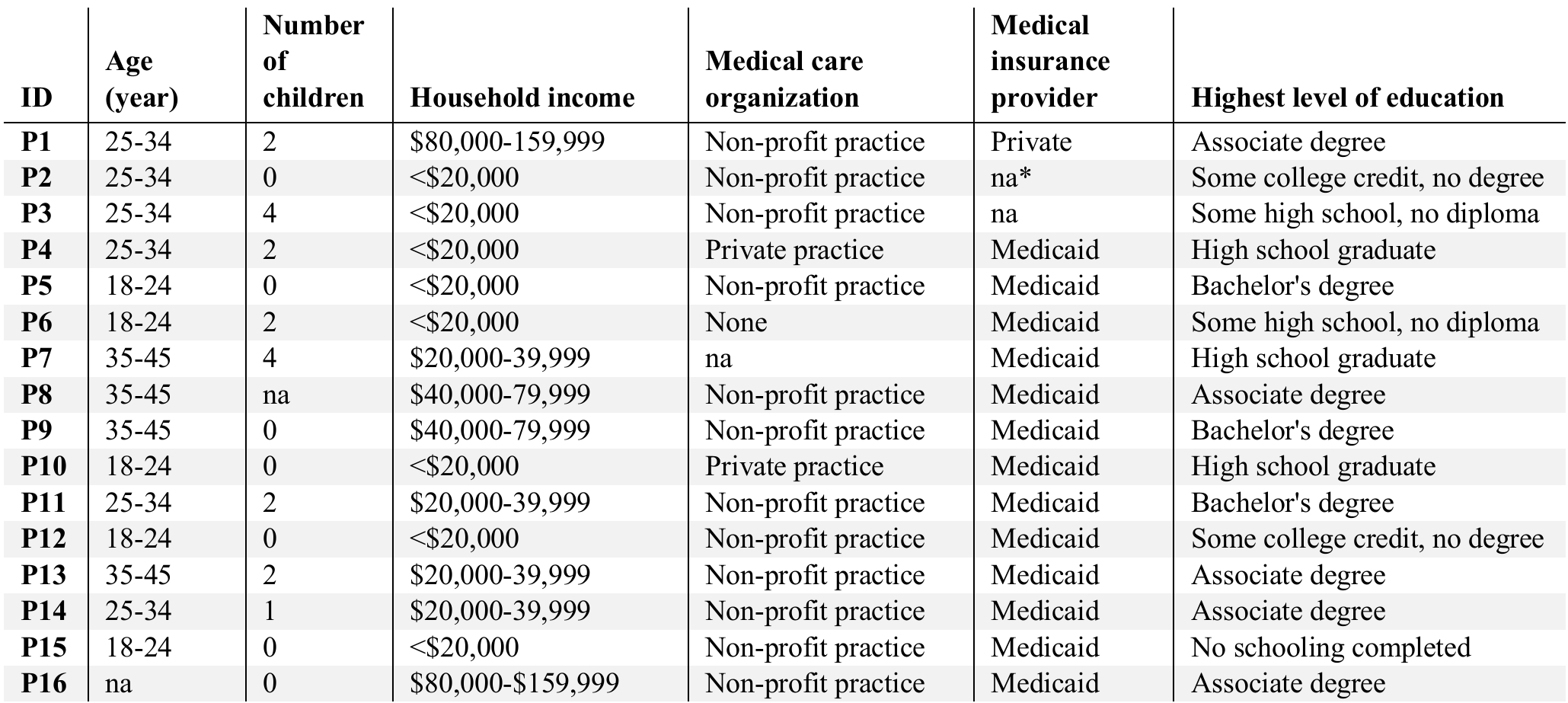 Table 1: Participant profiles showing a high reliance on Medicaid and a range of educational backgrounds.
The Corroboration Calculus: How Decisions Are Made
The most striking finding is the "Corroboration of Information." Unlike previous theories suggesting low-income users passively receive info, these women act as "Information Detectives."
- Search First: A symptom occurs; the first stop is Google or a pregnancy app.
- Corroborate: They cross-check "clinical" results with Facebook groups and YouTube "vlogs" to see if real women experienced the same.
- Validate: Finally, they might bring this to a doctor—not for the answer, but to interrogate the doctor's perspective.
The Power of Video
94% of participants used YouTube. They avoided "influencer-like" polished content, instead seeking "authentic" and "raw" testimonials. If a woman on screen looked like them and talked about a similar medical complication, her advice held more weight than a brochure at a clinic.
Key Digital Platforms Analyzed
- Pregnancy Apps: Used for "week-specific" tracking (e.g., "my baby is the size of a scallion"), but highly "fluff-allergic"—users ignored the recipes and exercises, focused only on development and community chat features.
- Facebook Groups: Acted as "Judgment-Free Zones." These groups provided material support (e.g., "Cash-app-ing" someone in need) and social support that family members (often perceived as judgmental) could not.
- YouTube: Used primarily for "Labor Prep" and "C-Section" reality checks.
Academic Insight: Why This Works
The paper challenges the "Information Poverty" narrative. These women aren't "information poor"; they are Trust Disadvantaged. They utilize high-frequency digital engagement to build a safety net that the US healthcare system has failed to provide.
Takeaways for Future Design
The authors suggest two major shifts for health tech and policy:
- Meet users where they are: Doctors should "lurk" and participate in existing Facebook groups rather than building expensive, used-once proprietary apps.
- Radical Relatability: Health information should be delivered via unpolished, first-person narrative videos from "pregnancy-experienced" peers rather than high-production medical advertisements.
Conclusion
Equity in maternal health isn't just about providing more doctors; it’s about fixing the digital and social trust architecture. By prioritizing authentic peer voices and material support, technology can begin to bridge the life-and-death gap facing Black mothers today.