
The Social Capital Divide: How Age Shapes Our Digital Identity
Age differences in online social networking – A study of user profiles and the social capital divide among teenagers and older users in MySpace
The study investigates age-related differences in the use of MySpace, comparing teenagers (13-19) and older users (60+). Using custom web crawlers and linguistic analysis (LIWC), it reveals a significant "social capital divide" regarding network size, media usage, and self-representation.
TL;DR
This landmark study from 2008 explores the generational gap on MySpace, revealing that while teenagers dominate in social quantity, older users excel in age diversity. Through automated data crawling and linguistic analysis, the researchers uncover a "social capital divide" that defines how we present ourselves and interact across the lifespan.
Background Positioning
Published during the peak of MySpace’s influence, this paper serves as a foundational architectural study in the field of Computer-Human Interaction (CHI). It moves beyond the "youth-centric" bias of early social media research to provide a comparative framework for inclusive design.
Problem & Motivation: The Invisible Digital Divide
Most early SNS research assumed a "one-size-fits-all" model based on college students. However, the authors argue that this ignores the unique cognitive and social needs of older adults. The core motivation was to determine if older users were simply "less active" or if they were building a different kind of social capital—the resources created through social networks that provide support and integration.
Methodology: Scalable Insights via Web Crawling
The researchers bypassed manual data collection by developing a custom Ruby-based web crawler.
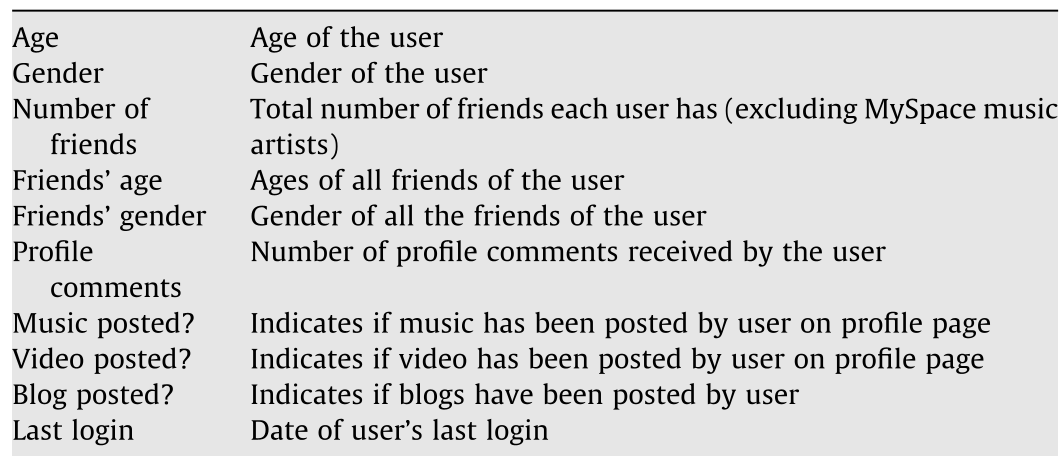
- Data Scoping: They sampled 50 teenagers and 50 older users (balanced for gender) and crawled their entire first-degree networks, totaling ~6,000 profiles.
- Linguistic Analysis: They used the LIWC (Linguistic Inquiry Word Count) tool to analyze the "About Me" sections, looking for psychological markers in writing styles.
Key Findings: Quantity vs. Diversity
The results highlight a sharp contrast in how social networks are constructed:
1. The Friend Gap
Teenagers exhibit a median of 60 friends, while older users average only 12.5. Teenagers primarily connect with peers within a 2-year age range, effectively moving their high school social circles online. In contrast, older users have much more heterogeneous networks, often connecting across generations (e.g., with grandchildren).
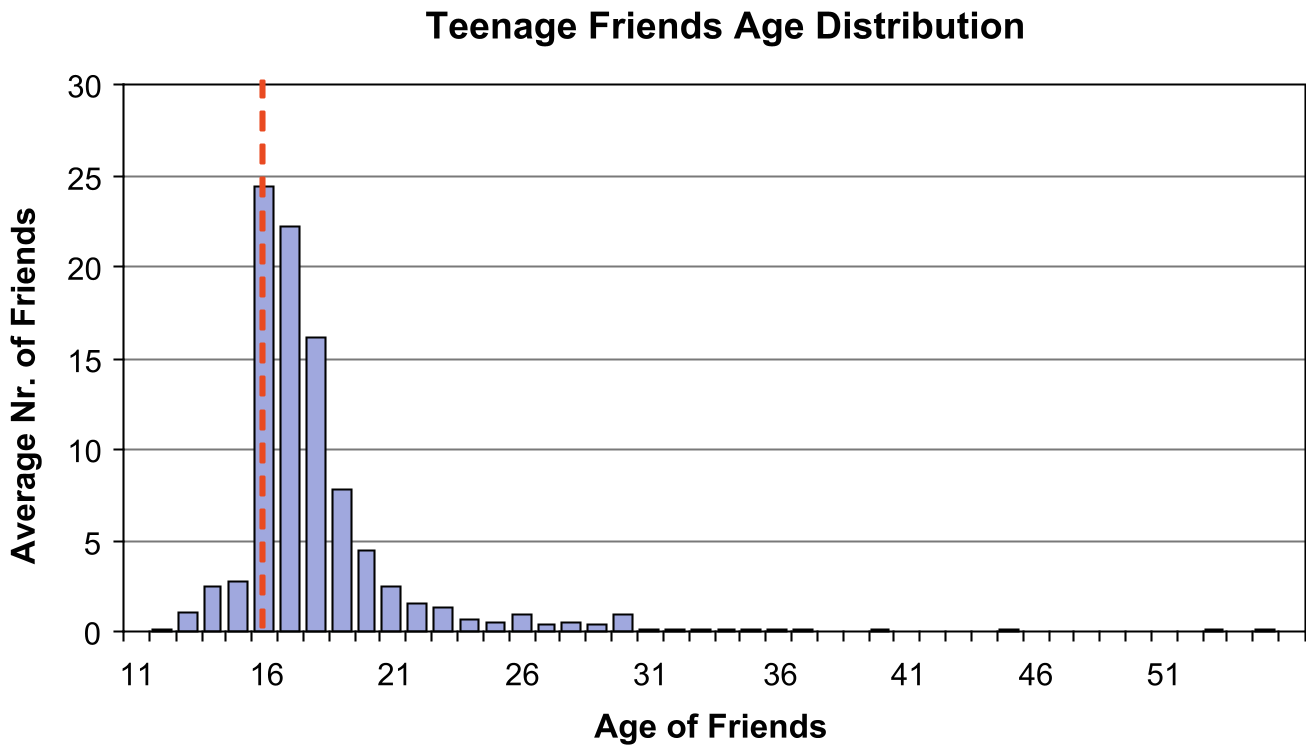 Figure: The "narrow" peak of teenage friendships suggests a focus on bonding within a specific peer group.
2. Linguistic Fingerprints
The content analysis revealed that:
- Teenagers: High usage of self-references ("I", "me") and negative emotions. They use the platform for identity experimentation and emotional venting.
- Older Users: High usage of "big words" and articles. Their profiles resemble formal correspondence, suggesting they view SNS as a more official communication medium.
3. Media and Engagement
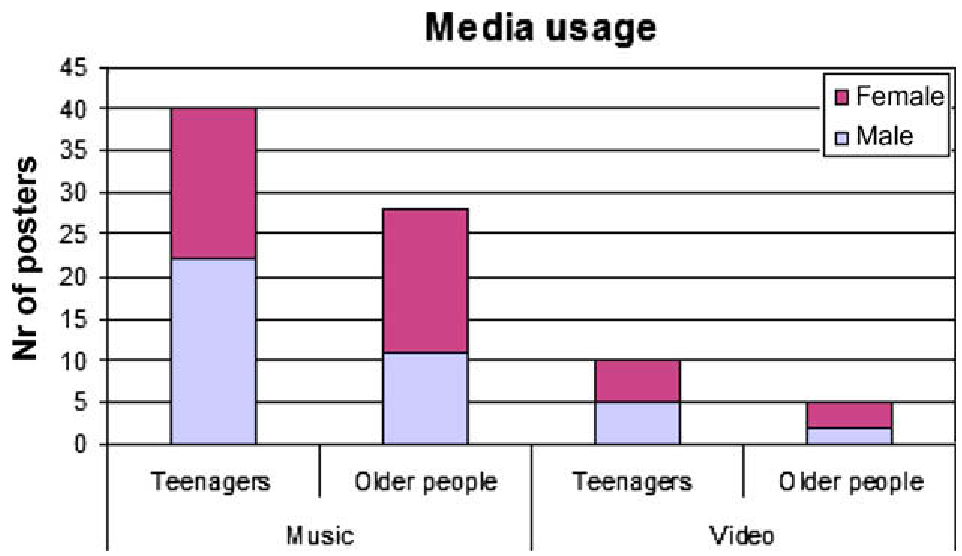
Teenagers are significantly more likely to use music and video features and receive 10x more comments. The study suggests that "nurturing" social capital through constant micro-interactions is a predominantly youthful behavior.
Critical Analysis & Conclusion
The "social capital divide" isn't just about technical skill; it's about intent. Teenagers use SNS to build "bridging" capital (weak ties/mass connections), whereas older users focus on "bonding" capital or specific familial bridges.
Takeaway for Today’s Designers: The formal writing style and smaller networks of older users suggest they require higher trust signals and more detailed identity verification to feel comfortable expanding their networks. In the modern era of "context collapse," this study reminds us that different age groups inhabit the same digital spaces with vastly different psychological maps.
Limitations: As the study was limited to MySpace (a platform since declined), the specific technical behaviors (like "Top 8" or profile music) may have changed, but the underlying social capital motivations likely remain constant.