
Structured Insights from Chaos: A Hybrid Ontology Approach to Facebook User Profiling
Age, Gender, Race and Smile Prediction Based on Social Textual and Visual Data Analyzing
The paper introduces a specialized framework for social network user profiling, specifically targeting Facebook data. It presents a customized PHP application to extract unstructured user data, which is then structured through a hybrid semantic-multidimensional ontology and stored in a scalable NoSQL Cassandra database to facilitate predictions of age, gender, race, and smiling.
TL;DR
Social media holds a goldmine of user data, but its unstructured nature makes analysis difficult. This paper details a full-stack framework—from data extraction via a custom PHP app to storage in a NoSQL Cassandra database—that uses a Hybrid Semantic-Multidimensional Ontology to structure profiles and predict user attributes like age and race.
Problem & Motivation: The Messy Reality of Social Data
In the context of Smart Cities, understanding citizen preferences is key to improving services. However, social data from platforms like Facebook presents three major hurdles:
- Heterogeneity: Data ranges from text comments to cover photos.
- Volume: With billions of users, traditional relational databases (SQL) suffer from "Availability" and "Reliability" bottlenecks.
- Lack of Context: Vector-based models often treat interests as isolated points, ignoring the semantic links between, for example, a "Favorite Movie" and a "Religious Belief."
The authors argue that current tools like "Netvizz" or "RUM extractor" focus on extraction but fall short in providing a sophisticated representation that balances structure with semantic meaning.
Methodology: The Architecture of Understanding
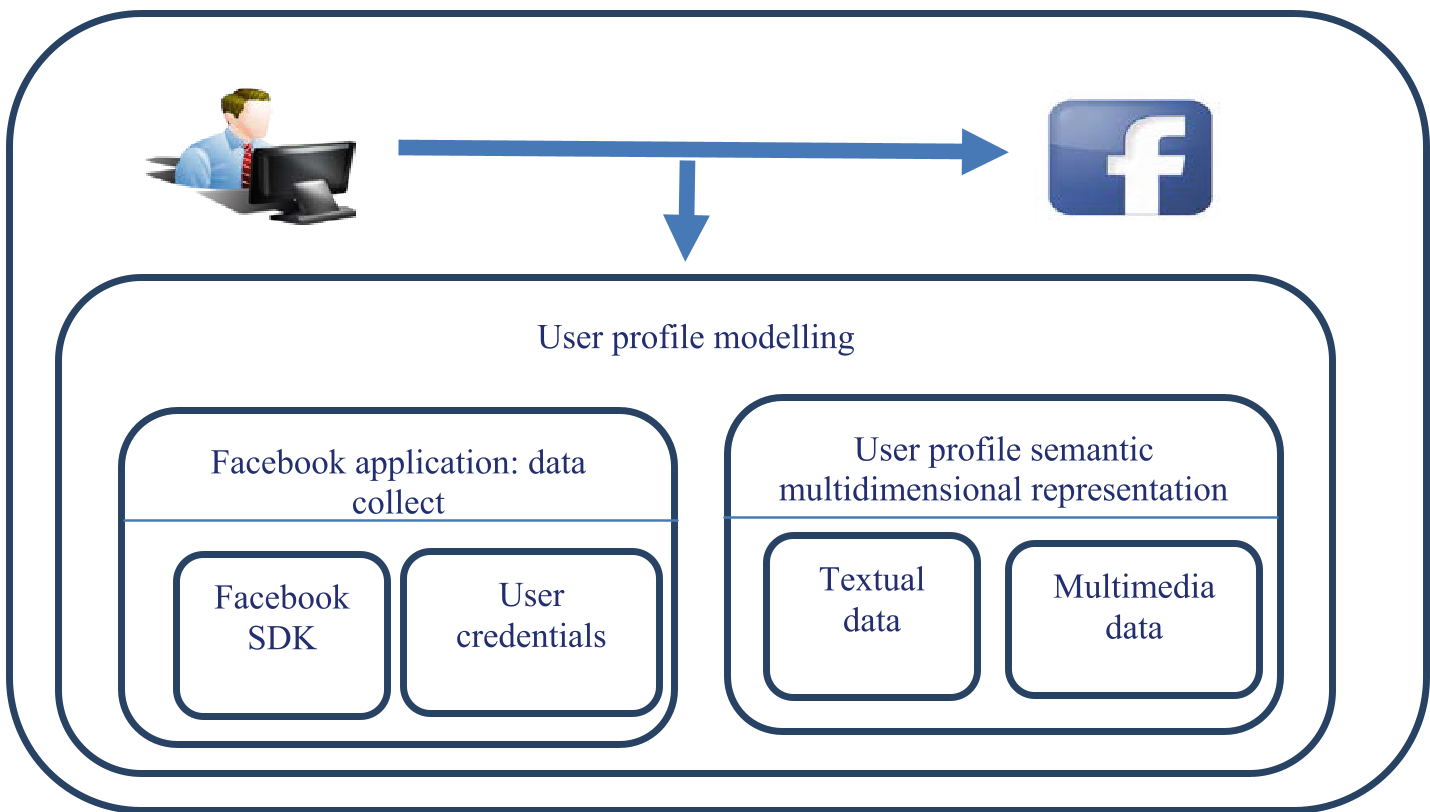
The proposed framework follows a systematic pipeline: Collection → Representation → Storage.
1. Hybrid Ontology Model
The core innovation lies in combining two representation techniques:
- Multidimensional Representation: Segregates data into logical buckets like "Textual" and "Multimedia."
- Semantic Representation: Uses the Web Ontology Language (OWL) to define relationships between these buckets (e.g., how a "Like" relates to "Identity").
2. High-Scalability Storage (NoSQL)
Instead of the standard MySQL, the team uses Apache Cassandra. By using the Cassandra Query Language (CQL), the framework ensures that as the "Social@Regim" database grows, it maintains high performance—a critical requirement for analyzing social streams in a Smart City.
Analysis of the Ontology
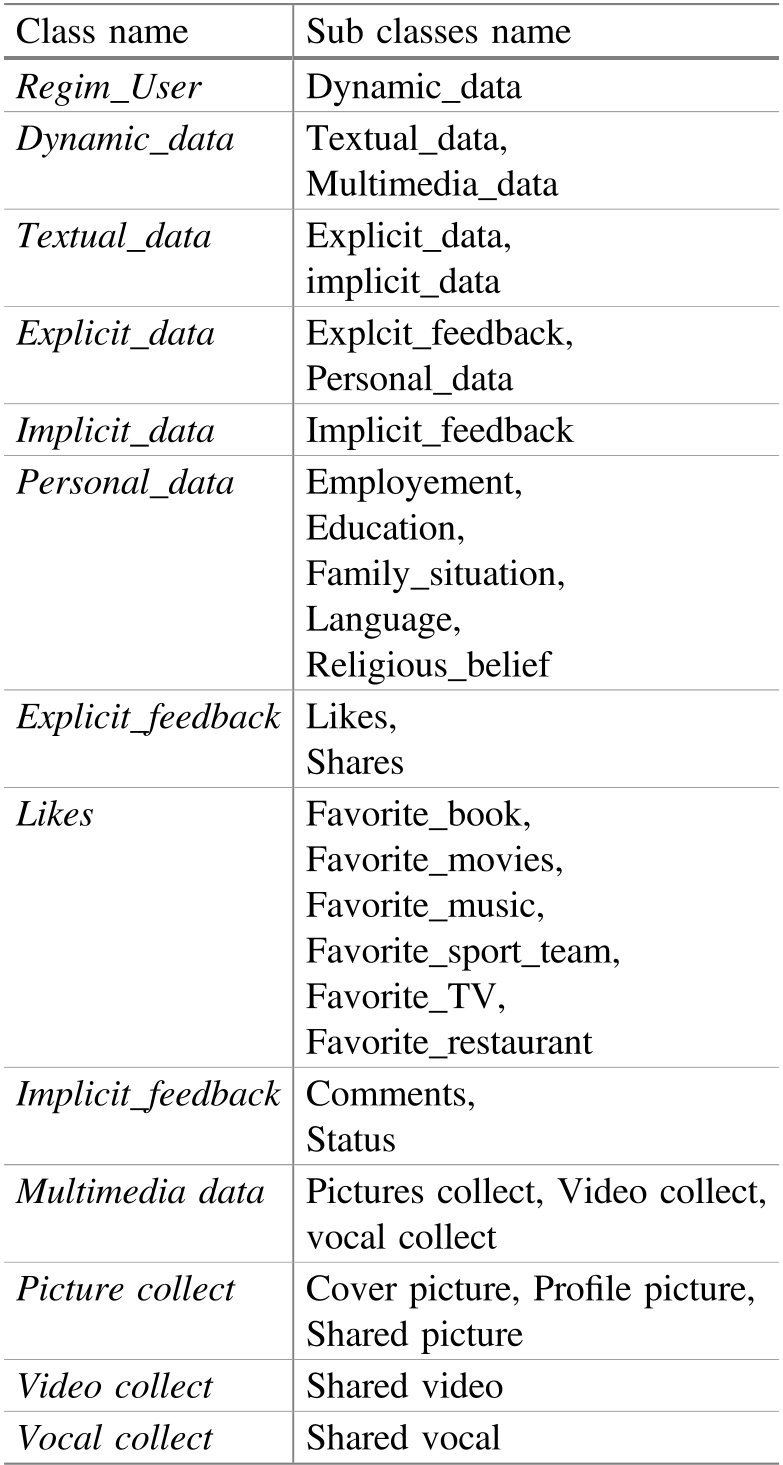
The ontology is built around the "REGIM-User" class. It splits data into Explicit (Personal data, Likes) and Implicit (Comments, Status updates) categories. This distinction is vital for modern AI, as implicit data often reveals more about true user sentiment than their self-declared interests.
Experiments & Results: Turning Photos into Profiles
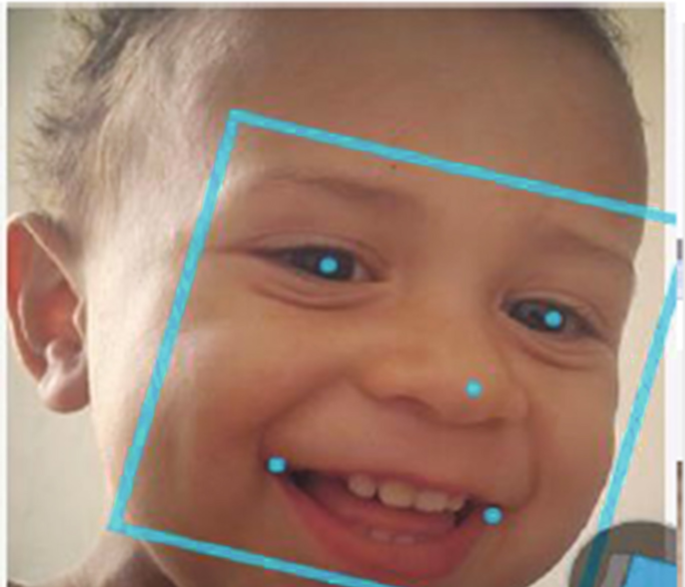
To validate the system, the authors collected data from 50 test users. By processing the "Multimedia" dimension of their ontology (specifically profile pictures), they were able to run predictive models.
- The Goal: Predict Age, Gender, Race, and "Smiling" status.
- Outcome: The system mapped visual features directly back into the ontology, creating a rich, multi-faceted digital twin of the user.
Critical Insight & Conclusion
While the current work excels at structuring the data and providing a scalable home for it, the predictive side (Age/Gender estimation) appears to be a proof-of-concept. The real value for future practitioners is the Scalable Ontology Design.
Future Outlook: The next logical step is to automate the "feeding" of the ontology directly from the NoSQL database using Natural Language Processing (NLP) to turn "Implicit" comments into "Explicit" ontological facts. This would move social profiling from static storage to a living, evolving knowledge graph.
Takeaway for Tech Leads: If you are building a personalization engine, don't choose between a Graph/Ontology or a NoSQL store—bridge them. Use NoSQL for the heavy lifting of raw data and an OWL-based ontology to give that data meaning.