
Agency or Objectification? Re-evaluating Autism Technology Research
Agency of Autistic Children in Technology Research—A Critical Literature Review
This research presents a critical literature review of 185 papers (148 projects) concerning technologies for autistic children in the HCI community. It establishes six primary categories of technology purpose: behavior analysis, assistive technologies, education, social skills, therapy, and well-being, while identifying a persistent "medical model" bias across the field.
TL;DR
Is technology for autistic children actually for them, or is it for the adults around them? A critical review of 185 papers reveals that the HCI community predominantly operates under a "Medical Model," viewing autism as a deficit to be corrected. While social skills and therapy dominate the research landscape, the children's own agency—their ability to define their needs and use technology on their own terms—is largely ignored.
The Problem: The "Medical Deficit" Trap
For decades, technology design for autism has been driven by the intent to "normalize." The prevailing research intuition suggests that because autistic children may appreciate structure and predictability, they are "natural" partners for robots and computers.
However, the authors argue this leads to a dangerous "othering." By focusing on correcting social skills or behavior, researchers treat children as "data generators" or "receivers of correction." The pain, anxiety, and intrinsic desires of the children are rarely the primary design criteria. Instead, the real "users" are often the parents and therapists seeking a specific behavioral outcome.
Methodology: Mapping the Purposive Landscape
The review categorized technologies into six domains to see where the field's priorities lie:
- Behavior Analysis: Monitoring and diagnosing.
- Assistive Technology: Supplements for communication (e.g., AAC).
- Education: Traditional learning and "learning to learn."
- Social Skills: The largest category (48.1%), focusing on emotion recognition and collaboration.
- Therapy: Formalized interventions like ABA or Robot-assisted therapy.
- Well-being: A tiny minority (3.8%) focused on fun and sensory exploration.
The Core Insight: The Inversion of Agency
The most striking finding is the Inversion of Agency. In most HCI research, the technology is the "active" party—it teaches, prompts, and analyzes—while the child is "passive," merely consuming or adapting.
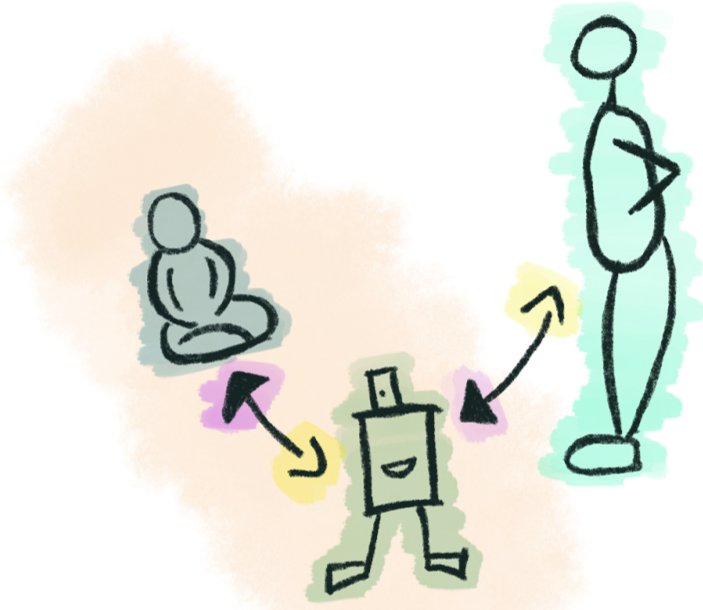 Figure: The "Triangle of Use" illustrates how neurotypical expectations are mediated to the child through technology, often ignoring the child's direct input.
Why Participatory Design (PD) is Not Enough
Even when projects claim to use "Participatory Design," the review found that children are rarely involved in defining the purpose of the technology. They are asked to choose colors or characters for a game whose therapeutic goals were already set in stone by adults. This "participation" is often superficial, failing to challenge the status quo of marginalization.
Results & Trends
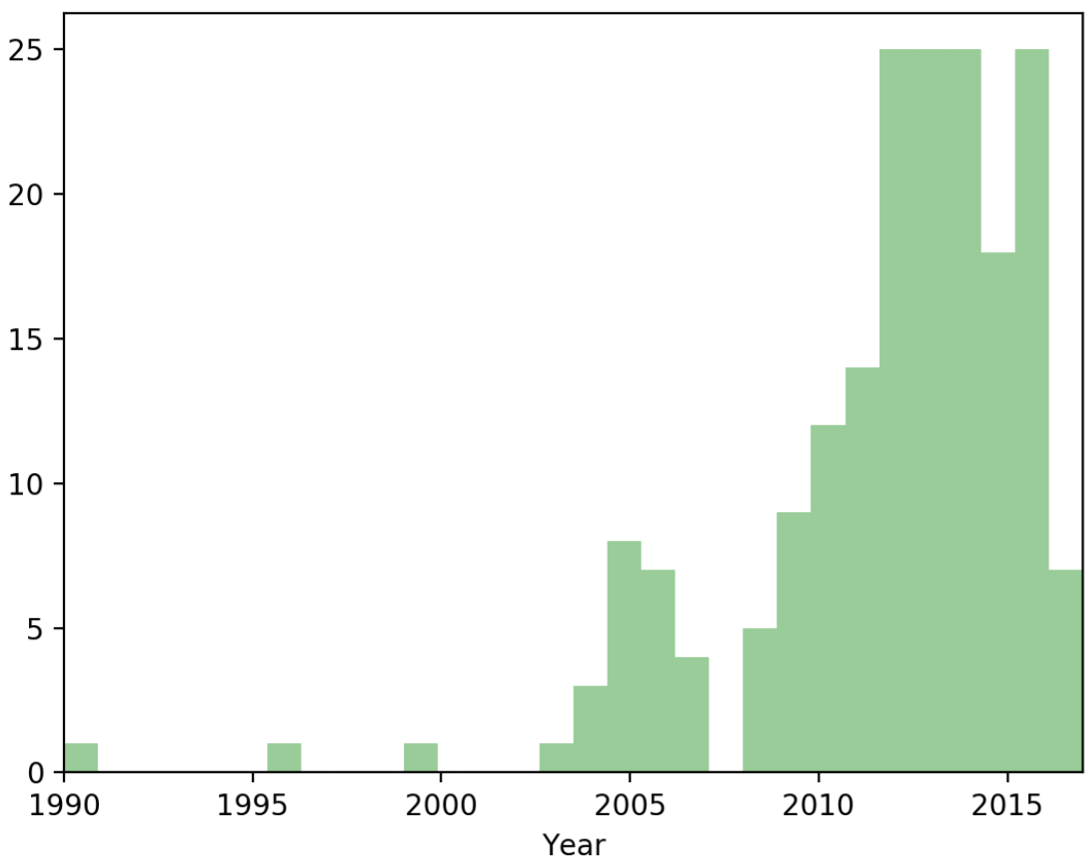
The data shows a community in flux. While the volume of research is increasing, the methods remain skewed:
- Gender Bias: Most studies focus on boys (9:1 ratio), reinforcing the stereotype that autism is a "male" condition and neglecting the experiences of girls and non-binary children.
- Technology Choice: Social robots are the "darling" of the field (24.9% of keywords), valued for their perceived predictability, yet they are often used as tools for external monitoring rather than genuine companionship.
Critical Perspective: Beyond the "Other"
The authors challenge future researchers to stop "othering" autistic children. Instead of designing to "fix" a child so they fit into a neurotypical world, we should design to:
- Educate the Environment: Create tools that help neurotypical peers and adults understand autistic communication.
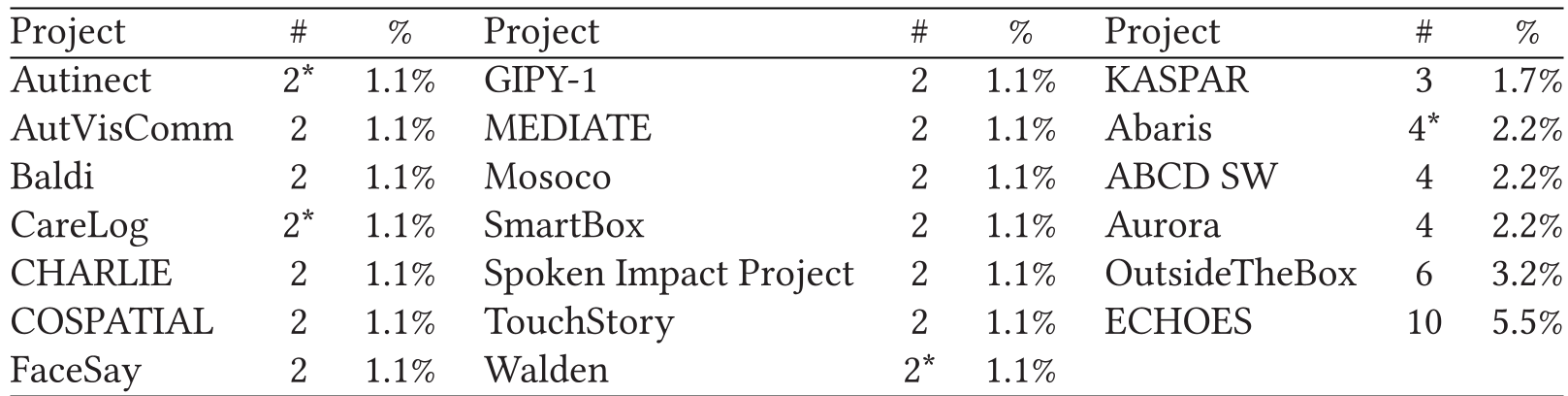
- Support Self-Determination: Design objects that children can use to explore their own interests (like the "Thinking Machine" in the OutsideTheBox project).
- Prioritize Well-being: Move away from 36-hour-a-week therapy models toward technologies that foster joy and sensory comfort.
Conclusion
This paper serves as a profound call to conscience for the HCI community. If we truly want to design for autistic children, we must stop treating them as problems to be solved. We must acknowledge them as partners, honor their unique ways of making sense of the world, and build technologies that celebrate neurodiversity rather than suppressing it.