
Beyond Rationality: Simulating Human Collective Behavior via Artificial Emotion
Collective behavior simulation based on agent with artificial emotion
This paper introduces a multi-layer modeling framework for collective behavior simulation, integrating Personality, Emotion, Mood, and Behavior (PEMB). By utilizing the Netlogo platform, it successfully simulates the emergence of self-organized human groups under non-rational, emotionally driven conditions.
TL;DR
Researchers have developed a multi-layered agent-based model that moves beyond simple "follow-the-leader" physics. By incorporating Personality, Emotion, and Mood (PEM), the model simulates how humans form self-organized groups—not through logic, but through the "soft binding" of emotional satisfaction and social interaction.
The Missing Piece: Why Rational Models Fail
Most swarm intelligence studies are inspired by the movement of birds or fish. However, human groups are far more complex. We don't just move; we feel. Prior work often overlooks the fact that human "self-organization" is frequently an irrational process driven by temperamental similarity, mutual trust, or the sting of social exclusion.
Methodology: The PEMB Hierarchical Architecture
The core of this research lies in its multi-level psychological engine, which dictates how an agent perceives its world and neighbors.
- Personality (FFM): The static foundation based on the "Big Five" (Openness, Conscientiousness, Extraversion, Agreeableness, Neuroticism). This determines the agent's baseline behavior.
- Emotion (Ekman's Six): A dynamic 6D vector (Joy, Sadness, Anger, etc.) that responds to external stimuli.
- Mood: A more stable, slower-changing state (Excited, Normal, Negative) modeled using neural cell state space equations to ensure continuity.
- Behavior Choice: A Bayesian network-driven selection process that maps internal states to actions like "close," "leave," or "wander."
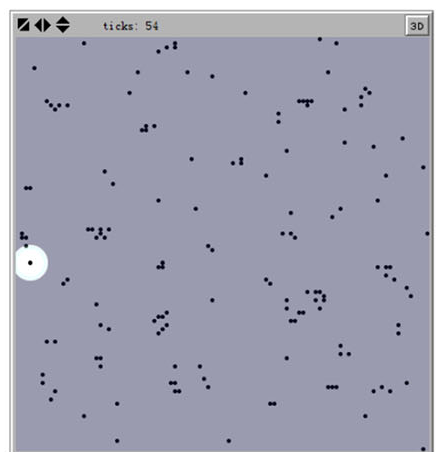 Fig 1: The emergence of self-organized collective behavior based on the PEMB framework.
The Interaction Logic
The "secret sauce" is the Interaction Update Function. Agents don't just bump into each other; they evaluate every encounter. If Agent A has a "friendly" interaction with Agent B, the relationship value increases. This creates a mathematical "vibe" that dictates future social proximity.
Experimental Insights: Social Needs and Group Cohesion
Using the Netlogo platform, the researchers tracked individual agents (like Agent 14) and the global population.
- The Tipping Point: Agents remain "quiet" until social contact triggers emotional fluctuations. As interactions increase, the richness of the agent's emotional world expands.
- The Cohesion Paradox: The simulation reveals that self-organized groups without formal leaders are inherently unstable. As the global "average mood" changes, groups reach a saturation point where members begin to leave, leading to a perpetual cycle of aggregation and dissolution.
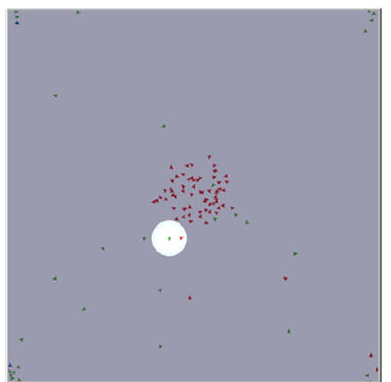 Fig 2: Group emergence states and corresponding mood change curves across 360 simulation cycles.
Exclusion and Loneliness
The model also captured "social exclusion." If an agent is rejected by a cluster, its negative emotions strengthen, reinforcing an "avoidance" behavior. This accurately reflects how negative group dynamics can amplify individual loneliness—a level of psychological depth rarely seen in traditional crowd simulations.
Critical Analysis & Conclusion
Takeaway
This work successfully bridges the gap between social psychology and computational modeling. By proving that "irrational" factors like mood and personality are the primary drivers of group stability, it provides a more robust framework for simulating realistic human environments.
Limitations & Future Work
While the model is sophisticated, it currently relies on discrete "atomic actions." Future iterations could integrate Deep Learning to allow for more nuanced, continuous behavior patterns. Additionally, exploring how "core figures" (leaders) stabilize these groups using the same emotional mechanics would be a significant next step.
In summary: If we want to simulate humans, we must first simulate their hearts. This paper provides the mathematical blueprint to do exactly that.