
Evolving Corporate Strategy: Merging Agent-Based Modeling with Evolutionary Computation
Agent-Based Modeling of Corporate Behaviors with Evolutionary Computation
This paper introduces an agent-based simulation model integrated with Evolutionary Computation (GA) to analyze and optimize corporate strategic behaviors. By utilizing a Multi-Objective Genetic Algorithm with Tabu Search, the researchers simulate competing firms within an artificial society to identify optimal marketing strategies based on the Balanced Scorecard (BSC) framework.
TL;DR
This research bridges the gap between abstract business strategy and computational social science. By treating a company's strategic choices as "genes" and the market as a fitness landscape, the authors use a Multi-Objective Genetic Algorithm (GA) to discover optimal business behaviors. They successfully validate their model against real-world Japanese consumer data, proving that simulation can reveal which strategies (like Operational Excellence) actually dominate in competitive environments.
Problem & Motivation: The Complexity of the Market
Why is it so hard to predict business success? Conventional management science typically looks backward via case studies or tries to oversimplify the world through macro-statistics. These methods fail to capture emergent phenomena—the unpredictable results of many individual agents (companies and customers) interacting.
The authors identify four critical "pain points" in existing social simulations:
- Complexity: The models have too many parameters to tune manually.
- Conflicting Goals: Businesses don't just want profit; they want market share, cash flow, and low debt simultaneously.
- Reality Gap: Many models are purely theoretical and lack "grounding" in real-world data.
- Interpretability: Even if a simulation works, it’s hard to tell why a certain strategy succeeded.
Methodology: The GA-Driven Artificial Society
To solve these issues, the researchers built an artificial marketplace consisting of 40 competing companies.
1. The Genetic Blueprint of a Firm
Instead of arbitrary rules, each company’s strategy is defined by 7 key attributes (the "genes") derived from the Balanced Scorecard (BSC) and Treacy/Wiersema’s value propositions:
- Products & Services: Price, Quality, Time, Function.
- Customer Relationship: Service, Relationship.
- Image: Brand Image.
2. Multi-Objective Tabu GA
Since a company must balance multiple goals, the study employs a specialized Genetic Algorithm. They use VEGA (Vector Evaluated Genetic Algorithm) enhanced with Tabu Search. The Tabu lists prevent the model from getting stuck in local optima and help maintain diversity in strategies.
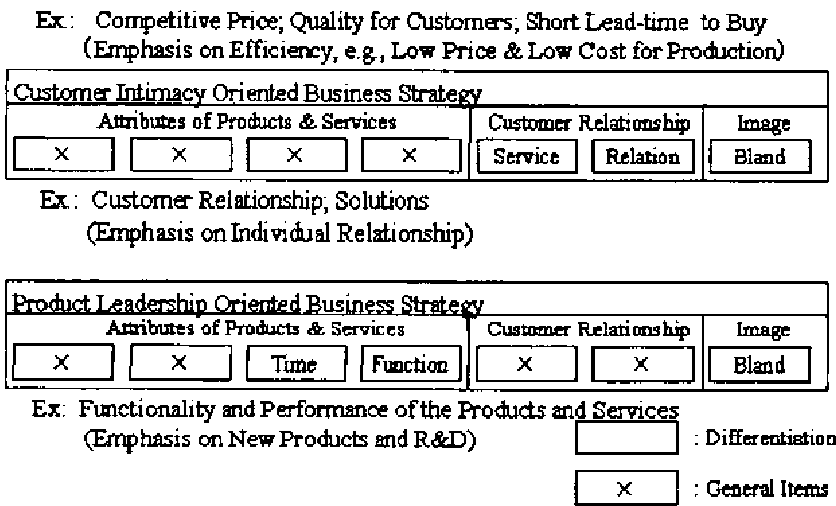 Figure 1: The architecture of the decision-making agent, mapping strategic genes to operational divisions.
3. Real-World Grounding
The researchers didn't guess consumer preferences. They used marketing survey data from Japanese electric appliance markets (TVs, Radios, Shavers) to define four distinct customer clusters, ranging from "price-sensitive" to "quality-sensitive."
Experiments and Results
The simulation was run for 100-1500 generations. The primary focus was the TV market, where the simulation sought to optimize four objectives: Benefit, Market Share, Cash Flow, and Borrowing.
Key Findings:
- Convergence: Most objectives reached stability within 100 generations, while "Market Share" was more volatile, requiring up to 300 generations (see Figure 6).
- Strategy Insights: For maximizing Benefit and Cash Flow, the "genes" for Price and Service were dominant.
- Product Differentiation: In the electric shaver market, "Function" was the critical gene, whereas in the radio-cassette market, "Time" (speed to market) was more important.
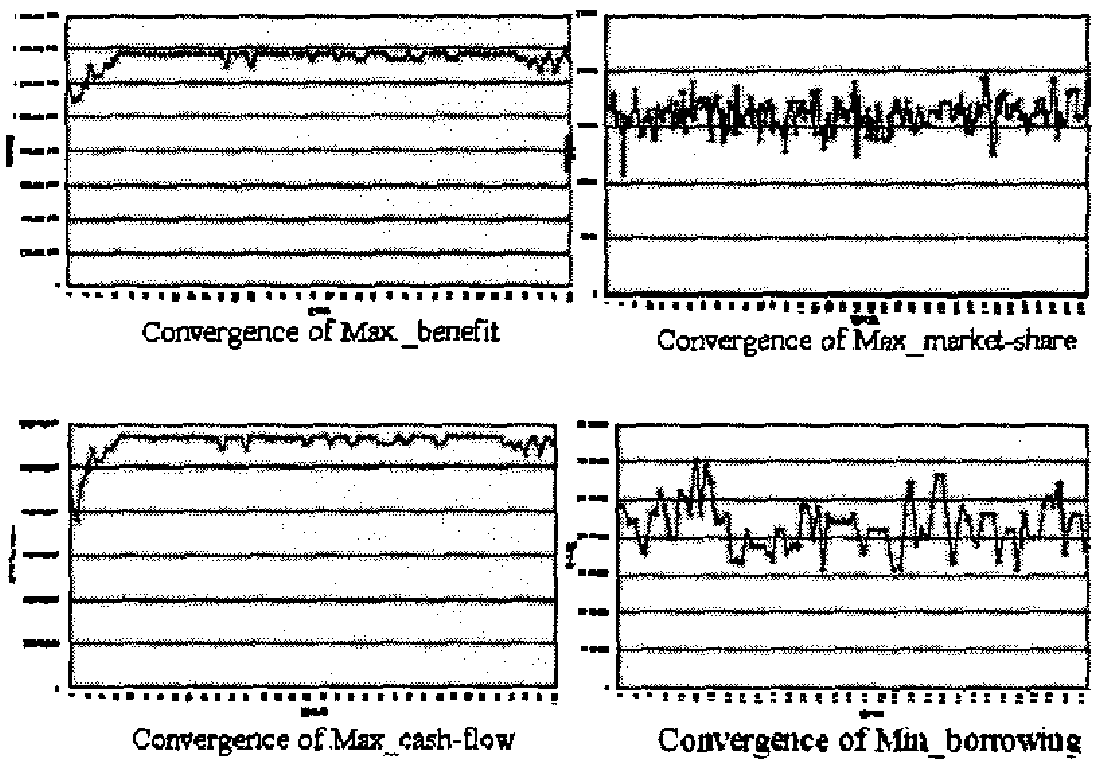 Figure 2: Performance of the Multi-Objective GA across different business metrics.
Critical Analysis & Conclusion
The true value of this paper lies in its Statistical Validation of genes. By analyzing the variance of genes in the "elite" population (the Tabu lists), the authors can determine which parts of a strategy are essential and which are secondary. If a gene has low variance across all top-performing agents, it indicates a "must-have" strategic trait for that specific market.
Takeaway: This methodology transforms "Management by Intuition" into "Management by Evolution." It provides a rigorous framework for executives to test "What-If" scenarios in a risk-free digital twin of the market.
Limitations: The current model only evolves one company against 39 "static" random competitors. A more realistic (though computationally expensive) extension would be a co-evolutionary model where all 40 companies learn and adapt simultaneously, reflecting the true Red Queen Effect of real-world competition.