
Diversity as a Catalyst: How Diverse Human Values Optimize Social Information Flow
Agent-based social simulation model that accommodates diversity of human values
This paper proposes an Agent-Based Modeling (ABM) framework for social simulation that utilizes Particle Swarm Optimization (PSO) to represent the diversity of human values. By treating agents as individuals with distinct evaluation functions (fitness landscapes), the study compares information propagation within homogeneous versus heterogeneous value environments.
TL;DR
Researchers have developed a social simulation model using Particle Swarm Optimization (PSO) where agents aren't just data points—they are individuals with unique "Value Standards." The study reveals a fascinating counter-intuitive truth: we find better solutions not by sticking with like-minded people, but by interacting within a community of diverse thinkers.
Contextual Positioning
This work sits at the intersection of Swarm Intelligence and Sociology. While most Particle Swarm models seek a single global optimum for a specific task, this paper uses PSO as a lens to observe how "Information Propagation" behaves when the definition of "Best" changes from person to person.
The Core Friction: The Homogeneity Trap
In traditional social media or network models, we often assume information has an objective worth. In reality, a "red car" is high-value to a sports car enthusiast but low-value to a minimalist. The authors argue that previous Agent-Based Models (ABM) failed because:
- They treated information as a scalar constant.
- They ignored the Inductive Bias created by individual human values.
- They couldn't explain why some communities stagnate while others evolve.
Methodology: Mapping Values to Mathematics
To simulate the messiness of human values, the researchers assigned agents different mathematical "Fitness Functions."
- Sphere Function: Represents simple, straightforward values.
- Rastrigin/Bohachevsky: Represents complex, "multimodal" values with many mental traps (local optima).
- Rosenbrock: Represents values with high inter-dependency.
Architecture and Selection
The model uses two communication structures:
- Gbest (Global Best): Every agent talks to everyone.
- Lbest (Local Best): Agents only talk to their immediate neighbors.
The "Natural Selection" step is the secret sauce: every few iterations, the worst-performing agents (those failing to find information that satisfies their value standard) are "re-educated" or replaced by the strategies of the most successful agents.
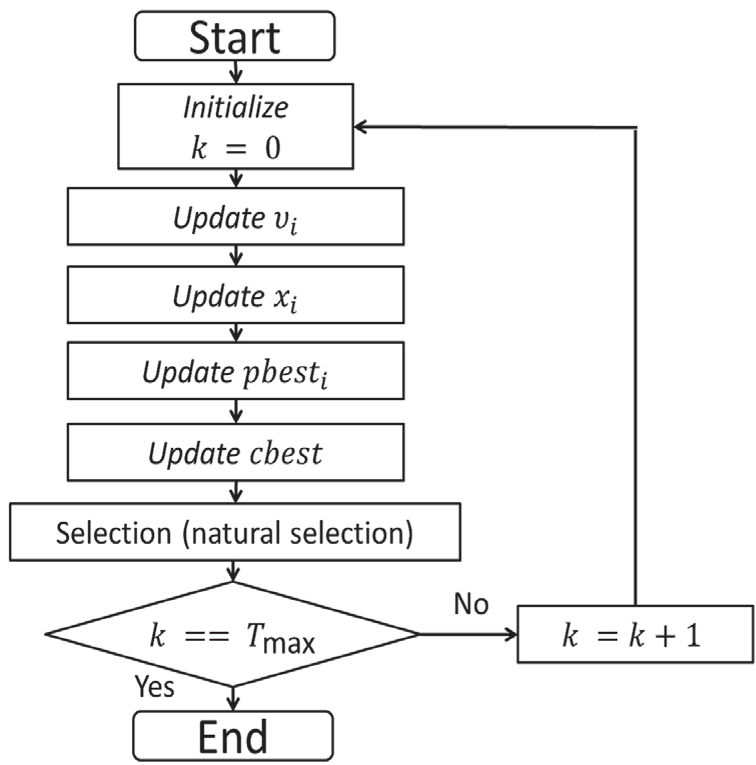 Fig 1: The hybrid PSO-Selection algorithm flow.
Experiments: Homogeneous vs. Heterogeneous
The researchers set up two worlds:
- Conventional Environment: Clusters of agents who all value information the same way.
- Proposed Environment: A "melting pot" where agents with different evaluation functions (colors) are interlinked.
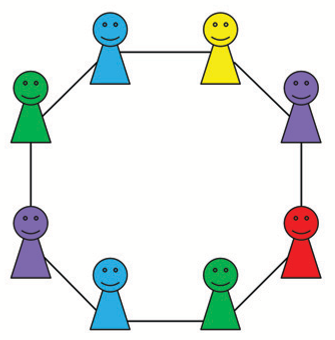 Fig 2: Conventional (Left) vs. Proposed (Right) network topologies.
The "Cross-Pollination" Effect
The results were striking. Agents with complex, "difficult" values (like the Rastrigin function) performed significantly better when they were allowed to interact with "simpler" agents.
Why? Because the simple agents (Sphere function) move towards the global optimum very quickly. Their movement provides a "gravitational pull" that drags the complex agents out of their local ruts. In a homogeneous group of complex thinkers, everyone gets stuck in the same local traps.
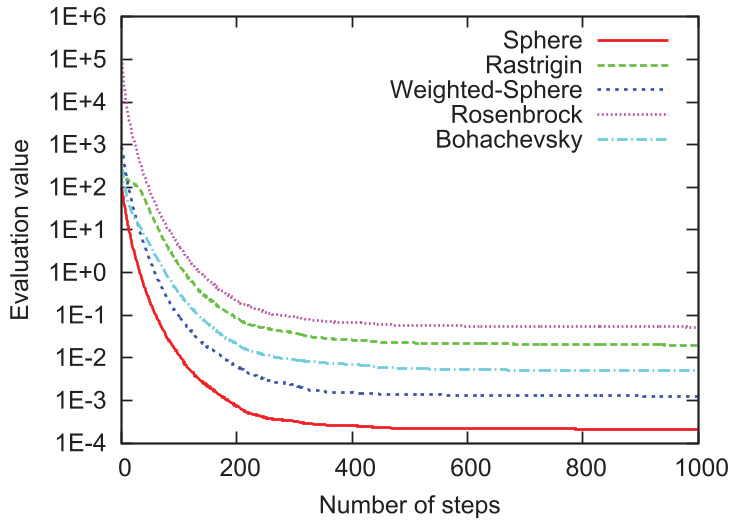 Fig 3: Convergence rates in the Proposed (Diverse) Environment showing superior performance across complex value sets.
Critical Insight & Conclusion
The paper concludes that Diversity is a functional necessity for social optimization.
- Takeaway: If your community only consists of people with complex, identical worldviews, you are mathematically more likely to stay "stuck."
- Limitations: The study assumes that all agents are ultimately looking for a similar global optimum (0,0), just through different landscapes. In the real world, "Global Bests" might be diametrically opposed.
This model provides a robust foundation for future "Security Simulations"—predicting how misinformation might spread differently in an echo chamber versus a diverse social network.