
Engineering Urban Social Fabric: A Heuristic Approach to Spatial Network Synthesis
An Agent-based Spatial Urban Social Network Generator: A Case Study of Beijing, China
This paper introduces an agent-based spatial social network generator that utilizes utility-based functions and heuristic algorithms to synthesize "close" and "somewhat close" friendships for urban populations. Applied to a case study of Beijing, the model successfully reproduces realistic network degree and transitivity distributions while incorporating geographical factors like residence and workplace locations.
TL;DR
Researchers have developed a sophisticated Agent-Based Model (ABM) that generates realistic social networks for urban synthetic populations. By distinguishing between "close" and "somewhat close" ties and utilizing a dual-stage heuristic optimization, the model achieves a high-fidelity match with real-world connectivity patterns in Beijing, accounting for where people live, work, and who they are.
Context: Why Standard Networks Aren't Enough
In the world of urban simulation—whether for pandemic modeling or traffic forecasting—the "social network" is the invisible infrastructure directing human flow. However, standard mathematical models like Small-World or Scale-Free networks are often "aspatial" and lack biological or sociological realism. They don't account for the fact that you are more likely to be friends with a neighbor or a colleague than a random person across the city.
The challenge lies in creating a network that is behaviorally sound (reflecting individual choices) yet statistically accurate (matching global metrics like transitivity and degree distribution).
Methodology: The Logic of Friendship
The authors break down the friendship formation process into a utility-driven competition. The core mechanism is a utility function that calculates the "probability" of a tie based on:
- Homophily: Similarities in age, sex, and income.
- Spatial Proximity: The physical distance between agents' homes and workplaces.
Two-Stage Heuristic Optimization
Unlike prior works that simply hope the utility function creates the right global structure, this model uses an active "fitting" process:
- Degree Fitting: Iteratively links agents with the highest utility scores until the distribution of "how many friends people have" matches surveyed data.
- Transitivity Adjustment: To fix the "clustering" (the "friend-of-a-friend" effect), the model employs a "Swap" heuristic. It builds a triangle of friends (increasing transitivity) and simultaneously dissolves a less "valuable" link to maintain the degree count.
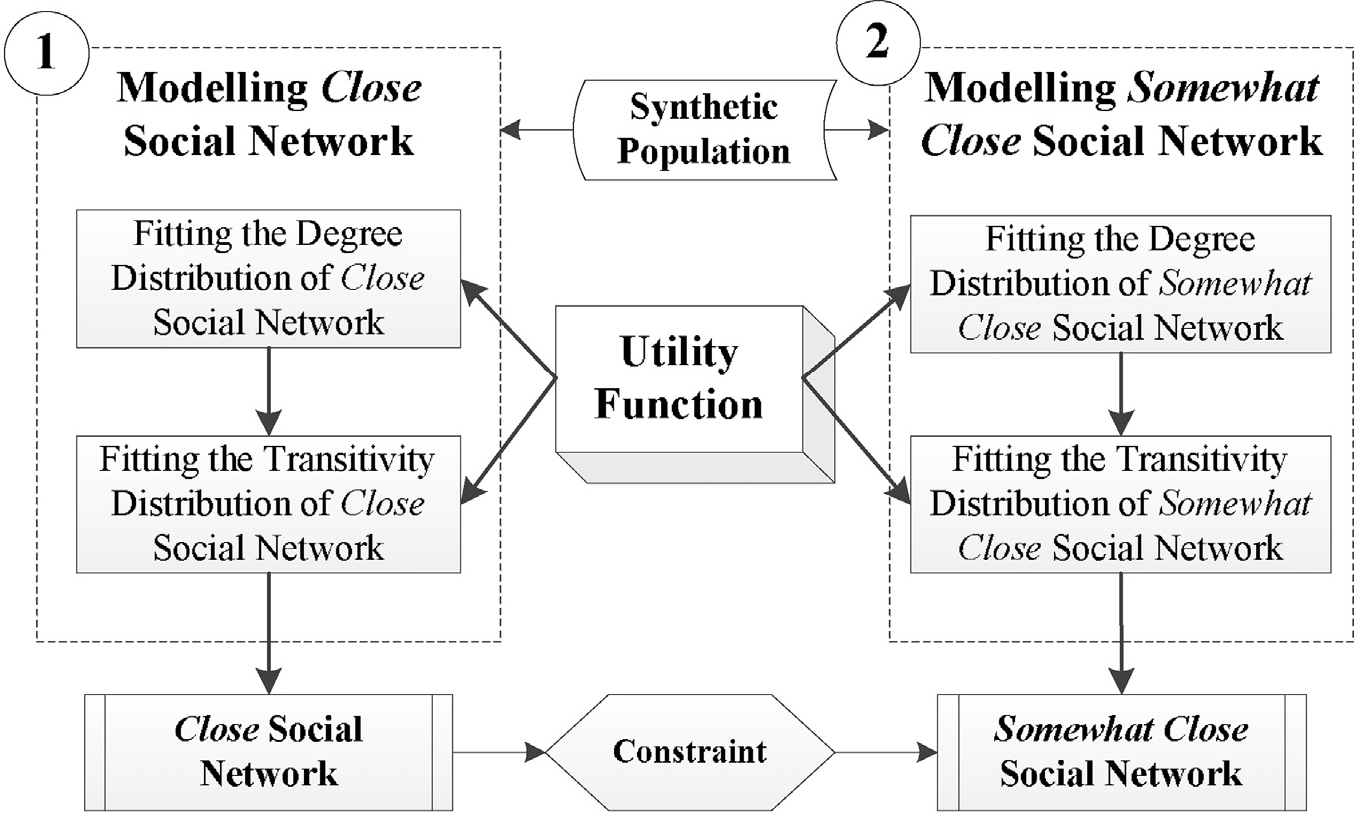 Figure 1: The dual-layered process of generating Close vs. Somewhat Close networks.
Experiments: Validating Beijing's Digital Socialites
Using Beijing as a case study (19.6 million population context), the authors synthesized a population and calibrated the model using an egocentric-network survey.
The results were remarkably precise. Whether looking at the number of friends (Degree) or the likelihood of friends knowing each other (Transitivity), the generated data (blue lines) tracked the target survey data (red lines) with minimal deviation.
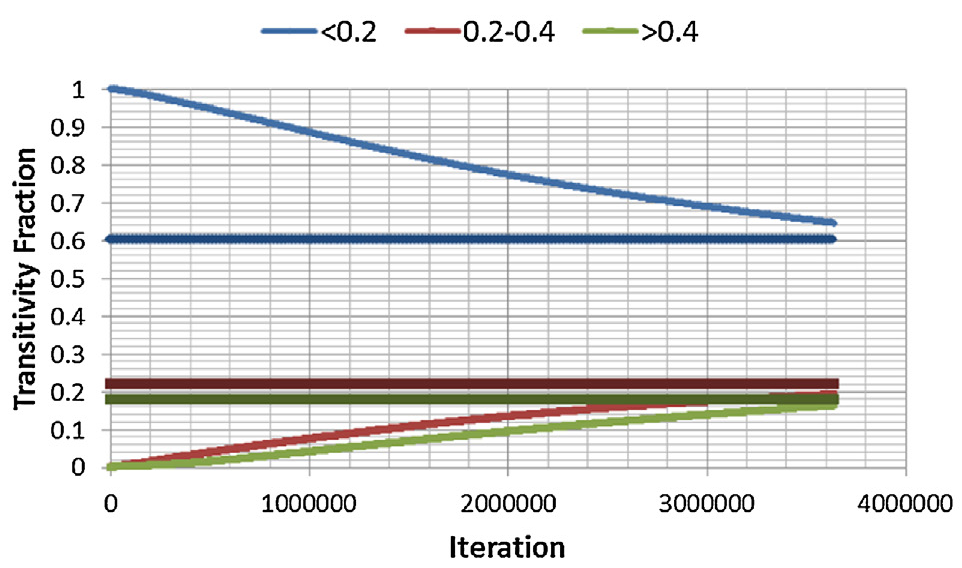 Figure 2: Comparison between target survey distributions and the model's generated results for friend numbers.
Spatial Insights
One of the most compelling outputs of this spatially explicit approach is the "Social Map" of Beijing. The study found that:
- Centrality Matters: Residents in central districts tend to have significantly more friends and higher clustering coefficients.
- Work-Home Balance: Friendships formed around workplaces are just as vital as neighborhood ties in defining the urban social structure.
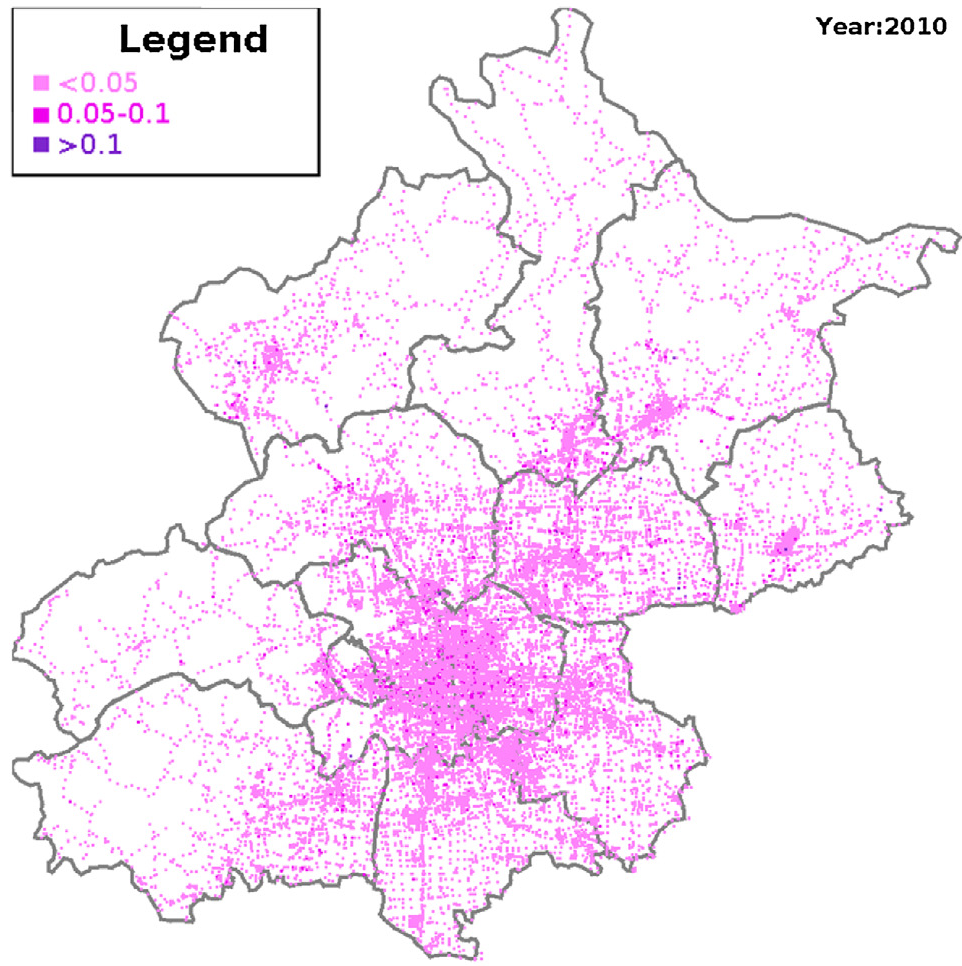 Figure 3: GIS visualization showing the density of social ties across Beijing's administrative districts.
Critical Insight: The Computation/Realism Trade-off
The model’s greatest strength—its iterative fitting of transitivity—is also its "Achilles' heel" regarding computation. The authors admit that for millions of agents, this optimization is extremely expensive.
Future Outlook: The move toward High-Performance Computing (HPC) and parallelization is necessary, but the real breakthrough might come from integrating this with Dynamic Social Evolution, moving from a "snapshot" of a network to one that grows and decays as the city breathes.
Conclusion
This work moves beyond the "random graph" era of urban simulation. By treating friendship as a byproduct of both personal attributes and urban geography, it provides a much more granular lens through which we can view the modern city.