
Aging Agents: Decoding the Generational Gap in The Division 2
Aging Agents: Cross Generational Analysis of Behavior and Need Satisfaction Among Players of Tom Clancy’s The Division 2
This research investigates how player age affects behavior and psychological need satisfaction in the online multiplayer shooter "Tom Clancy’s The Division 2." By cross-referencing survey data from 8,120 players with actual in-game behavioral tracking, the study identifies distinct generational patterns using the Ubisoft Perceived Experience Questionnaire (UPEQ).
Executive Summary
TL;DR: Far from the stereotype of the "casual" older gamer, Baby Boomers and Gen X are the "marathon runners" of hard-core shooters. This study reveals that while older players spend significantly more time in-game than Gen Z, they do so with different psychological drivers—prioritizing narrative and agency over raw mechanical mastery.
Academic Positioning: This work moves beyond traditional "survey-only" or "telemetry-only" studies. It is a large-scale empirical bridge connecting Self-Determination Theory (SDT) with actual server-side behavioral data, establishing age as a critical vector in player modeling.
The Problem: The "Young Gamer" Bias
The games industry often designs with a "typical" young user in mind. However, as the first generation of gamers grows old, the "Baby Boomer" and "Gen X" cohorts are becoming a dominant economic force in mid-to-hardcore titles. Existing literature has struggled to explain why older adults play complex shooters like The Division 2 and how their behavior differs from the "digitally native" Gen Z.
Methodology: Telemetry Meets Psychology
The researchers analyzed 8,120 players by merging two data streams:
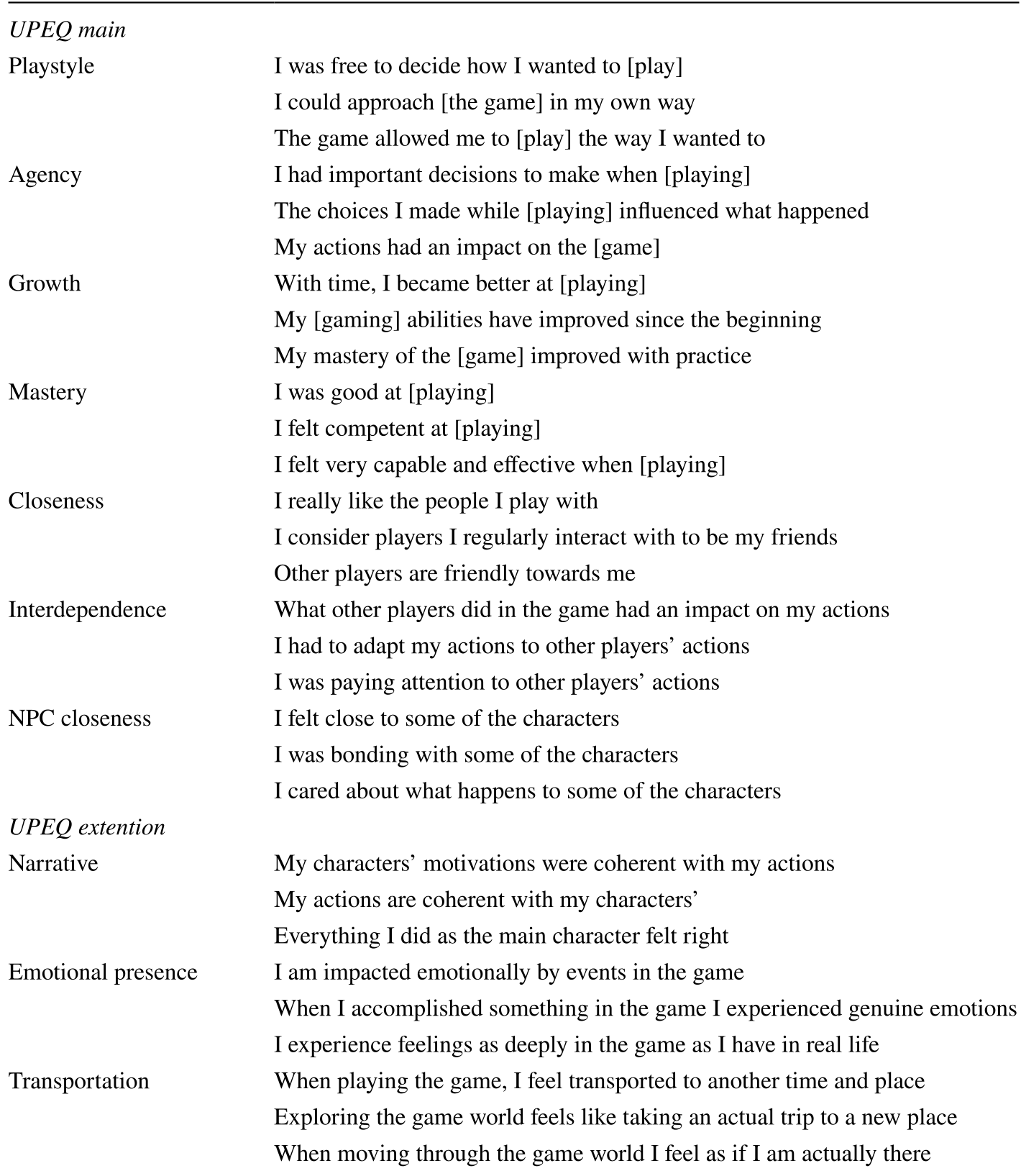
- Subjective Surveys: Using the UPEQ (Ubisoft Perceived Experience Questionnaire), measuring Autonomy, Competence, Relatedness, and Presence.
- Objective Telemetry: Tracking
daysplayed,playtime_hrs, andmax_gearscoredirectly from Ubisoft’s servers.
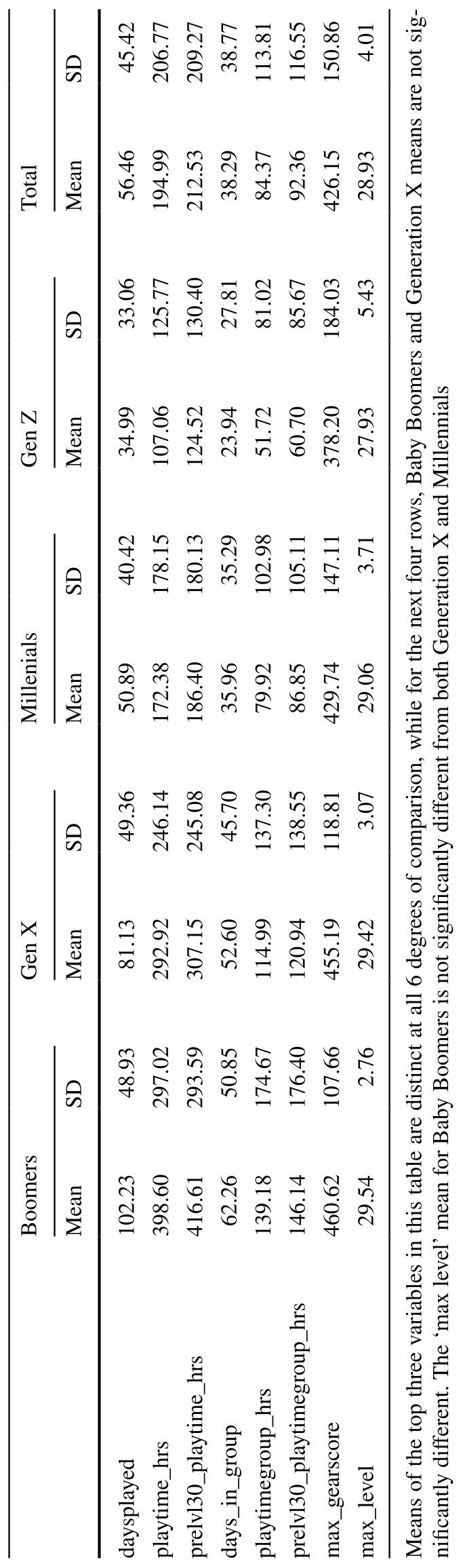
Core Insights: Experience Over Skill
The results challenge several industry assumptions about engagement:
1. The Playtime Paradox
Older generations play more, not less. Baby Boomers averaged ~400 hours of playtime compared to just ~100 hours for Gen Z. However, their "efficiency" is lower; they take longer to reach level caps and complete narrative content.
2. Agency vs. Mastery
One of the most profound findings is the negative correlation between age and Mastery.
- The Struggle: Older players feel less "competent" at the game's mechanics.
- The Reward: Despite lower mastery, they feel significantly higher Agency (the sense that their choices matter) and Narrative Presence.
- The Compensation: The authors suggest older players might be spending more time in-game specifically to compensate for slower progression, finding value in the world-building rather than the leaderboard.
3. The Social Shift
While older players have higher absolute "group playtime," the ratio of social play decreases with age. Gen Z spends nearly half their time in groups (48.3%), whereas Boomers lean more toward solo or NPC-centric play (34.9%).
Predictability via Machine Learning
Can we guess a player's age just by looking at their logs? The study used an ensemble of Neural Networks and SVMs.
- Top Predictors: Total playtime and "pre-level 30" playtime were the strongest indicators of age.
- Result: The multimodal model reached nearly 59% accuracy in predicting generational cohorts, proving that age leaves a distinct "behavioral fingerprint" in virtual worlds.
Deep Insight & Industry Takeaways
The study concludes that Playtime is not a universal metric of joy. For a teenager, 400 hours might signify obsession or mastery. For a retiree, it may signify a slow, methodical immersion in a story-rich environment.
- For Designers: Don't just build "harder" endgame content. Build "meaningful" content that rewards agency and narrative exploration to retain the high-spending, high-loyalty older demographic.
- Limitations: The study is limited to a single title (The Division 2). Behavioral patterns might differ in less "stressful" genres like Simulation or Strategy games.
In the "Aging Agent" era, the successful game will be the one that respects the player's time—not by making it shorter, but by making it feel relevant to their sense of self, regardless of their reaction speeds.