
The AGNES System: Bridging the Digital Divide via Ambient Social Interaction
12717_The AGNES system for ambient social interaction.
The AGNES system (Assistive Society for a New Generation) is an ambient social interaction framework designed to mitigate social isolation among the elderly. It introduces a multi-device ecosystem connecting home-based sensors, tangible interfaces, and specialized social networks to foster pervasive communication and wellbeing monitoring.
TL;DR
The AGNES system represents a pioneering shift in assistive technology, moving away from reactive emergency alarms toward proactive Ambient Social Interaction. By combining wearable sensors, tangible devices, and a specialized social graph, AGNES enables elderly users to stay connected with family and friends without the need to "learn" complex computer interfaces.
Problem & Motivation: The Loneliness of the "Digital Immigrant"
In the landscape of 2012, social networking was booming, yet the elderly remained largely excluded. The primary barrier wasn't just physical access but cognitive friction. Conventional interfaces require active participation—posting updates, checking notifications, and navigating menus.
For an elderly user, "learning the computer" is a significant hurdle. Furthermore, existing assistive environments were often "silent" until a crisis occurred (e.g., a fall). The researchers behind AGNES argued that social presence is a continuous need, not a discrete event, requiring a system that works in the background of daily life.
Methodology: The Architecture of Ambient Connection
The AGNES system is built on a tripartite architecture: Home-based Sensing, Tangible Interaction, and the Social Network.
1. Sensor Fusion for Automated Context
Instead of asking the user "What are you doing?", AGNES uses Sensor Fusion to infer state. By combining data from wearable accelerometers, cameras (detecting facial presence), and home sensors, the system determines:
- Presence: Is the user at home or out?
- Wellbeing: Based on facial expression and activity patterns.
- Physical Activity: Quantifying daily movement to encourage a healthy lifestyle.
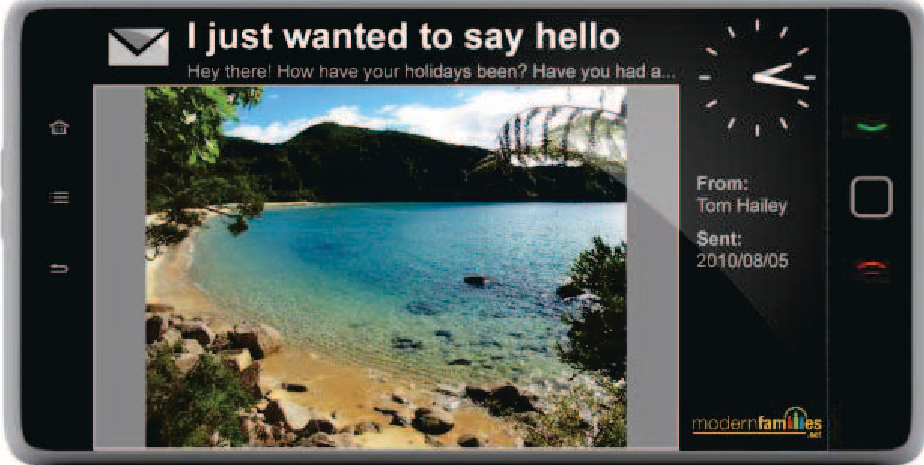 Fig 1: The Sensor Fusion logic for detecting user presence and state.
2. Tangible and Ambient Interfaces
To bypass the "screen barrier," AGNES employs:
- Tangible Devices: Physical objects that can be manipulated to trigger digital actions (e.g., a "ContactMe" physical token).
- Ambient Displays: Digital picture frames or smartwatches that show status updates from family without requiring a "log-in" process.
- BringMeHome: A specialized mobile interface for elderly users when they are outside, emphasizing simplified navigation and simplified status reporting.
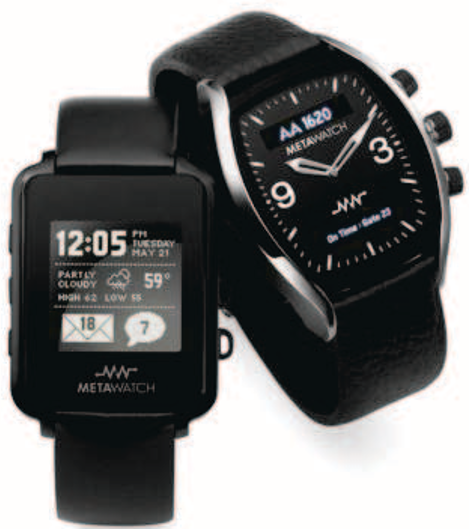 Fig 2: Wearable and tangible interfaces used to lower cognitive load.
Experiments & Results: Connecting Networks
The AGNES social network acts as the "glue" between these devices. It differentiates between different user groups—family, theme-based groups (e.g., hobby clubs), and emergency contacts.
The system's core success lies in its Semantic Abstraction. Raw GPS or sensor data is never shared directly; instead, it is translated into human-readable social cues like "Close to home" or "Active in the kitchen." This preserves privacy while maintaining a sense of "ambient awareness" among the peer group.
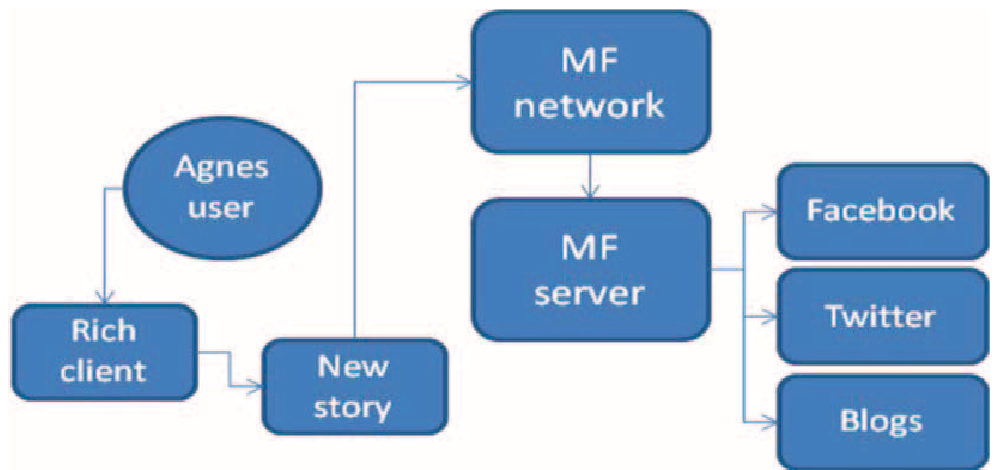 Fig 3: The interconnected network logic allowing seamless information flow between the elderly and their social circle.
Critical Insight: From Tools to Presence
What makes AGNES stand out in the history of HCI (Human-Computer Interaction) is its focus on Presence over Productivity. Most software is a "tool" to accomplish a task. AGNES is a "medium" that facilitates existence within a social sphere.
Limitations: While AGNES solved the "input" problem via sensors, the 2012-era hardware (early smartwatches and tablets) likely faced battery and connectivity constraints that today’s IoT devices are better equipped to handle. Furthermore, the reliance on camera-based facial observation for wellbeing remains a significant privacy trade-off.
Conclusion: The AGNES system paved the way for modern "Ambient Intelligence." It proves that for aging populations, the most powerful interface is the one that disappears into the environment, transforming the home itself into a social companion.