
Advancing Crop Protection: A Unified Dataset and Transfer Learning Framework for Agricultural Disease Identification
Agricultural Disease Image Dataset for Disease Identification Based on Machine Learning
The paper introduces a high-quality agricultural disease image dataset containing 15,000 images across various crops (rice, wheat, cucumber, grape) and proposes a transfer learning framework using CNNs (AlexNet, VGGNet) to achieve state-of-the-art identification accuracy.
TL;DR
Agricultural yields are under constant threat from pests and diseases, which account for over one-third of global natural crop losses. This paper addresses the critical shortage of high-quality training data by releasing an agricultural disease image dataset of 15,000 samples and presenting a Transfer Learning pipeline that reaches over 95% accuracy, outperforming traditional SVM and standard deep learning benchmarks.
The "Small Data" Bottleneck in Precision Agriculture
Modern Computer Vision (CV) has the potential to revolutionize farming, yet it faces a persistent paradox: Deep Learning requires massive datasets, but high-quality, labeled agricultural disease images are notoriously difficult to collect. Prior works often relied on datasets with fewer than 300 images, leading to models that fail under real-world conditions. Furthermore, traditional methods like SVM require "Hand-crafted Features" and manual lesion segmentation—processes that are both labor-intensive and fragile.
Methodology: Bridging Knowledge through Transfer Learning
The authors tackle the data scarcity problem through two distinct Transfer Learning (TL) strategies, ensuring the model can learn even when labeled samples are limited.
1. Unified Agricultural Dataset
The researchers built a comprehensive database covering rice, wheat, cucumber, and grapes. Unlike existing resources that show only a few typical symptoms, this dataset includes thousands of high-resolution images per disease, captured under natural light to reflect real-field conditions.
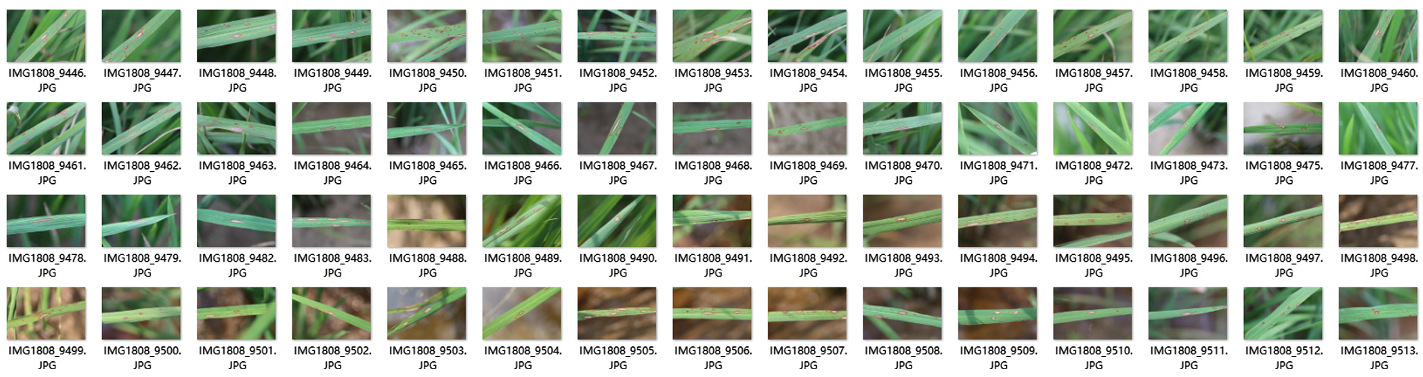 Fig 1: High-resolution samples of Rice Blast from the proposed dataset.
2. Optimized Transfer Strategies
- Instance-Based (TrAdaBoost + KNN): For tasks where auxiliary data exists, the authors use a modified TrAdaBoost. They integrate a KNN-based filtering strategy to remove auxiliary samples that are too dissimilar from the target crop, preventing "negative transfer."
- Parameter-Based (CNN + DisturbLabel): Leveraging AlexNet and VGGNet pre-trained on the PlantVillage dataset. To combat overfitting on smaller subsets, they introduce DisturbLabel—randomly intentionally mislabeling a small percentage of training data to force the network to learn more robust features.
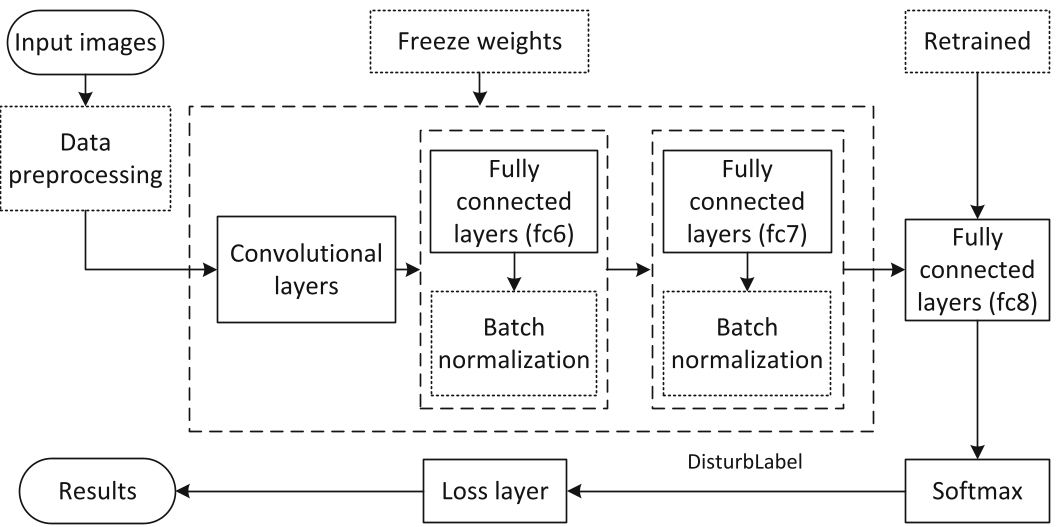 Fig 2: The parameter-based transfer learning architecture utilizing pre-trained weights and loss-layer regularization.
Experimental Performance
The transfer learning approach demonstrated clear superiority over both traditional and "from-scratch" deep learning models.
- Accuracy Boost: The proposed method achieved 95.93% accuracy on processed cucumber and rice datasets.
- Stability & Convergence: By employing Batch Normalization (BN), the authors significantly reduced the number of iterations required for convergence, while the training on "processed" (carefully cropped) images showed much higher stability than "raw" images.
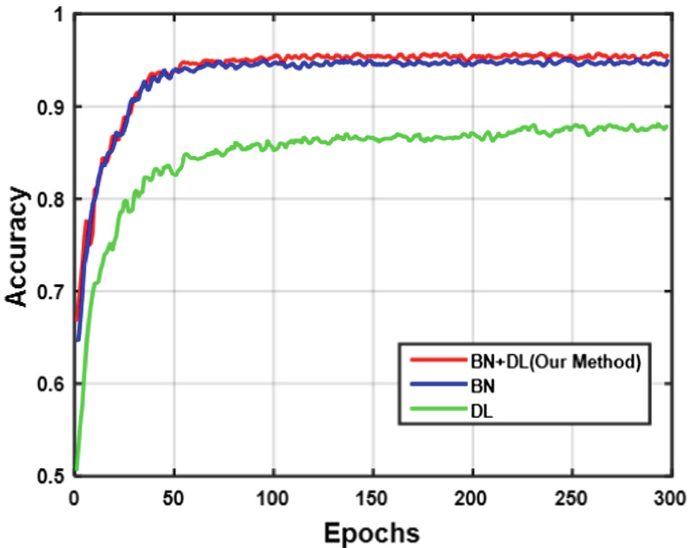 Fig 3: Comparison of Loss and Stability: Notice how processed datasets (blue/red) converge more smoothly than raw data.
Strategic Insights
The success of this work lies in the Inductive Bias provided by the specialized auxiliary dataset (PlantVillage). While ImageNet is common for pre-training, the authors found that using a domain-specific auxiliary set (plants-to-plants) yielded better feature alignment. Furthermore, the use of DisturbLabel serves as a potent alternative to Dropout, specifically effective for fine-tuning on specialized medical or agricultural images where sample variety is low.
Conclusion & Future Outlook
This paper provides a vital springboard for AI in agriculture. By releasing a 15,000-image dataset and proving the efficacy of transfer learning with loss-layer regularization, the authors have lowered the barrier to entry for high-precision crop monitoring. Future work likely involves moving toward Zero-shot or Few-shot learning to identify emerging mutations of diseases without needing 1,000 new images per variant.
Key Takeaways:
- Data quality > Quantity: Properly cropped and screened samples (Processed Dataset) significantly outperformed raw, unedited captures.
- Transfer Learning is essential: It bridges the gap between massive general datasets and small, niche agricultural targets.
- Regularization: Techniques like DisturbLabel are crucial when fine-tuning deep networks on relatively small agricultural subsets.