
Cloud-Driven Agro-Meteorology: Empowering Precision Farming with Machine Vision
Design and implementation of the agricultural meteorological system based on machine vision and cloud platform
The paper presents an Argo-meteorological system that integrates machine vision, IoT sensors, and cloud computing for real-time farmland monitoring. By utilizing a binocular imaging array and an Alibaba Cloud backend, the system achieves automated pest counting and crop growth analysis, serving as a comprehensive SOTA-level solution for precision agriculture.
TL;DR
Agriculture is undergoing a digital transformation. This paper introduces a sophisticated Argo-meteorological system that bridges the gap between field-level sensing and cloud-scale analytics. By combining binocular camera arrays with the Alibaba Cloud platform, the researchers achieved a stable, long-term monitoring solution that delivers a 90% accuracy rate in pest detection while significantly lowering the barriers to entry for large-scale agricultural management.
Background: Beyond Manual Monitoring
Modern agriculture faces a "data bottleneck." While sensors can track temperature and humidity, understanding the visual health of a crop—such as pest density or growth rate—has historically required manual labor. Previous works often struggled with either high hardware costs or limited data storage. This system repositions the field device as a "data harvester" and the Cloud as the "brain," optimizing the trade-off between power consumption and analytical depth.
Methodology - The "Edge-to-Cloud" Architecture
The system's backbone is divided into four critical layers:
- Remote Sensing Nodes: Built on a hybrid Arduino (for low-power sensor management) and Linux (for image handling) stack.
- Energy Management: Uses solar panels with a sophisticated buck-mode PWM charging circuit (CN3791) to ensure 3-day autonomy during cloudy weather.
- Communication: High-security VPN tunnels over 4G networks enable bidirectional communication and secure data uploads.
- Cloud Intelligence: An Alibaba Cloud-hosted processing center that runs OpenCV-based algorithms to transform raw images into actionable insights.
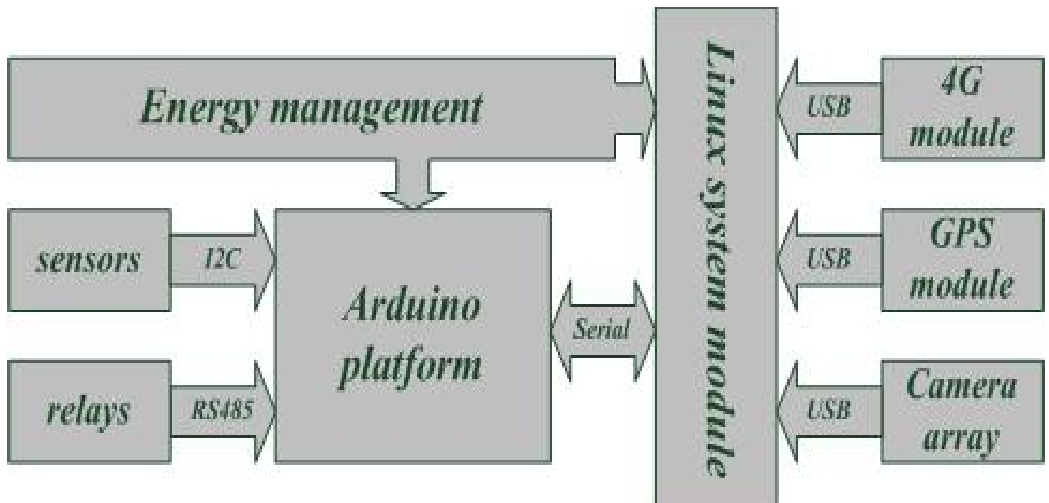 Figure 1: The holistic workflow from field sensors to the centralized cloud processing center.
The Machine Vision Secret Sauce
The "Machine Vision" aspect is particularly clever. Instead of expensive 14-megapixel specialized cameras, the authors used a 6-camera array to synthesize panoramic views at a fraction of the cost.
- Pest Recognition: Uses Otsu binarization for segmentation and Watershed algorithms to separate overlapping insects on sticky boards.
- Growth Analysis: Extracts RGB components and converts them to HSI (Hue, Saturation, Intensity) to correlate green-color intensity with Nitrogen levels, providing automated fertilizer recommendations.
Performance & Experiments
The system was rigorously tested for stability and accuracy. Key performance metrics include:
- Pest Counting Accuracy: Reached 90%, proving that traditional computer vision algorithms remain robust for structured agricultural backgrounds.
- Data Capacity: The cloud architecture can concurrently manage 5,000 sub-stations and store up to 3 years of historical environmental data.
- Connectivity: Maintained an average transmission rate of 450Kbps, sufficient for high-definition image uploads via 4G-VPN.
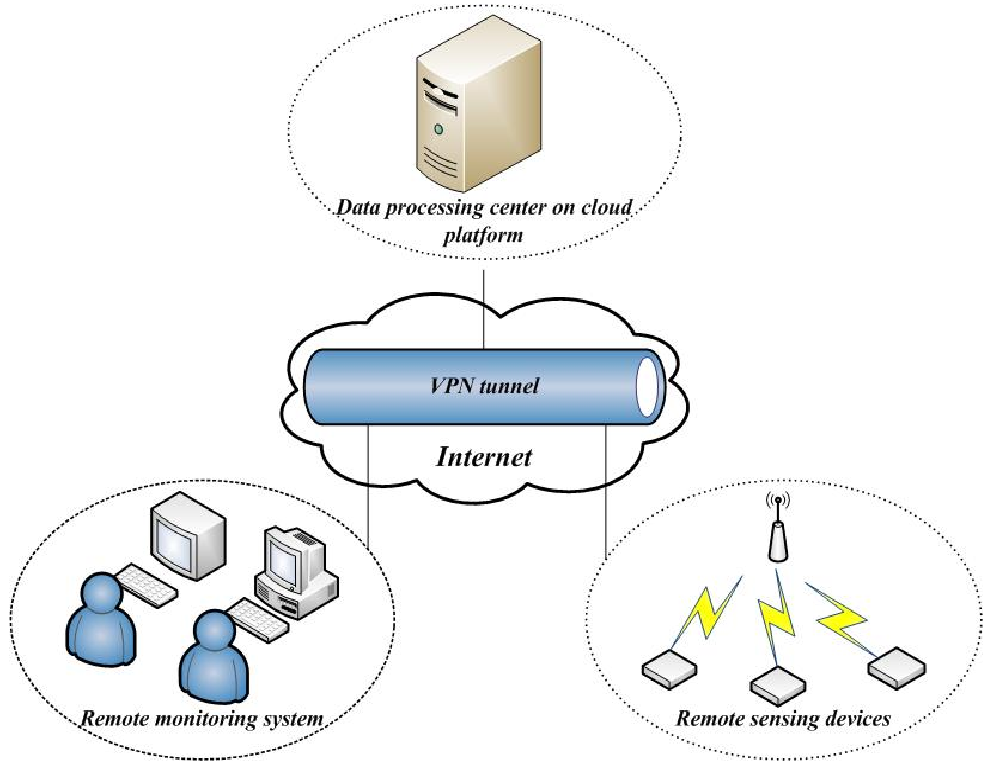 Figure 2: The hardware layout of the remote sensing node, emphasizing the modular design of Arduino and Linux components.
Critical Insight & Evaluation
While many IoT systems focus merely on "connecting" sensors, this paper emphasizes "comprehension." By offloading image processing to the cloud, the authors bypass the hardware limitations of embedded systems (like the ATMEGA328P).
Strengths:
- Cost-Effective: The binocular array approach is an excellent example of using software (image fusion) to replace expensive hardware.
- Scalability: The VPN-based network architecture is designed for national-level deployment (supporting over 65k nodes).
Limitations:
- Algorithmic Shift: While the 90% accuracy is impressive, modern Deep Learning (CNNs/Transformers) might offer better generalization under varying light conditions than Watershed algorithms.
- Network Dependency: The system relies heavily on 4G coverage; in ultra-remote "dead zones," the lack of local processing power might hinder real-time emergency responses.
Conclusion
This Argo-meteorological system represents a mature blueprint for "Internet+ Agriculture." It successfully transforms raw environmental variables into a graphical, manageable interface for farmers. For future iterations, integrating edge-AI to perform initial image filtering could further reduce data transmission costs, making this system even more resilient for the next generation of smart farms.