
Agricultural Knowledge Graphs: Integrating the Lifecycle from Farm to Table
Research on Information Integration Method of Agricultural Products Producing and Managing Based on Knowledge Graph
The paper proposes an agricultural information integration framework based on Knowledge Graphs (KG) to unify heterogeneous data across the entire supply chain. It introduces a specialized ontology and a dual-extraction method—D2R for structured databases and weak supervision for unstructured text—achieving large-scale integration on the "Green-Cloud-Grid" platform.
TL;DR
To combat the fragmentation and inefficiency of agricultural data management, this paper introduces a comprehensive Knowledge Graph (KG) framework. By combining structured database mapping with weakly supervised text mining, the authors successfully integrated 5.2 TB of data across the "Planting-Processing-Sales" lifecycle onto a unified "Green-Cloud-Grid" platform, significantly improving decision-making accuracy for tasks like disease diagnosis.
Problem & Motivation: The Agricultural Data Silo
Information in agriculture is inherently "messy." It is distributed across different stages—soil sensors in the field, pesticide records in processing plants, and price logs in wholesale markets.
Current systems suffer from two main flaws:
- Semantic Rigidity: Traditional relational databases cannot easily represent the complex, evolving relationships between concepts like "pest invasion" and "picking time."
- Scalability Issues: Manual ontology construction is too slow to keep up with the massive influx of daily agricultural data. This leads to information asymmetry, where managers and consumers lack a holistic view of food safety and supply.
Methodology: The Core Engine
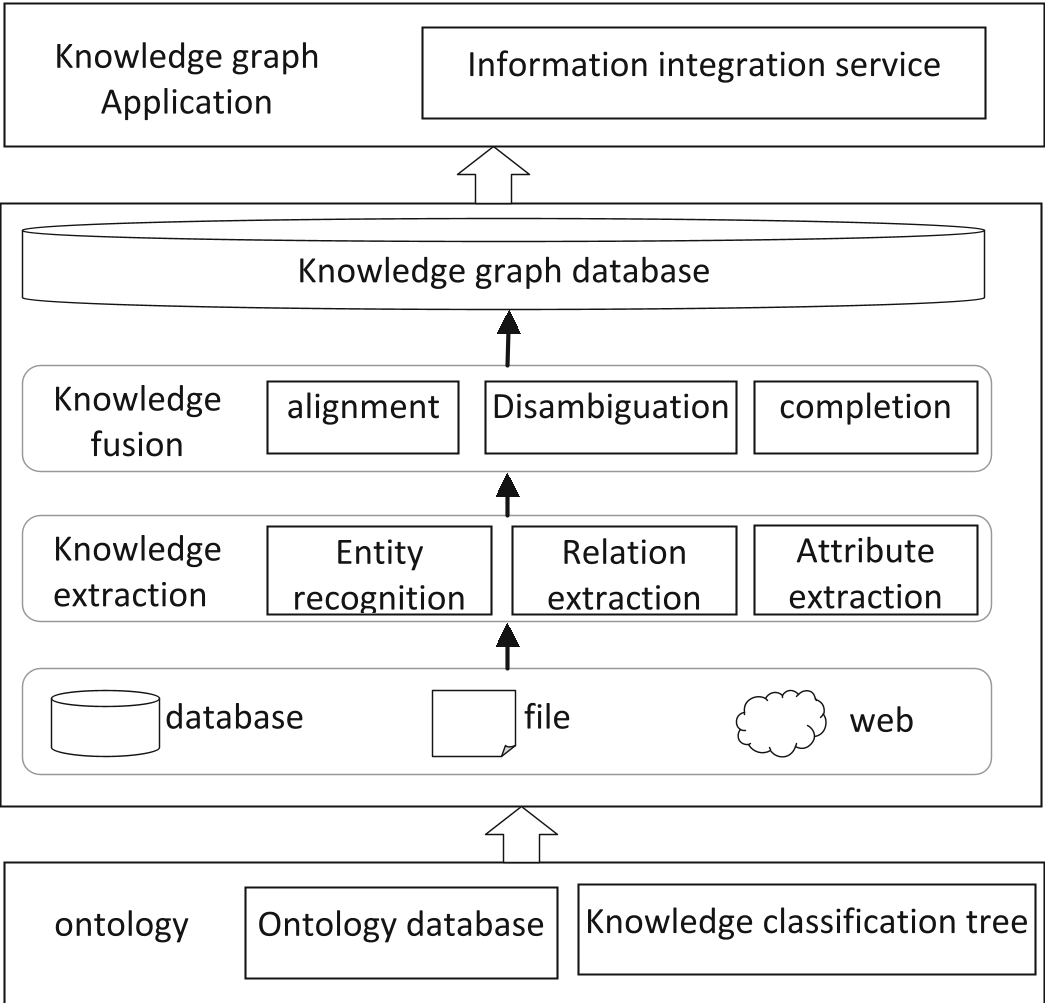
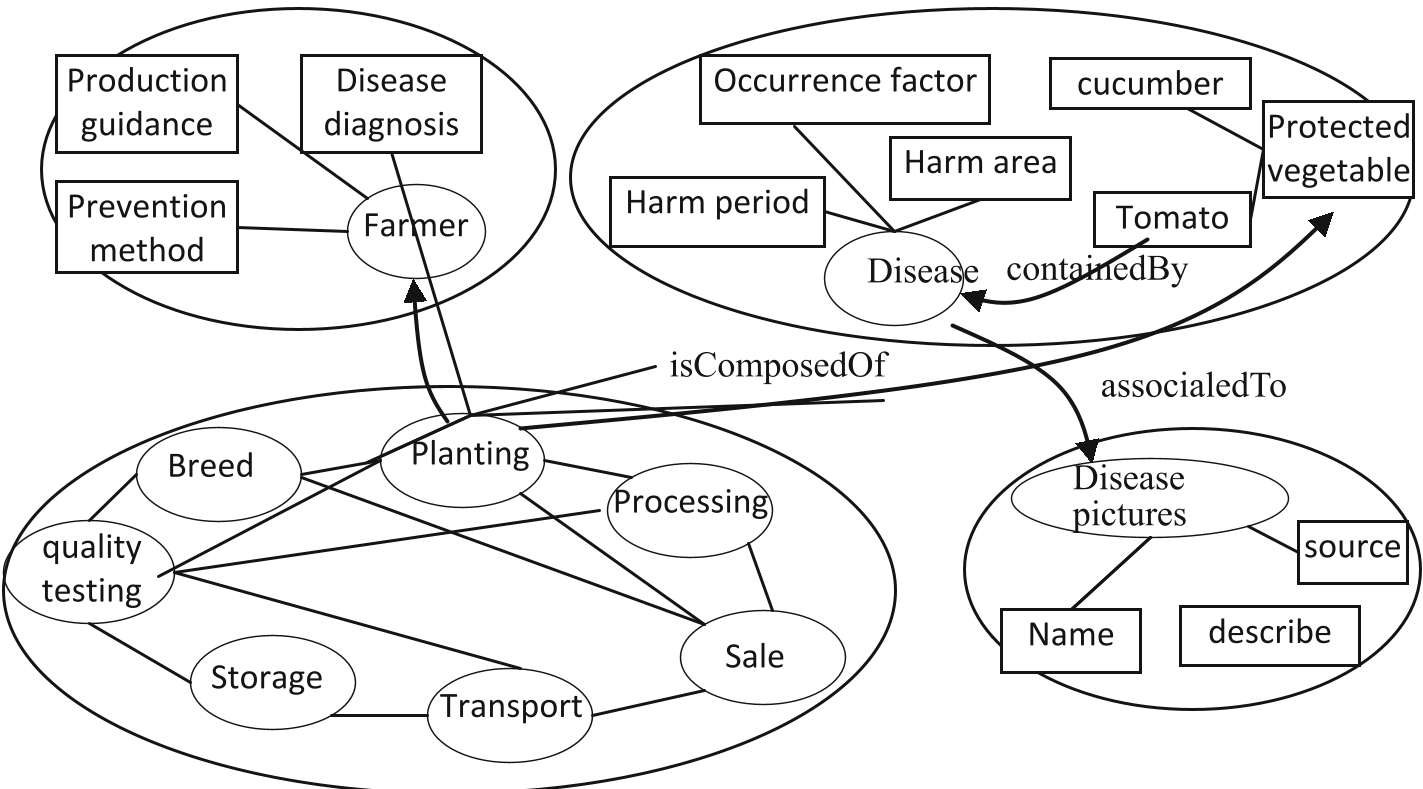
The paper proposes a three-layer architecture: Ontology, Database, and Application. The technical brilliance lies in how they populate the graph.
1. Database-to-Graph Mapping (D2R)
Instead of manual entry, the authors developed a mapping logic to transform relational records into RDF triples. For instance, a table name becomes a "Concept," a record becomes an "Entity," and foreign keys are translated into "Relationships."
2. Weakly Supervised Relation Extraction
For unstructured text (like agricultural news or tech reports), the authors used Remote Supervision. By starting with a small "seed set" of known relationships (e.g., [Apple] - [is susceptible to] - [Powdery Mildew]), the system iteratively crawls and learns new patterns from text without needing a massive human-labeled dataset.
3. Natural Language Query (NLQ)
To make this usable for non-technical farmers, they built a query engine that translates natural language (e.g., "What are the symptoms of manganese deficiency?") into graph traversal languages like Gremlin.
Experiments & Results
The system was integrated into the Green-Cloud-Grid Platform, which manages:
- 560+ production bases.
- 1000+ wholesale markets.
- 120+ agricultural varieties.
- 5.2 TB of total resources (text, video, and data).
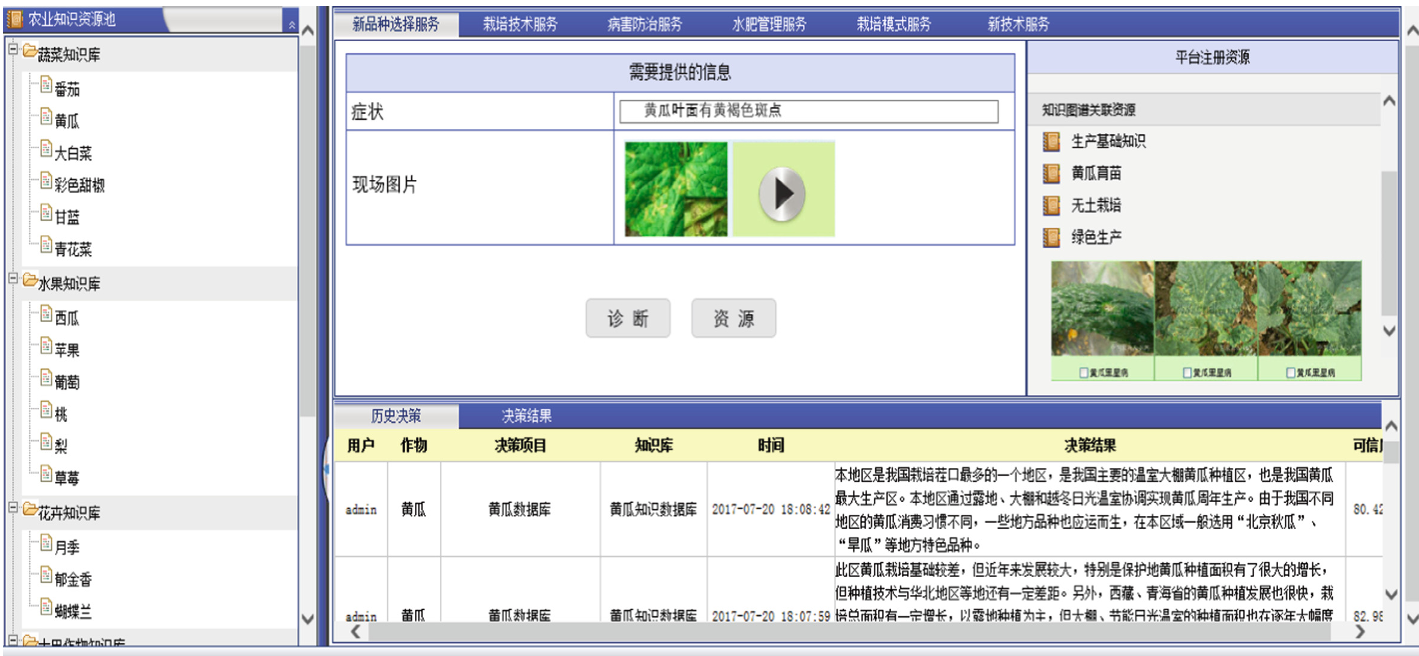
The paper highlights a case study on Cucumber Disease Diagnosis. By using the KG, the platform can correlate planting time, fertilizer history, and meteorological data to provide a much more accurate diagnosis than a simple keyword-based search.
Critical Analysis & Conclusion
Takeaway
The work successfully shifts agricultural management from "Data Storage" to "Knowledge Connection." The use of weak supervision is a pragmatic choice for a domain where high-quality labeled data is scarce and expensive.
Limitations
While the integration is impressive, the paper relies on older weak-supervision techniques (DIPPRE). Modern LLM-based (Large Language Model) entity extraction could likely further improve the accuracy and semantic depth of the graph. Additionally, the real-time update latency for 5.2 TB of data remains an area for further investigation.
Future Work
The authors plan to focus on better understanding user search intent and handling even more heterogeneous data sources to refine the decision-making intelligence of the platform.