
Agropedia: Bridging the Semantic Gap in Global Agricultural Knowledge
11049_Agropedia Humanization of Agricultural Knowledge.
Agropedia is a pioneering agricultural knowledge repository that utilizes semantic models, collaborative platforms, and social networking metaphors to organize and disseminate information. Developed by a consortium led by ICAR, it integrates expert-reviewed scientific content (Gyanadhara) with community-generated folk knowledge (Janadhara) to bridge the gap between researchers and farmers.
TL;DR
Agropedia is one of the world's first agricultural knowledge repositories built on semantic and social networking metaphors. By introducing "Knowledge Models" (simplified ontologies), it transforms raw scientific research into a structured, searchable, and "humanized" format accessible to everyone from PhD researchers to village-level farmers.
Background Positioning
In the landscape of digital knowledge management, Agropedia acts as the "UMLS of Agriculture." It is a foundational SOTA (State-of-the-Art) framework for domain-specific knowledge organization, specifically targeting the unique socio-economic challenges of food production in India.
The Problem: A Digital Desert for Agriculture
While medicine and computer science have robust online ecosystems, agriculture has historically lacked authentic, peer-reviewed content on the web. This is caused by two main factors:
- Lack of Standardized Vocabulary: Without precise terms of reference, creating a searchable and interoperable database is nearly impossible.
- The Semantic Gap: Scientific papers from research institutions are often unintelligible to the farmers who need the information most. Conversely, the "folk wisdom" of farmers rarely reaches the scientific community.
Methodology: The "Lingua Franca" of Knowledge Models
The core of Agropedia's success is its Knowledge Models. These are concept maps developed by agricultural scientists that serve as a universal language for the platform.
Architecture Overview
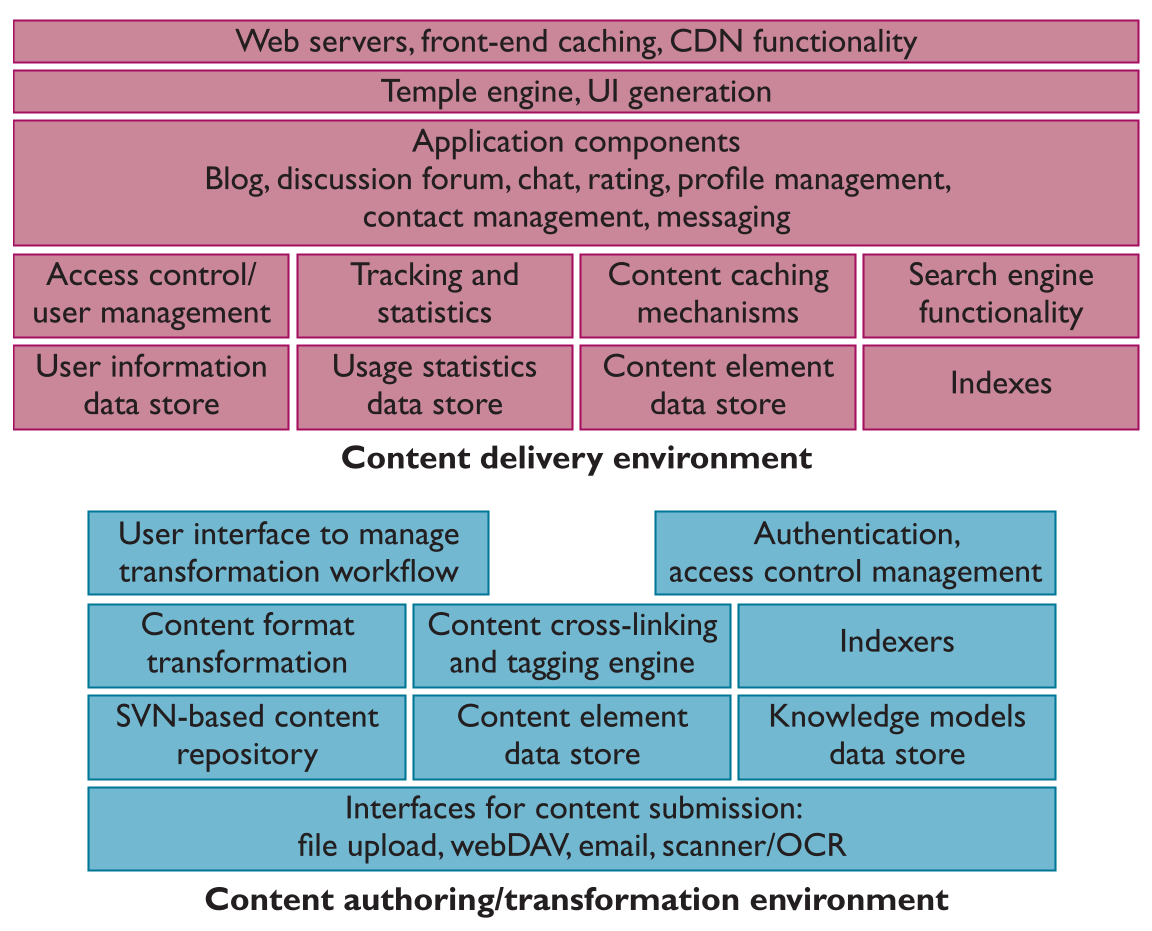
Agropedia uses a layered architecture to separate content acquisition from presentation. This allows the system to remain flexible across different access channels, such as mobile phones or offline devices for remote areas.
Gyanadhara vs. Janadhara
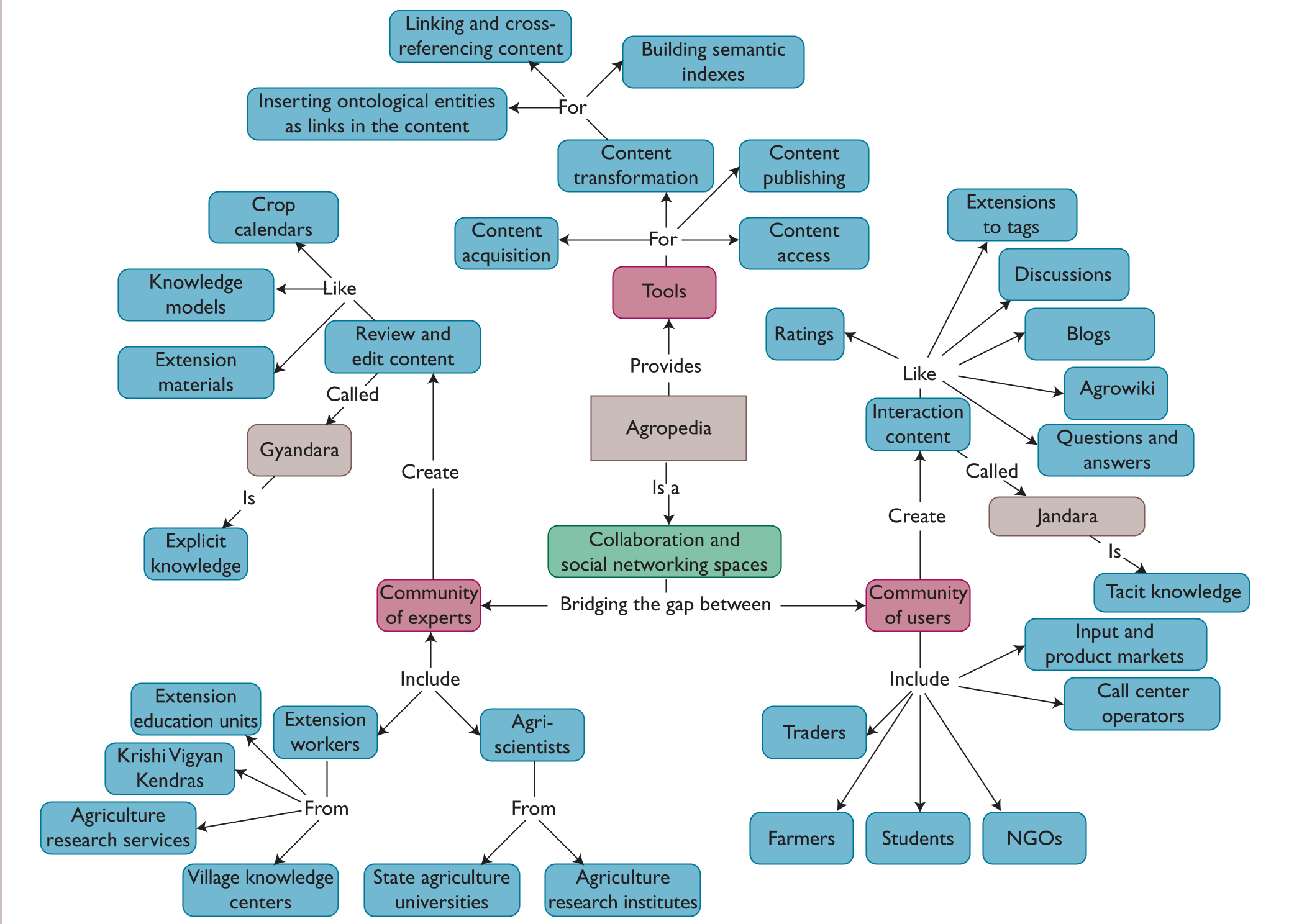
The platform operates on two distinct yet intertwined streams:
- Gyanadhara (Expert Stream): Rigorously peer-reviewed content from National Agricultural Research Systems (NARS) institutions.
- Janadhara (Folk Stream): Interactive content generated by the community via wikis, blogs, and forums.
The Knowledge Models act as the "glue," using multidimensional semantic indexing to cross-reference these two streams automatically.
Why It Works: The Power of Semantic Indexing
By using ontologies for tagging, Agropedia enables discovery of relationships and inferencing models. This means a farmer searching for a specific pest might be automatically directed to both a scientific white paper on biological control (Gyanadhara) and a blog post by a fellow farmer discussing local application experiences (Janadhara).
Critical Analysis & Future Outlook
Strengths:
- Scalability: The transition to an SaaS platform allows other institutions to deploy their own localized versions of Agropedia.
- Hybrid Knowledge: It successfully validates the importance of "folk knowledge" alongside traditional science.
Limitations:
- User Adoption: The paper notes that while experts jumped on board quickly, the "user community" (farmers/traders) was slower to adopt the platform, likely due to digital literacy or access barriers prevalent in 2010.
Future Prospects: In the age of Generative AI, Agropedia’s Knowledge Models provide the perfect structured data foundation (Knowledge Graphs) to ground LLMs, preventing hallucinations in critical agricultural advice. This "Humanization" of knowledge remains the gold standard for extension services today.