
AI-Based Crop Rotation: Bridging "Bookish Knowledge" and Farmer Intuition for Global Sustainability
AI-Based Crop Rotation for Sustainable Agriculture Worldwide
This paper proposes a conceptual framework for an open-source, AI-based crop rotation expert system designed for sustainable agriculture. It utilizes a User-in-the-Loop (UIL) architecture to combine "bookish" academic knowledge with farmers' empirical experience, aiming to optimize multi-dimensional variables like soil health and market demand.
TL;DR
Agriculture is at a crossroads between profit-driven monoculture and nature-aligned sustainability. This paper outlines a vision for an open-source AI expert system that optimizes crop rotation by placing the farmer back into the algorithmic loop. By combining complex data dimensions—soil, weather, and market—with local human experience, the system aims to provide actionable, long-term farming strategies that are vendor-independent and accessible via mobile devices.
The Multidimensional Optimization Crisis
Historical crop rotation was a 7-year cycle of diversity; modern industrial farming has collapsed this into short, chemical-dependent cycles. Improving this isn't just about planting different seeds; it is a multidimensional optimization task.
Farmers must balance:
- Physical constraints: Soil nitrogen/potassium levels and local climate.
- Economic factors: Market demand and machinery availability.
- Regulatory factors: Subsidies and law regulations.
Most current solutions are "black boxes" provided by machinery vendors, often biased toward selling more equipment or specific fertilizers. The authors argue that a truly sustainable solution must be open-source and human-centric.
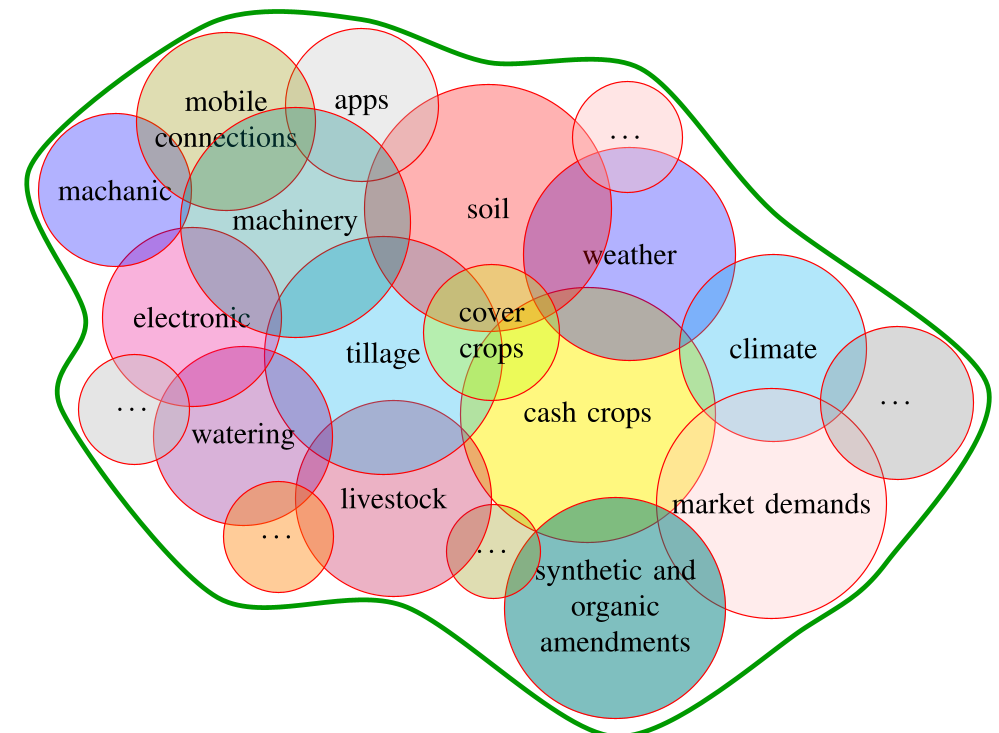 Figure: The shift from limited human attention (a) to an ideal, AI-supported multidimensional frame of attention (b).
Methodology: The User-in-the-Loop (UIL) Architecture
The core innovation lies in not replacing the farmer, but augmenting them. The paper defines two types of knowledge:
- "Bookish Knowledge": Structured data from botany, chemistry, and climatology.
- "Empirical Knowledge": The farmer’s visual, olfactory, and tactile observations of their specific fields.
Bridging the Gap
To connect these, the architecture employs two critical modules:
- Algorithm Decoder: Translates high-dimensional AI calculations into simplified, visual/auditory representations that a farmer can trust and understand.
- Knowledge Encoder: Converts human feedback (e.g., "the soil feels unusually dry today") into mathematical representations the AI can process.
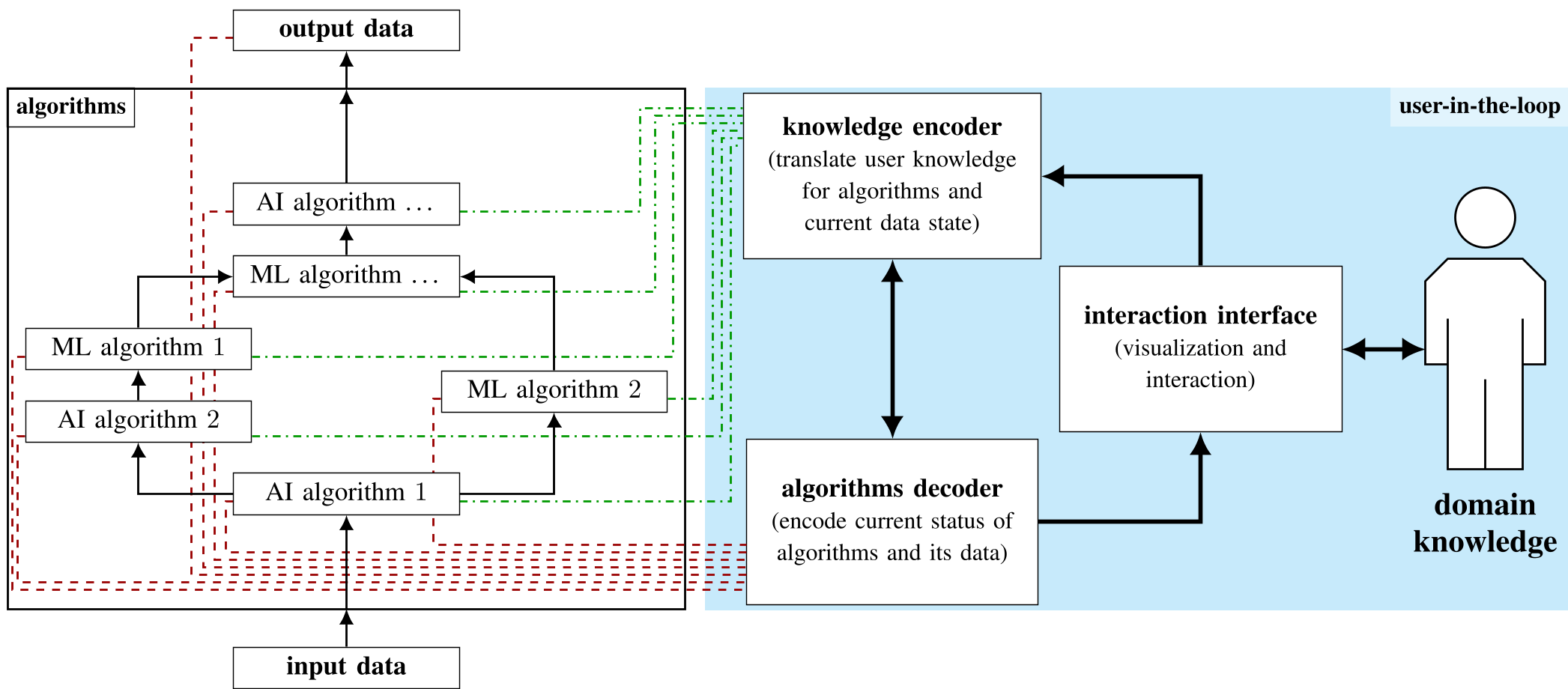 Figure: The UIL principle—transforming high-dimensional AI space into an interactive interface for the expert user.
Interaction in the Field: Hands-Free UI
A significant hurdle for AI in agriculture is the environment. A farmer cannot easily use a touchscreen while handling a spade or driving a tractor. The authors propose hands-free interfaces utilizing:
- Voice Assistants: Guiding the farmer through soil structure analysis.
- Gaze Control: Allowing interaction while hands are occupied.
- Lightweight NNs: Ensuring the AI runs locally on a smartphone, vital for rural areas with poor connectivity.
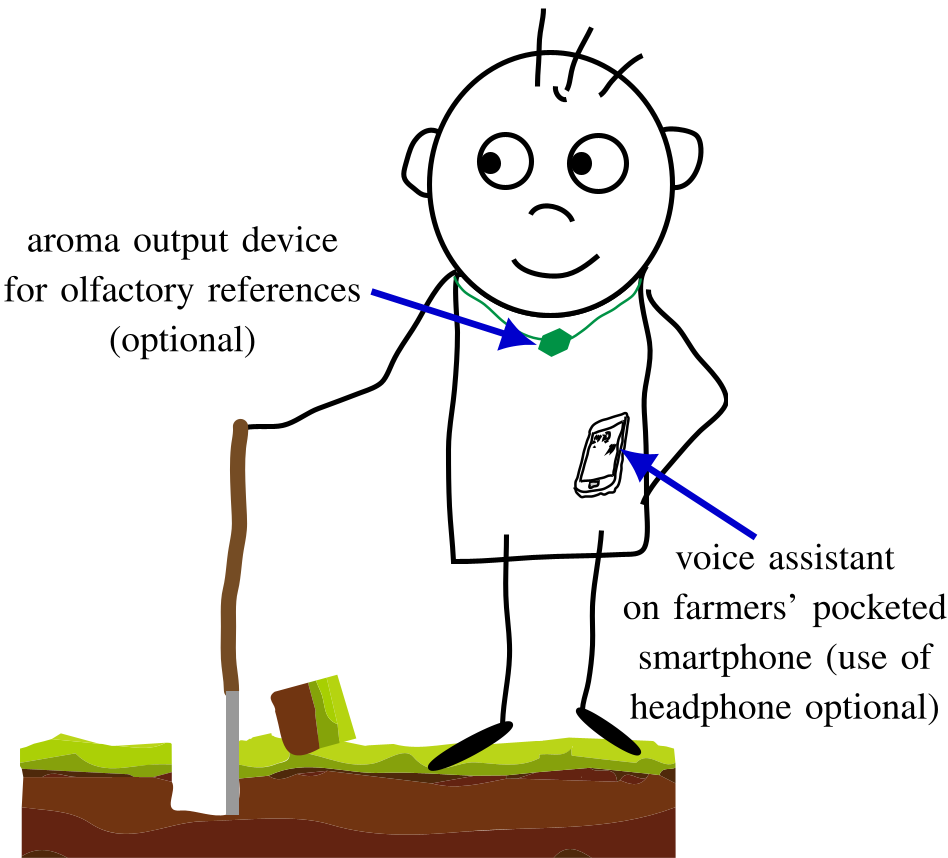 Figure: A mockup of a hands-free soil evaluation interface, enabling the digitalization of tactile human experience.
Critical Insights & Future Outlook
Why this matters: Most AI research focuses on the "Model" or the "Data," but this paper focuses on the "Expert." By addressing the trust gap through explainability and UIL, the system ensures that AI recommendations are not just theoretically optimal but practically viable.
Limitations: The system is currently in the conceptual phase. The "semantic gap"—how to accurately quantify a farmer's subjective "feeling" about soil—remains a significant open research question in the field of knowledge encoding.
Conclusion: This work sets the stage for a new generation of Agricultural AI that works with nature and with humans. By moving toward open-source frameworks, the research community can democratize sustainable farming, directly contributing to UN goals like Zero Hunger and Climate Action.