
Boosting Edge-AI Emotion Recognition: The Power of Tensor Decomposition
AI-based Emotion Recognition System with Tensor Decomposition Optimized Pre-processing
This paper introduces an emotion recognition system that optimizes a 2D-CNN architecture by integrating a Tucker Decomposition-based pre-processing engine for EEG signals. The method achieves state-of-the-art efficiency by utilizing High-Order Singular Value Decomposition (HOSVD) and Alternating Least Squares (ALS) to extract core feature tensors, significantly reducing data redundancy for edge AI deployment.
TL;DR
Researchers from National Yang Ming Chiao Tung University have developed an EEG-based emotion recognition system that is both faster and more accurate. By applying Tucker Decomposition as a pre-processing step before a CNN, they slashed memory usage by 35%, tripled the processing speed, and actually gained 4% in accuracy. This moves us closer to responsive, wearable emotional intelligence.
Background: The Edge AI Bottleneck
Deep Learning, particularly Convolutional Neural Networks (CNNs), has revolutionized EEG (electroencephalogram) analysis. However, EEG data is inherently multi-dimensional (channels × time × samples), leading to high computational costs. For "Edge AI"—like a headband or a smartwatch—we cannot afford the memory or power consumption of processing raw, redundant signal "cubes."
The core insight of this paper is that raw data is not optimized data. By mathematically "compressing" the signal into its core components before it even hits the neural network, we can remove noise and focus the AI on what matters.
Methodology: Refinement via Tucker Decomposition
The system employs a specific form of tensor approximation called High-Order Singular Value Decomposition (HOSVD), optimized by the Alternating Least Squares (ALS) algorithm.
The Workflow
- Tensor Construction: 8-channel EEG signals are segmented and down-sampled into 3D tensors (cubes).
- Factorization: The HOSVD-ALS engine decomposes the raw tensor into a core tensor and several factor matrices .
- Core Feature Selection: Instead of the full signal, the authors found that using a specific factor (Factor 3) provides a distilled representation that is far more efficient for the CNN to process.
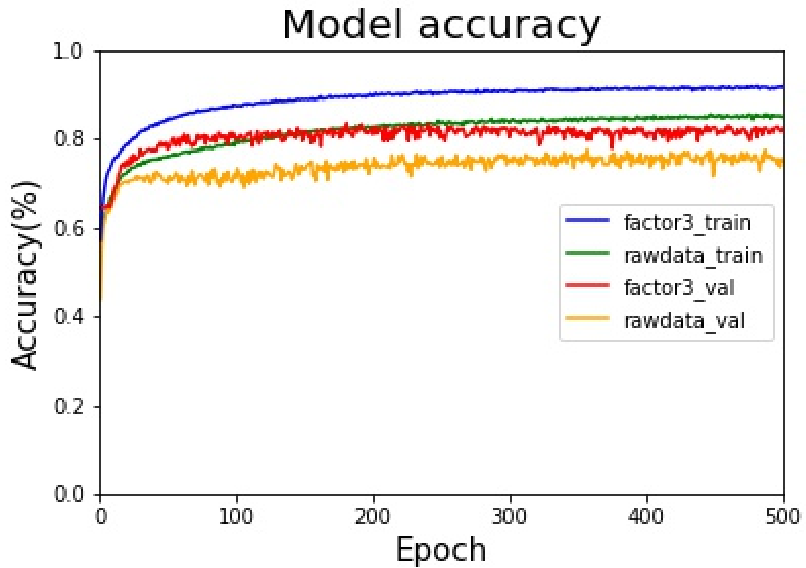 Fig 1: The integration of tensor decomposition pre-processing into the CNN pipeline.
Architecture: Lightweight CNN
The backend is a 3-layer 2D-CNN designed for efficiency. It utilizes:
- Batch Normalization: To accelerate convergence.
- Dropout (0.25): To prevent overfitting on small EEG datasets.
- Softmax Output: Classifying emotions into Positive vs. Negative states.
Experimental Results: Less is More
The results provide a rare "triple win" in engineering: higher accuracy, lower memory, and faster speed.
- Accuracy: The accuracy rose from 79.12% (raw data) to 83.46% (decomposed data). This suggests that tensor decomposition acts as a filter, removing "chatter" that confuses the CNN.
- Throughput: The system processed 23,046 samples/sec, a massive 3x jump from the baseline of 7,403.
- Footprint: Weight storage dropped by 35%, making it ideal for System-on-Chip (SoC) implementation.
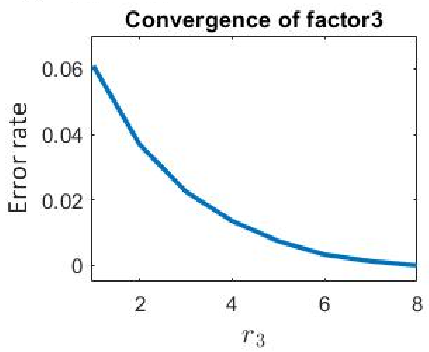 Fig 2: Training and validation curves show that the Factor-3 based model (Orange) converges more stably and at a higher accuracy than raw data (Blue).
Critical Insight: Why Decompose?
In many AI applications, we treat the neural network as a black box that should "learn everything." This paper argues for Inductive Bias through mathematics. By using HOSVD, we are manually enforcing a structure that identifies the most contributing features based on multilinear algebra. This reduces the "search space" for the CNN, allowing a smaller model to perform like a much larger one.
Conclusion & Future Work
This research proves that pre-processing is not just a secondary step—it is a critical architectural choice for Edge AI. By using Tucker Decomposition, the authors achieved significant efficiency gains without the "Accuracy Tax" usually associated with compression.
Limitations: The study focuses on a two-class problem (positive/negative). Future work should explore how this tensor approach handles more complex, multi-dimensional emotional states (e.g., the circumplex model of affect) and varied noise environments typical of real-world wearable use.