
The AI-Chatbot Approach: Solving the Engagement Crisis in Healthy Living
Addressing Challenges in Promoting Healthy Lifestyles: The AI-Chatbot Approach
This paper introduces an AI-driven chatbot framework designed to promote healthy lifestyles and nutrition through behavioral intervention technologies (BITs). By integrating machine learning for sentiment analysis and the "Efficiency Model of Support," the approach aims to overcome the high abandonment rates of traditional mHealth apps.
TL;DR
Despite the explosion of mHealth apps, maintaining user adherence to healthy diets remains a significant challenge due to "self-reporting burden." This paper presents an AI-driven chatbot architecture that utilizes natural language processing (NLP) and behavioral science to provide a more intuitive, engaging, and scalable alternative to traditional mobile health applications.
Background: Beyond the Burden of Manual Logging
Why do most nutrition apps fail? The answer lies in friction. Manually entering every calorie or "burger" into a rigid interface is a cognitive burden. The authors argue that the future of primary care lies in "Assistant-as-App"—a model where conversational agents (chatbots) act as the primary interface, reducing learning effort and meeting users where they already spend their time: messaging platforms.
The Core Innovation: Random Access Navigation (R.A.N.)
The technical heart of this proposal is the move away from rigid decision trees. Traditional bots fail if you don't follow their specific "if-this-then-that" script.
The Random Access Navigation (R.A.N.) model allows users to jump between intents—such as asking for a grocery location, then inquiring about a recipe, then reporting a mood—without breaking the dialogue flow. This is combined with Intent Detection and Entity Resolution to turn a sentence like "I had a burger for lunch in Trento" into actionable health data.
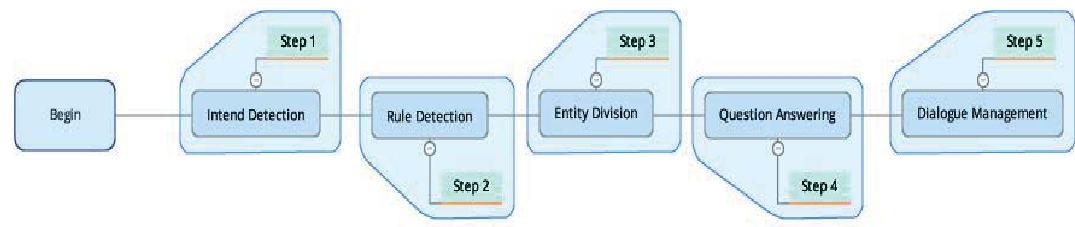 Figure 1: The key technology steps for interpreting human intent in health contexts.
Architecture: A Hybrid Intelligence Model
The system doesn't try to be a "standalone" AI. Instead, it follows the Efficiency Model of Support. It uses:
- Rule-based logic for standard protocols.
- Machine Learning APIs for Sentiment Analysis (detecting if a user is stressed or happy with their plan).
- Human-in-the-loop triggers: If the bot detects an "Unsatisfying" state or emotional distress, it automatically notifies a human healthcare expert (nutritionist or pediatrician).
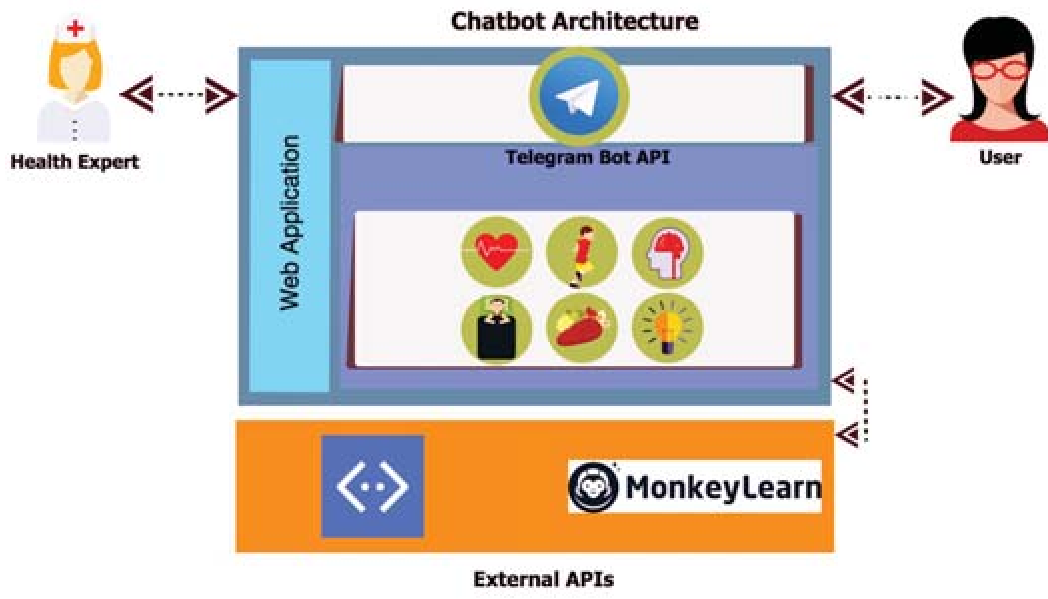 Figure 2: The high-level architecture showing the bridge between the user, the AI services, and the healthcare expert.
Critical Insight: The "Emotional" Dimension of Diet
Most apps treat nutrition as a math problem. This paper recognizes it as a psychological one. By tracking Sentiment, the bot can understand that "Sara" (the use-case persona) is eating poorly due to work stress. Instead of just nagging her about calories, a sophisticated bot can adjust its coaching tone or suggest stress-management activities, creating a truly personalized behavioral intervention.
Challenges and Future Outlook
While the vision is robust, the authors acknowledge significant hurdles:
- Semantic Complexity: Handling synonyms (is "soda" a "coca-cola"?) remains an NLP challenge.
- Privacy: Sending health data to third-party APIs for analysis requires rigorous security protocols.
- Human Complementarity: The bot is an augmentor, not a replacement for medical professionals.
Conclusion
As we move deeper into the era of AI-integrated healthcare, the work of Fadhil and Gabrielli serves as an early blueprint for how we can make healthy living "invisible" and frictionless. By leveraging the ubiquity of messaging and the intelligence of sentiment analysis, chatbots can transform from simple toys into vital lifelines for public health.
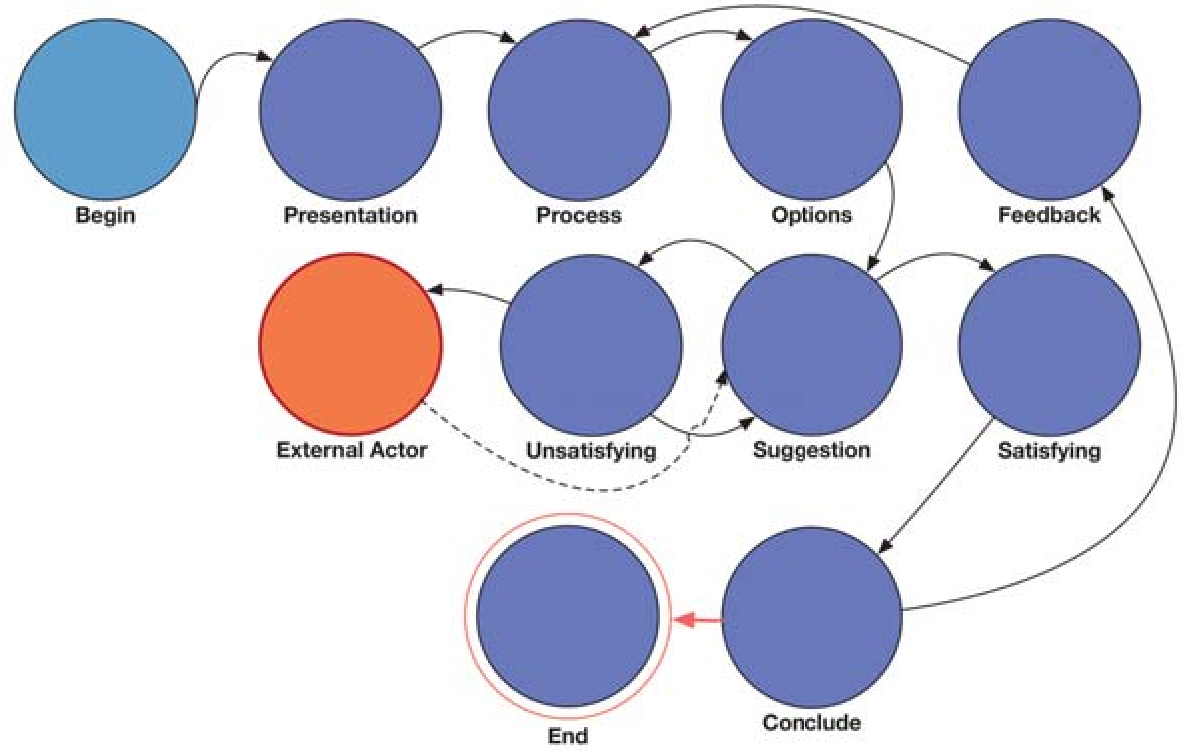 Figure 3: The Finite State Automaton guiding the transition from automated coaching to human intervention.