
Agriculture 4.0: Solving the Data Sharing Dilemma with AI-Powered Access Control
AI applications of data sharing in agriculture 4.0: A framework for role-based data access control
This paper introduces an AI-driven role-based access control (RBAC) framework for Agriculture 4.0, centered on Data Sharing Agreements (DSAs). It utilizes argumentation reasoning and abductive logic programming to resolve conflicting data access interests among farmers, research institutes, NGOs, and competitors.
TL;DR
Agriculture 4.0 is transforming farms into data-intensive hubs, yet the fear of losing competitive advantage often stifles collaboration. This study proposes a formal AI framework using Data Sharing Agreements (DSAs) and Argumentation Reasoning to automate complex access control decisions, ensuring that the right stakeholders get the right data without compromising a farmer's sensitive intellectual property.
Background: The Trust Deficit in Smart Farming
The "Agriculture 4.0" paradigm promises enhanced sustainability and food security through IoT, drones, and big data. However, a significant "resistance wave" exists among farmers. The problem is two-fold:
- Heterogeneity: Data ranges from simple soil moisture to highly sensitive "innovation data" (like proprietary fertilizer mixes).
- Conflicting Interests: A research institute might need high-accuracy data to improve yields, whereas a competitor could use that same data to undercut a farm’s market position.
Current systems lack the "logical nuance" required to navigate these social and professional relationships.
Methodology: Logic Over Raw Permission
The core innovation of this paper is the move away from static "Yes/No" permissions toward a Reasoning-Based Framework.
1. The DSA Template
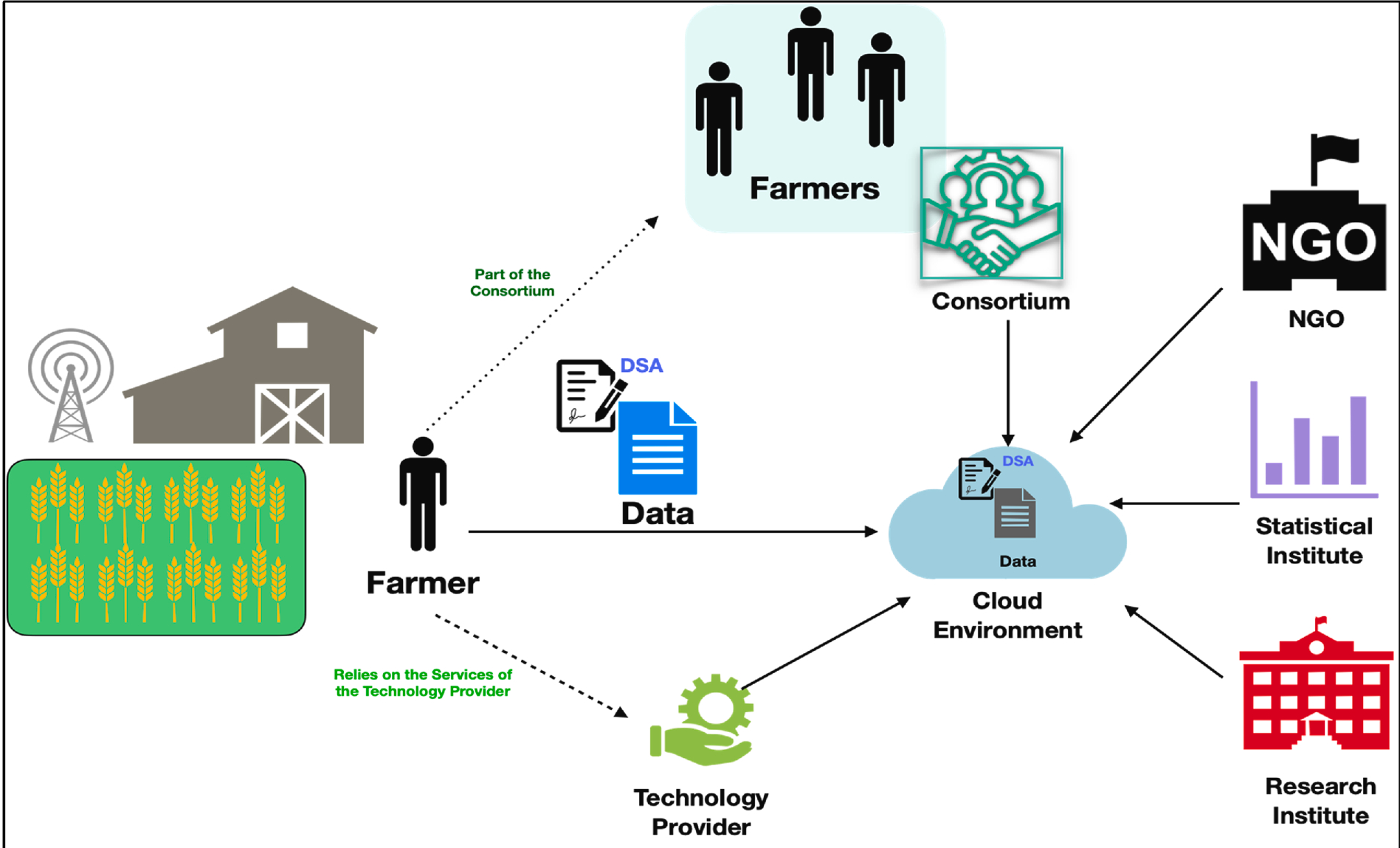
The authors define Data Sharing Agreements (DSAs) as the cornerstone of their design. These are not just legal documents but computational templates that define:
- Actors & Roles: Farmers (Owners), Research Centers, NGOs, and Technology Vendors.
- Data Degradation: A unique mechanism that alters Accuracy and Timeliness. For instance, an NGO might see production rates from last month (Low Timeliness), while a Strategic Partner sees them in real-time.
2. The AI Architecture: Argumentation Reasoning
Instead of simple "If-Then" chains, the framework uses Preference-based Argumentation. When two rules conflict—for example, "Deny access to competitors" (Rule A) vs. "Share data with consortium members" (Rule B)—the AI evaluates the Priority Relation (B > A if the competitor is part of a specific trust consortium).
Deep Dive into Rules and Conditions
The paper formalizes these logic gates using a policy language. A standout feature is the Emergency Exception.
- Standard Rule: Competitors are denied access.
- Emergency Rule (7a): In the event of a natural disaster or crop disease outbreak, sensitive data is automatically shared with neighbors to create a regional "prevention and mitigation" shield.
The authors underscore that "Innovation Data" and "Private Data" are hard-coded to never be shared, providing a "failsafe" for the farmer’s core assets.

Critical Insights: Beyond the Code
Theoretical Value
By bridging Design Science and Computational Logic, this work provides a blueprint for "Context-Aware" security. It acknowledges that data value is not absolute; it is a function of who is asking, why they are asking, and when they are asking.
Practical Limitations
- Complexity: Implementing logical reasoning systems (like GorgiasB) requires technical expertise that most traditional farms lack.
- Cloud Dependency: The "Sticky Policy" paradigm mentioned requires robust cloud infrastructure, which may be a bottleneck in remote rural areas with poor connectivity.
Conclusion: A Research Agenda for Future Farming
The paper concludes that Agriculture 4.0 will not reach its full potential until farmers feel safe in the digital ecosystem. The proposed AI-driven RBAC framework is a vital step toward creating a "Collaborative Supply Chain" where data flows freely enough to innovate, but stays restricted enough to protect.
Future Outlook: Expect to see these logical frameworks integrated with Blockchain Smart Contracts to provide immutable, audit-ready logs of every data access decision made by the AI.