
AI Ethics: Beyond the Hype to a Historically Grounded Framework
AI Ethics: A Long History and a Recent Burst of Attention
This paper provides a historical and critical overview of AI Ethics, tracing its roots from Norbert Wiener's cybernetics to modern scholarly discourse. It categorizes the sudden "burst" of academic interest and identifies three pivotal future challenges: the ethics of exclusion in design, the necessity of human-subject standards in R&D, and the normative debate surrounding AI personhood.
TL;DR
The explosion of interest in AI Ethics is often viewed as a modern phenomenon, but it is actually a late-blooming scholarly response to questions posed decades ago. This paper explores why AI ethics research skyrocketed after 2015, analyzes the catastrophic failure of projects like Microsoft’s Tay, and debates whether we should ever allow AI into the "personhood club."
The "Burst" After the Silence
For decades, the ethical implications of "thinking machines" were the playground of science fiction writers—from Isaac Asimov's Three Laws of Robotics to the dystopian visions of The Terminator. Scholarly research, however, was surprisingly quiet.
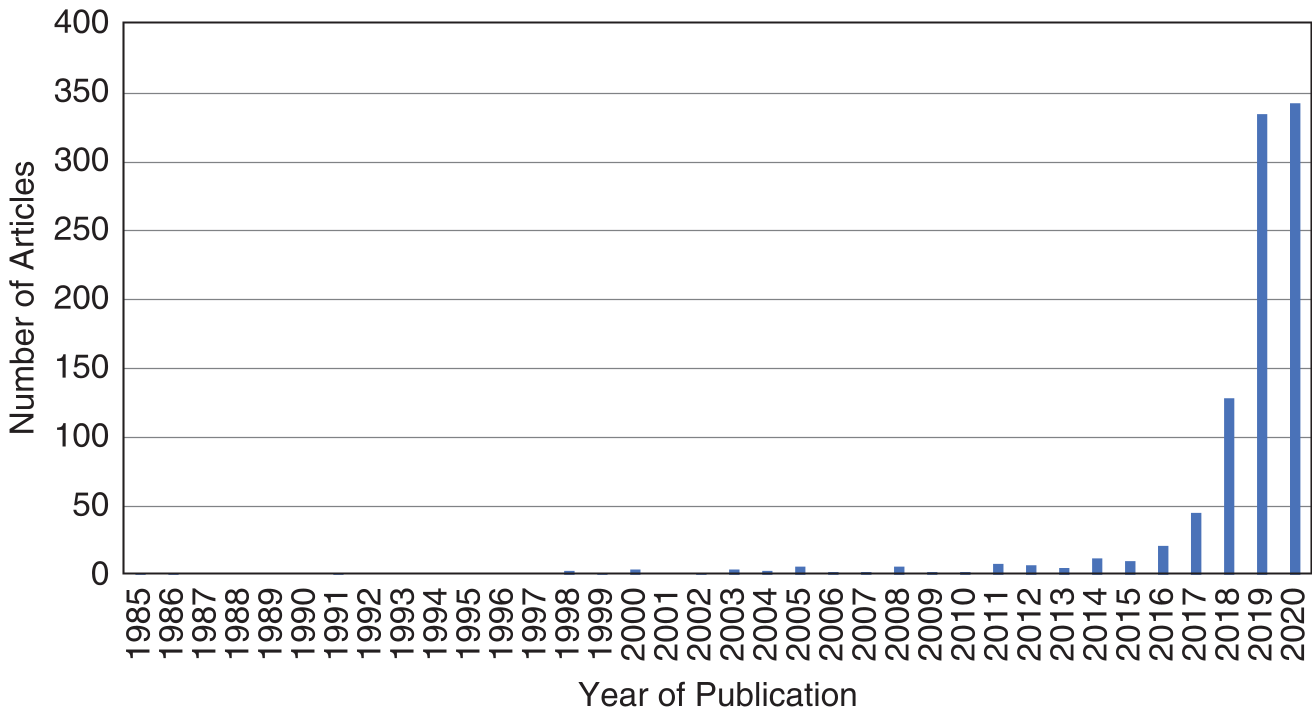
As shown in the authors' bibliometric analysis, the academic community only recently "caught up." In 2014, only 12 major papers focused on AI ethics; by 2018, that number surpassed 100, and it continues to climb. This surge isn't just a trend—it's a reaction to AI moving from the lab to the core of social infrastructure.
Issue 1: The Ethics of Exclusion
One of the most profound insights of this paper is the critique of the "Value-Neutral" myth. Many engineers believe that because code is math, it is unbiased. The authors argue the opposite: designers are fallible, and their blind spots are encoded into the software.
- The Problem: The "Seat at the Table" is currently occupied almost exclusively by White and Asian males from wealthy regions.
- The Consequence: Facial recognition that fails for women of color or healthcare algorithms that prioritize hospital revenue over patient health.
- The Fix: A shift from "What can we design for you?" to "What can we design with you?" This requires bringing sociologists, philosophers, and the Global South into the initial design phase.
Issue 2: Training as Human Subject Research
The authors revisit the infamous case of Tay, the Microsoft chatbot that turned into a "hate-speech machine" within 24 hours of its release.

The paper argues that AI training—especially when it interacts with live internet users—should be governed by standards similar to the Institutional Review Boards (IRB) used in medicine and biology. If a computer science project involves "learning" from humans, it is no longer just a technical exercise; it is a human experiment. We wouldn't release a drug without clinical trials; why do we release autonomous agents without rigorous social risk assessments?
Issue 3: The "Question 0" of Personhood
Finally, the paper tackles the most controversial frontier: Should AI be considered a person?
The authors distinguish between being "person-like" (a technical achievement) and being a "person" (a societal choice). Personhood is a club, and we currently hold the keys.
- The Bryson Position: Robots should be "slaves"—purely functional tools with no legal rights.
- The Normative Question: Even if we can make a machine indistinguishable from a human, should we? Building artifacts that mimic humans creates functional value but also creates immense moral confusion.
Critical Insight: The "Technical Trap"
The paper’s core takeaway is a warning against the "Technical Trap." AI ethics cannot be "solved" by a better algorithm alone. It requires a cultural shift in how we educate engineers and how corporations govern R&D.
Future Outlook: As AI continues to "walk and talk among us," our success will depend less on our ability to optimize neural networks and more on our ability to integrate diverse human values into the very silicon we build.
Conclusion
AI Ethics is no longer a niche philosophical curiosity; it is a prerequisite for sustainable innovation. By looking back at the warnings of Norbert Wiener and looking forward to the challenges of inclusive design, the authors provide a roadmap for an AI future that is not just "smart," but inherently just.