
RASGD: Enhancing Diabetes Prediction via Ridge-Regularized Adaline Learning
An AI-based intelligent system for healthcare analysis using Ridge-Adaline Stochastic Gradient Descent Classifier
This paper introduces an AI-based healthcare system for early diabetes detection, utilizing a novel Ridge-Adaline Stochastic Gradient Descent (RASGD) classifier. By integrating L2 regularization with high-speed stochastic optimization on the Pima Indians Diabetes Database, the system achieves a state-of-the-art accuracy of 92%.
Executive Summary
TL;DR: This study presents a specialized AI healthcare engine named RASGD (Ridge Adaline Stochastic Gradient Descent). By fusing the regularization power of Ridge Regression with the fast convergence of Adaptive Linear Neurons, the system achieves an impressive 92% accuracy in predicting diabetes, significantly surpassing traditional baselines like SVM and Logistic Regression.
Positioning: This work serves as an optimization-centric improvement in the machine learning healthcare space. It bridges the gap between traditional statistical regularization and iterative neural network optimization to solve the specific "noise and correlation" problems inherent in medical datasets.
Problem & Motivation: The "Correlation" Trap
Medical diagnosis datasets, such as the Pima Indians Diabetes Database, are notoriously difficult to navigate. Features like BMI, Glucose levels, and Age often exhibit high multi-collinearity (they are strongly correlated), which causes standard classifiers to overfit or become unstable.
The authors observed that:
- Standard SGD oscillates and converges slowly when features are redundant.
- Traditional Classifiers (like Logistic Regression) lack the robustness to handle missing values and the specific noise patterns of biological data.
- Overfitting remains the primary barrier to moving AI models from research to clinical bedside application.
Methodology: The Core of RASGD
The breakthrough of the RASGD system lies in its two-pronged approach to learning:
1. Robust Weight Decay (Ridge Integration)
Unlike simple classifiers, RASGD incorporates an L2 Penalty (Ridge Regression). By adding the square of the magnitude of coefficients to the cost function, the model "shrinks" the influence of less important or highly correlated features, effectively performing automatic feature selection and preventing any single variable from dominating the prediction incorrectly.
2. Adaline-driven Stochastic Optimization
Instead of using discrete class labels to update weights, the authors use ADALINE (Adaptive Linear Neuron). This allows the model to learn from a continuous linear activation function (). By calculating the error based on continuous values before thresholding, the gradient descent process becomes much more granular and precise.
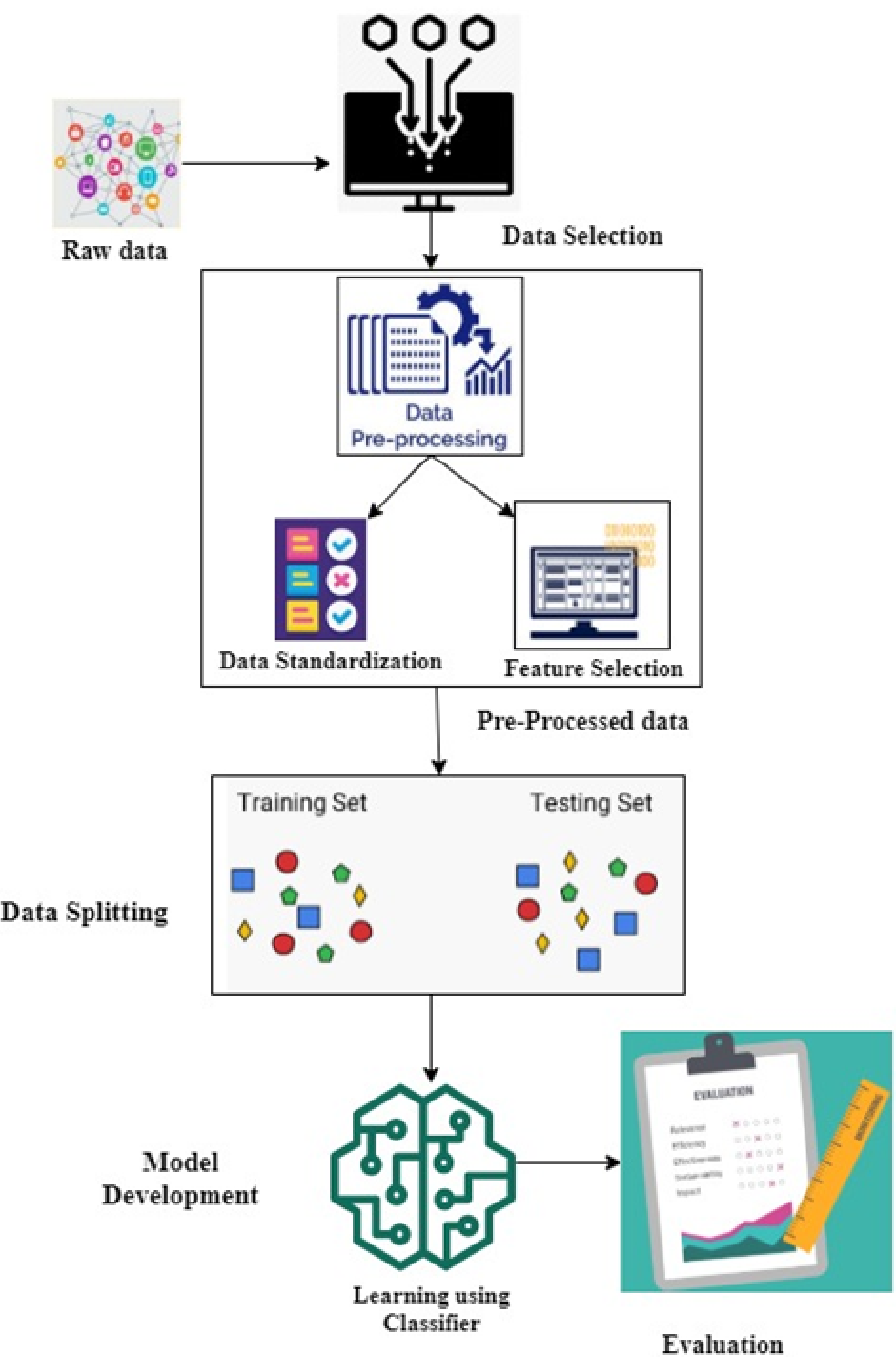 Figure 1: The proposed intelligent healthcare analysis framework including Min-Max pre-processing and RASGD training.
Experiments & Results: A New Benchmark
The researchers tested their model against a battery of standard algorithms. The results were clear: the synergy between Ridge regularization and Adaline learning creates a superior decision boundary.
- Accuracy Comparison:
- RASGD: 92%
- SVM (Support Vector Machine): 76%
- Logistic Regression: 72%
- Standard Adaline-SGD: 75%
The "Decision Region Boundary" visualizations in the paper highlight how RASGD creates a more nuanced separation between diabetic and non-diabetic cases compared to the more "rigid" boundaries of Logistic Regression.
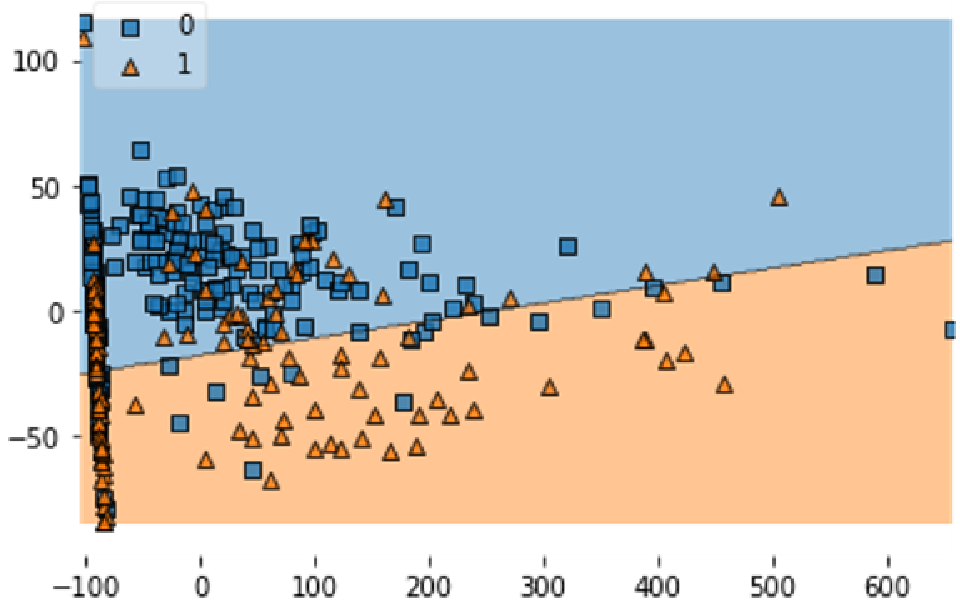 Figure 2: Performance of Adaline SGD without regularization, showing significant noise sensitivity compared to the final RASGD model.
Key Performance Metrics
| Metric | Non-Diabetic (Class 0) | Diabetic (Class 1) |
|---|---|---|
| Precision | 91% | 85% |
| Recall | 91% | 81% |
| F1-Score | 87% | 82% |
Critical Analysis & Conclusion
Takeaway
The RASGD model proves that early healthcare intervention can be powered by relatively "lightweight" yet mathematically sophisticated AI. You don't always need a Deep Neural Network; sometimes, a well-regularized linear model with intelligent optimization is more efficient and interpretable.
Limitations
While the 92% accuracy is high, the model was primarily validated on the Pima Indians dataset (approx. 800 instances). Clinical validity would require testing on more diverse, multi-ethnic datasets with higher dimensionality (e.g., including genetic markers).
Future Outlook
The authors suggest that the next frontier is scalability. Applying this Ridge-Adaline approach to "Big Data" environments (high-resolution EHR records) could provide real-time, 24/7 monitoring for at-risk patients, potentially saving billions in healthcare costs through early prevention.