
DataLex: Engineering a Collaborative Commons for Free Legal AI
Utilising AI in the legal assistance sector—Testing a role for legal information institutes
This paper introduces the "DataLex" platform developed by the Australasian Legal Information Institute (AustLII), which integrates rule-based AI and "intelligent assistance" (IA) into free legal information systems. It establishes a framework for building a "commons of legal expertise" specifically designed to support the legal assistance sector.
TL;DR
As AI experiences a massive revival in the legal sector, the "Free Access to Law" movement faces a critical turning point. This paper details how AustLII’s DataLex platform leverages 20 years of legal data to create a sustainable, rule-based AI environment. By allowing lawyers to code legal logic in quasi-natural language, it bridges the gap between raw legal databases and automated decision support for the public good.
Background: The Shift from Information to Expertise
For decades, Legal Information Institutes (LIIs) have focused on digitizing primary law (statutes and cases). However, the authors argue that "free access" must evolve. The challenge is no longer just finding the law, but applying it to individual circumstances—a task traditionally reserved for expensive human professionals.
The Pain Point: The Sustainability Gap
Most AI projects in law fail in the non-profit sector because:
- High Maintenance: Law changes rapidly; hard-coded software becomes obsolete instantly.
- Knowledge Silos: Legal experts (lawyers) and technical experts (coders) speak different languages, creating a "translation" bottleneck.
- Financial Constraints: The legal assistance sector cannot afford "knowledge engineers" or expensive proprietary licenses.
Methodology: The DataLex Approach
The DataLex platform is built on the principle of Sustainable Legal Advisory Systems. It moves away from complex machine learning—which can be a "black box"—toward transparent, rule-based "Intelligent Assistance" (IA).
1. Declarative Knowledge Coding
Instead of writing procedural code (if-then-else loops), lawyers write declarative statements. If a lawyer writes a rule about "rental eligibility," the system automatically generates the questions for the user, the logic flow, and the final report.
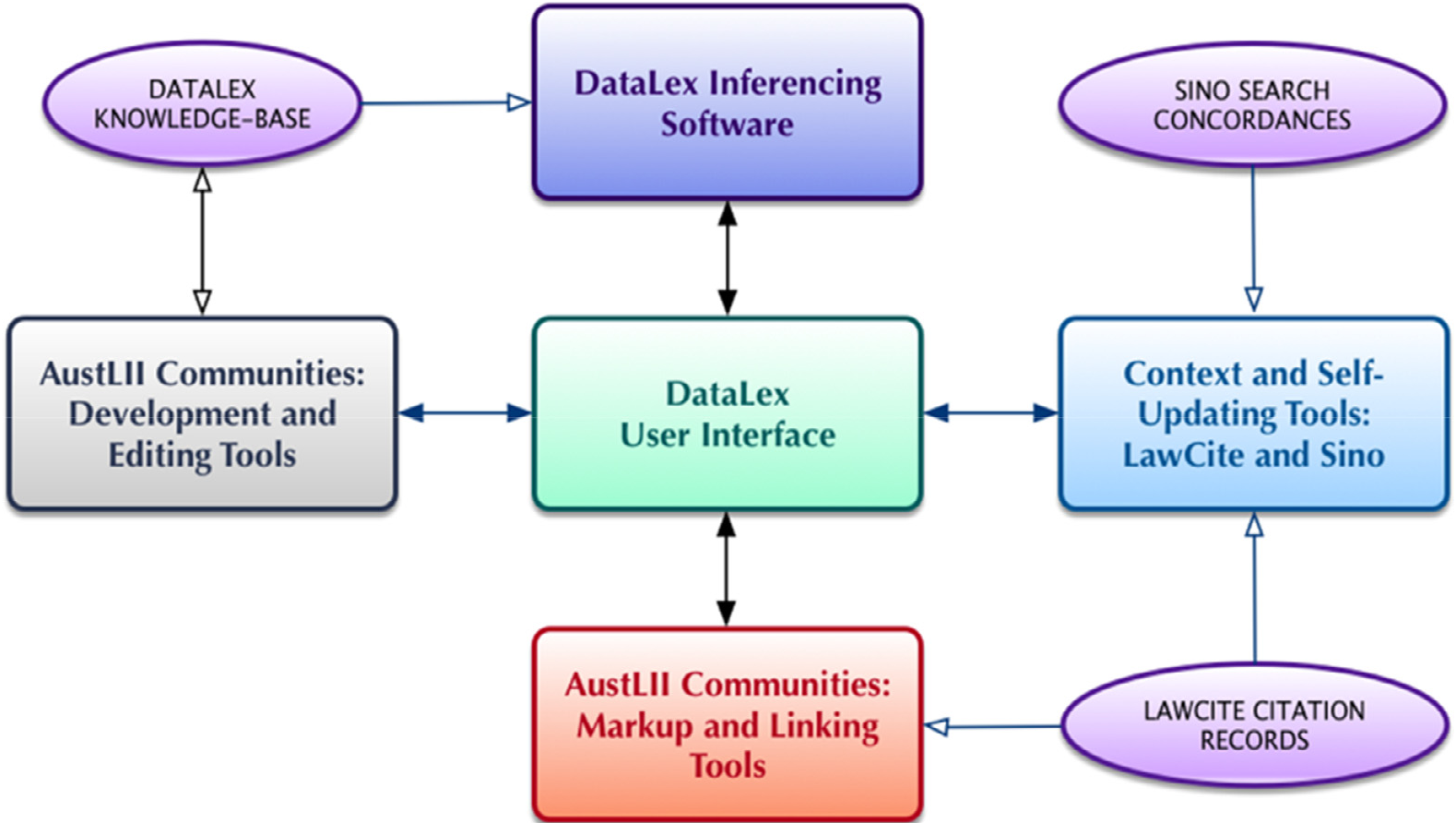 The five-element architecture of the DataLex platform, integrating inferencing software with live legal databases.
2. Isomorphism and Live Integration
"Isomorphism" means the code structure mirrors the legislative structure. This makes debugging intuitive for lawyers. Furthermore, the platform integrates LawCite, an automated citator.
- Real-time validation: If a knowledge-base refers to a case (e.g., Sykes v Cleary), the system provides a live link to see if that case has been overturned or cited recently.
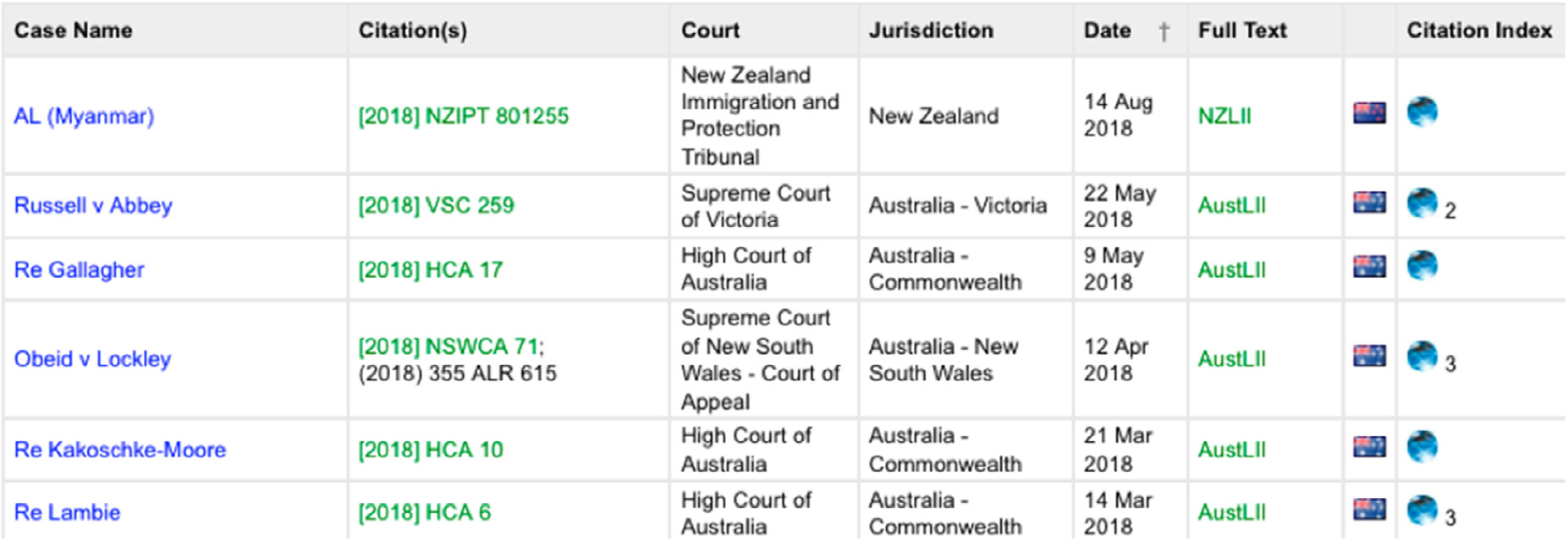 Integration of the LawCite index allows the AI to stay current with the latest judicial decisions.
Implementation: The "Commons" Model
The paper proposes a unique collaborative model:
- AustLII provides the technical infrastructure.
- Top-tier Law Firms (pro bono) provide the labor to build the knowledge-bases.
- Community Legal Centres use and test the apps with real clients.
- Universities evaluate the outcomes.
Critical Insight & Future Outlook
The brilliance of DataLex lies in its humility. It does not try to "replace" the lawyer with an autonomous robot. Instead, it creates an integrated decision-support system where the human and the machine pool their expertise.
However, the limitation remains: rule-based systems are excellent for "Rules as Code" (statutes) but less effective for highly discretionary or "grey" areas of common law. The next frontier will likely involve hybridizing these structured rule-databases with the conversational capabilities of modern LLMs—while maintaining the "source-of-truth" transparency that DataLex pioneered.
Conclusion
DataLex represents a move towards a "Commons of Legal Expertise." By lowering the technical barrier for lawyers to create AI tools, it ensures that the "AI Revolution" doesn't just benefit those who can afford it, but also the most vulnerable members of the legal assistance sector.