
The General Knowledge Machine: Resurrecting Soviet Cybernetics for Modern Adaptive Learning
Overview of AI Research History in USSR and Ukraine: Up-to-Date Just-In-Time Knowledge Concept
This paper provides a historical overview of AI research in the USSR and Ukraine, centering on pioneers like Lebedev, Glushkov, and Amosov. It introduces the "Just-In-Time (JIT) Knowledge" concept and the "General Knowledge Machine" (GKM) as a framework for adaptive learning and intellectual activity support.
TL;DR
This paper serves as both a historical preservation of Soviet and Ukrainian AI milestones and a forward-looking proposal for a new type of intelligence support. It transitions from traditional, linear education models to a Just-In-Time (JIT) Knowledge framework, powered by the General Knowledge Machine (GKM)—a system designed not to replace human experts, but to augment them by mimicking the spatial-temporal synchronization of the human brain.
Historical Context: The Hidden Giants
Before diving into the methodology, the author contextualizes the work by highlighting the overlooked contributions of researchers in the USSR:
- Sergey Lebedev: The "Soviet Alan Turing" who built MESM, the first stored-program computer in Continental Europe.
- Victor Glushkov: The father of Soviet information technology who envisioned the transition from "calculators" to "information technologies" as early as the 1960s.
- Nikolay Amosov: A pioneer who viewed the brain as a "semantic network" of neural assemblies rather than just isolated neurons.
The Problem: The Crisis of Human Self-Confidence in AI
The author argues that AI has faced a crisis because it has focused on replacing the human intellect rather than assisting it. Traditional Expert Systems use rigid "if-then" decision trees that don't match how experts actually think. Meanwhile, standard Neural Networks often act as "black boxes" that cannot explain their reasoning.
The motivation for the General Knowledge Machine (GKM) is to create a "Noosphere"—a sphere of intellect where technology helps humans navigate the overwhelming sea of global information.
Methodology: The Just-In-Time (JIT) Concept
The core of the paper is the JIT Knowledge concept. Unlike traditional learning, where you learn everything upfront, JIT Knowledge provides exactly what is needed to solve a specific problem at the moment it arises.
1. The Architecture of a Knowledge Item
A knowledge element in this system consists of a four-part tuple:
{Description of Problem, Name, Action, Result}
2. The GKM Workflow (The Sherlock Holmes Approach)
The system mimics a four-step intellectual process:
- Observation: Gathering data signs.
- Propositions: Generating hypotheses based on the knowledge base.
- Elimination: Using logic to discard impossible outcomes.
- Verification: Confirming the most likely solution.
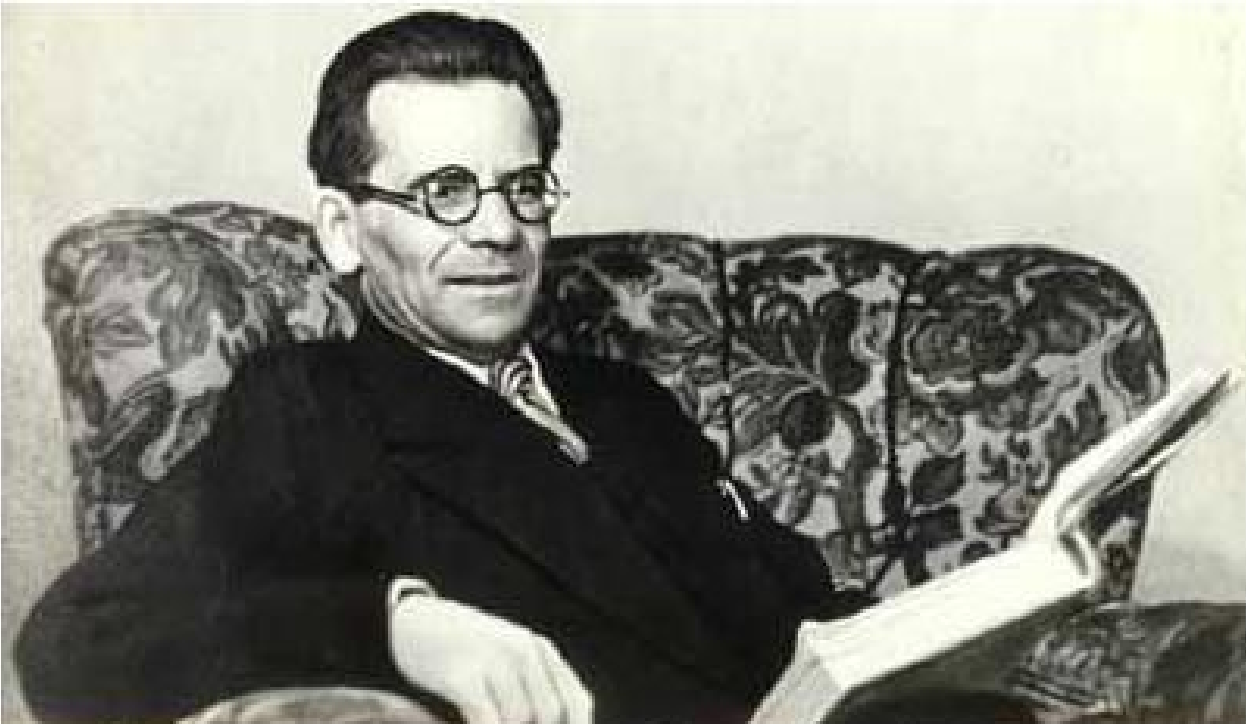 Figure 1: The MESM team worked in a derelict monastery, proving that high-level AI research often stems from human commitment rather than just hardware resources.
Mimicking the Brain: The Proposition Value Index
The most unique aspect of the methodology is how it ranks propositions. Drawing from M.N. Livanov's research on "Spatial Organization of Cerebral Processes," the author developed a Proposition Value Index.
This index is based on the idea that human memory association is a result of spatial-temporal coherence—narrow-band periodical oscillations across different sets of neurons. By calculating the similarity and "confidence level" of these connections, the GKM can offer a percentage-based ranking of potential solutions.
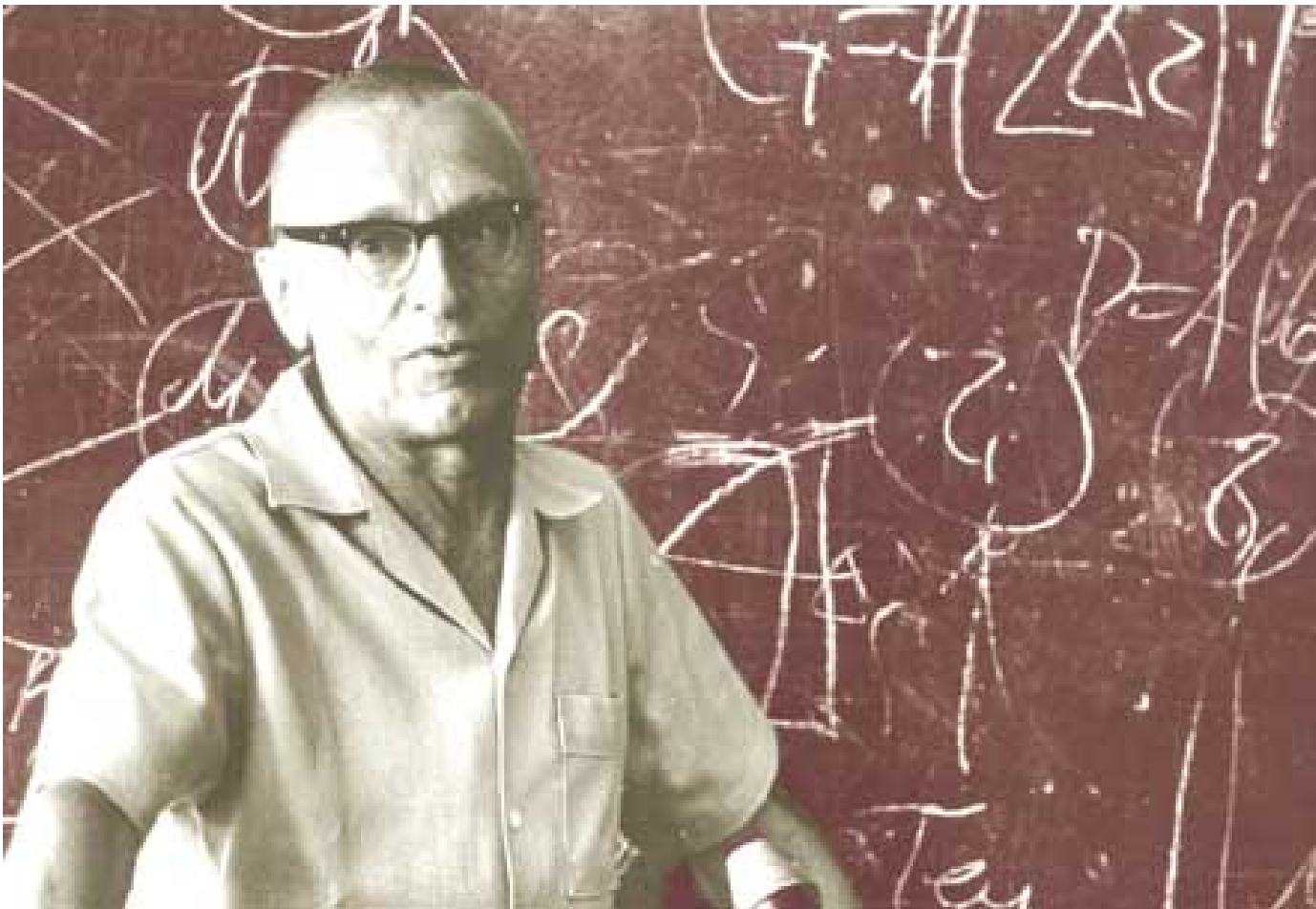 Figure 2: Amosov’s neural assembly concept—the theoretical foundation for the GKM's semantic network.
Experiments and Results
The GKM has been applied to diverse fields such as:
- Art History: Recognizing the style of Renaissance painters like Parmigianino based on specific "signs" (e.g., sfumato, elongation of proportions).
- Medicine & Business: Providing real-time consulting where the system suggests actions based on a database of "typical cases."
The system operates within seconds, providing the "grounds of its conclusion"—solving the interpretability of neural networks while maintaining the flexibility that decision trees lack.
Critical Analysis & Conclusion
The paper is a profound reminder that modern AI trends (like Semantic Search and RAG) have deep roots in Soviet Cybernetics.
Key Takeaways:
- Inductive Bias: By designing systems around the physiology of the brain rather than just pure mathematical optimization, we create more robust human-AI partnerships.
- Interpretability: The GKM's ability to list the specific "signs" leading to a conclusion is a prerequisite for professional use in high-stakes fields like medicine.
Though the paper lacks the large-scale quantitative benchmarks typical of modern arXiv papers, its value lies in its philosophical and structural alternative to the current "Black Box" AI paradigm. It challenges us to rethink the goal of AI: is it to build a better machine, or a better human-machine collective?