
Beyond the Visible: AI-Driven Spectral Fingerprinting for Early Plant Disease Detection
Application of AI Technology to Smart Agriculture: Detection of Plant Diseases
This paper presents a smart agriculture system for the early detection of "gray mold" in tomato leaves using Hyperspectral Imaging (HSI) combined with AI. By integrating Probabilistic Latent Semantic Analysis (pLSA) and Bayesian Networks, the authors achieved high-accuracy disease classification using only 8 optimal wavelengths, significantly reducing the computational and hardware costs of traditional HSI.
TL;DR
Researchers at Yokogawa Electric have developed a method to detect gray mold on tomato leaves before symptoms are visible to the human eye. By combining Hyperspectral Imaging (HSI) with Probabilistic Latent Semantic Analysis (pLSA) and Bayesian Networks, they reduced 121 spectral bands down to just 8 critical wavelengths. The result? A 13x reduction in data complexity with only a negligible 0.9% drop in accuracy.
The "Invisible" Agricultural Challenge
In modern agriculture, diseases like gray mold (Botrytis cinerea) are devastating. By the time a farmer sees a fuzzy gray patch on a leaf, the pathogen has already spread. Early detection is a "Holy Grail" in smart farming, but it has two major hurdles:
- Invisible Transitions: The "Infected" stage (post-inoculation but pre-symptom) looks identical to a "Healthy" leaf in the RGB spectrum.
- The Cost of Complexity: Hyperspectral cameras, which capture hundreds of wavelengths including Near-Infrared (NIR), are too expensive and data-heavy for practical, widespread field deployment.
Methodology: Fusing pLSA and Bayesian Networks
The authors identify a crucial flaw in standard approaches like PCA (Principal Component Analysis): they often result in negative values that lack physical meaning in spectroscopy. Instead, they utilize a unique "Soft Clustering" pipeline:
1. Feature Extraction via pLSA
pLSA, originally a text-mining tool, treats a spectrum as a "document" and specific wavelengths as "words." It groups co-occurring spectral reactions into "topics" or clusters. Using the Akaike Information Criterion (AIC), the system automatically determined that 13 clusters were optimal for representing the data.
2. Causal Visualization via Bayesian Networks
Instead of a "black box" classifier, a Bayesian Network was used to map how these 13 spectral clusters influence leaf status. This directed graph approach allows humans to see why the AI makes a decision, revealing the probabilistic dependencies between specific wavelengths and the "Infected" state.
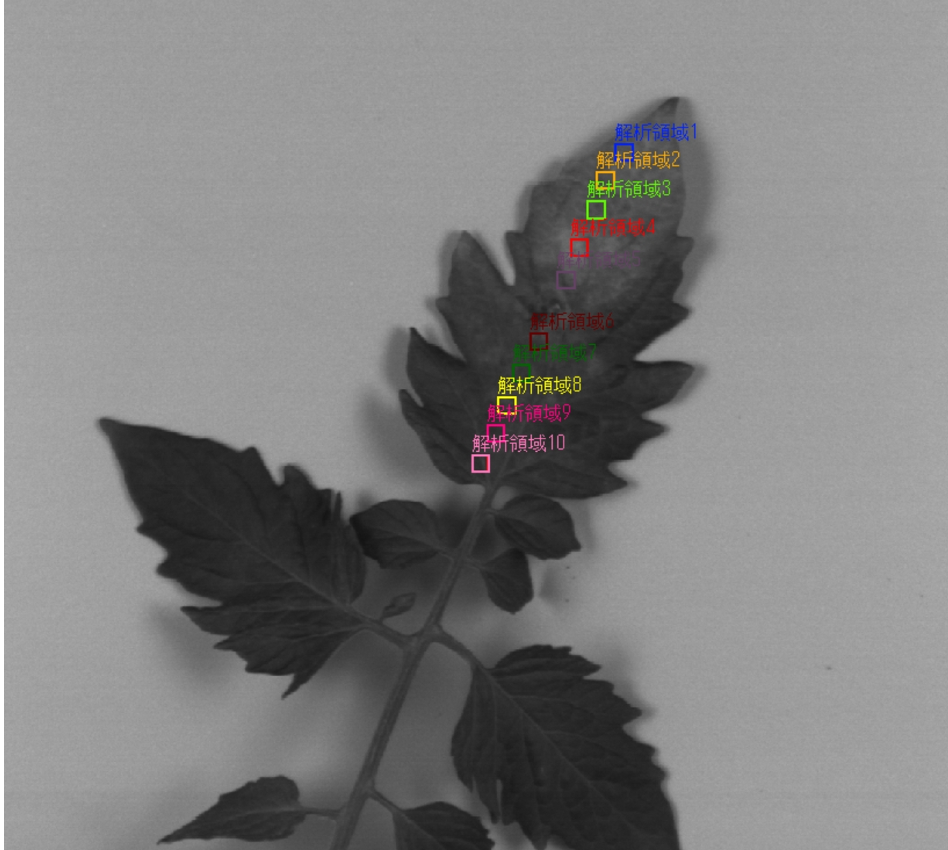 Fig 1: The full workflow from artificial inoculation to AI-based disease detection.
Experiments and Key Results
The team tested their approach on tomato leaves over a 10-day progression. They compared a Full Spectral Model (121 bands) against their Selected Wavelength Model (8 bands).
- Full Model Accuracy: 84.3%
- 8-Band Model Accuracy: 83.4%
Despite using only 6.6% of the original data, the performance remained robust. The selected 8 wavelengths were not random; they centered around the "Red Edge" (690nm - 740nm) and specific visible ranges (570nm) where chlorophyll decay and dehydration first manifest.
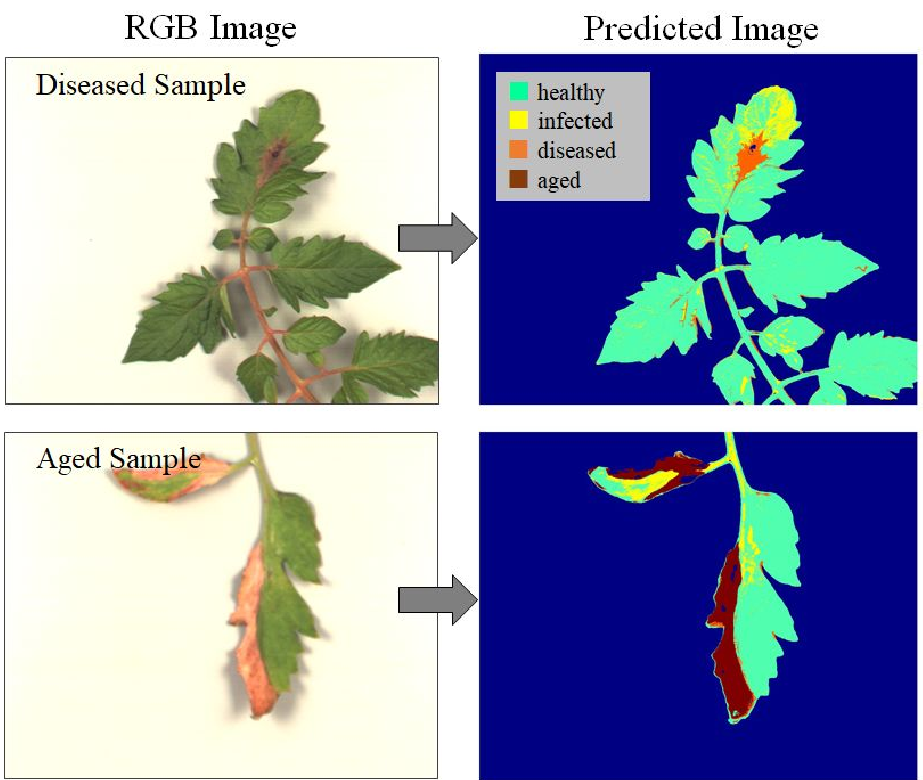 Fig 2: Prediction map using only 8 wavelengths. Green represents healthy tissue, while yellow captures the "Infected" but visually invisible stage.
Critical Insight: Why This Matters
The real breakthrough here isn't just the accuracy—it's the interpretability and cost reduction. By identifying the specific 8 wavelengths that matter, engineers can build specialized, low-cost "multispectral" sensors rather than expensive "hyperspectral" ones.
Limitations: The current study relied on controlled laboratory conditions and artificial inoculation. Real-world fields introduce "noise" like varying sunlight, dust, and multiple simultaneous stressors (e.g., drought + disease).
Conclusion
This work bridges the gap between complex spectroscopic theory and practical agricultural application. By using pLSA and Bayesian Networks, we move away from "brute-force" AI and toward an "informed" AI that understands the physical shift in a plant's biology. For the future of smart agriculture, this means lighter, faster, and cheaper robots that can "see" a disease long before the farmer can.